

 русский
 Español
 中文简体
中文简体

Non-Standard Custom Fasteners for Specialized Industrial Requirements Standard screws and fasteners are suitable for many general assembly applications, but modern industrial equipment often requires ...
READ MOREAutomotive Movable Shaft Core Manufacturers
-
HYS-0106
-
HYS-0107
-
HYS-0108
-
HYS-0109
-
HYS-0110
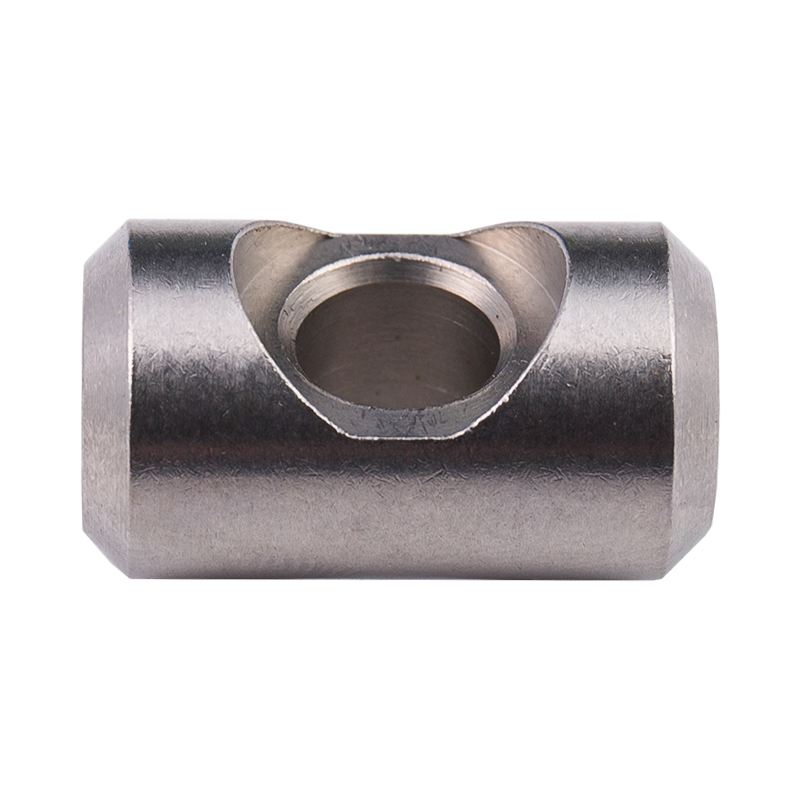
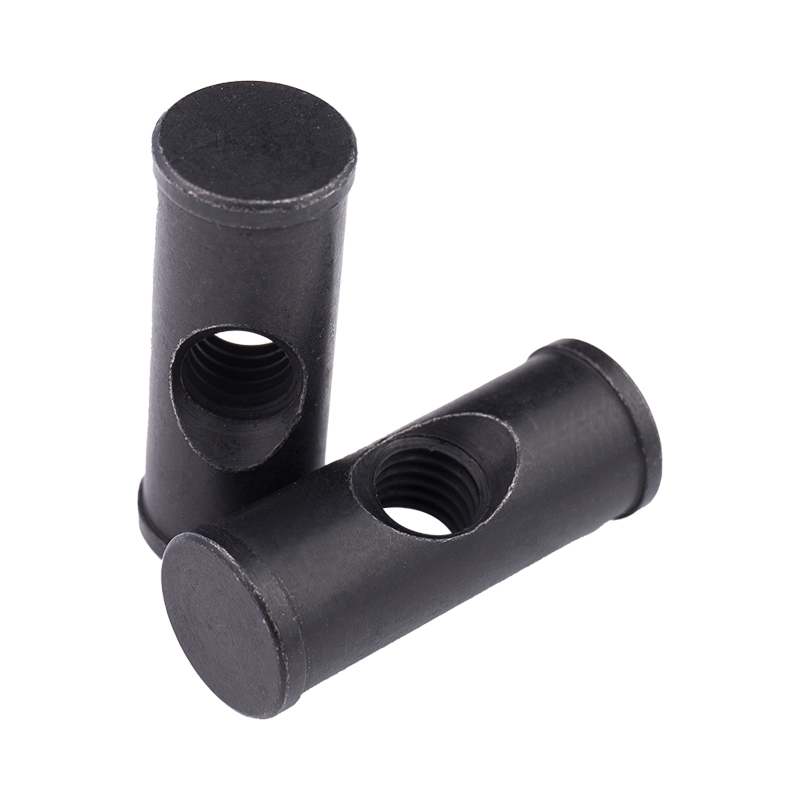
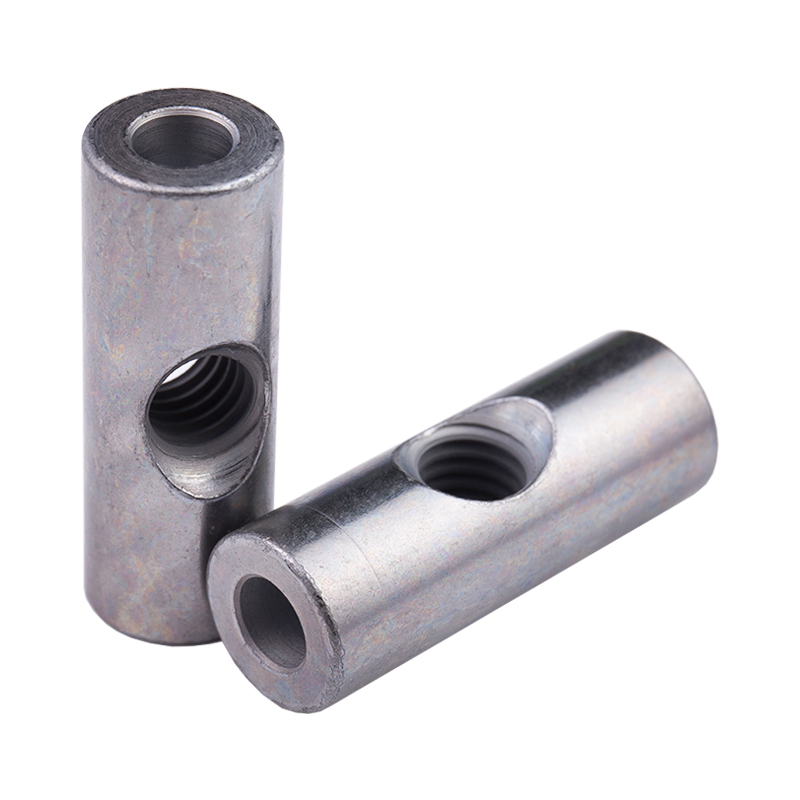
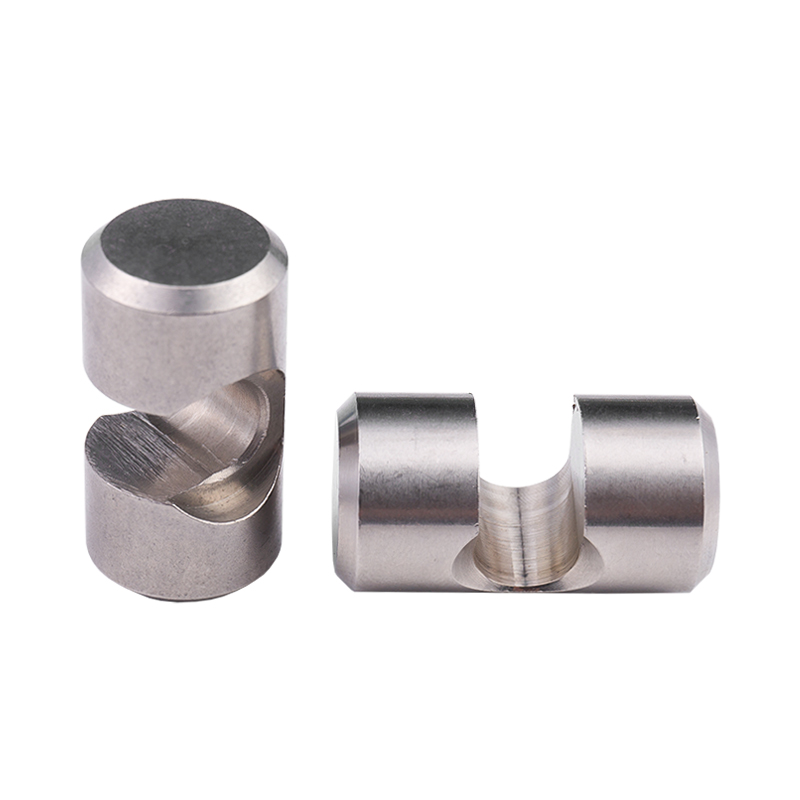
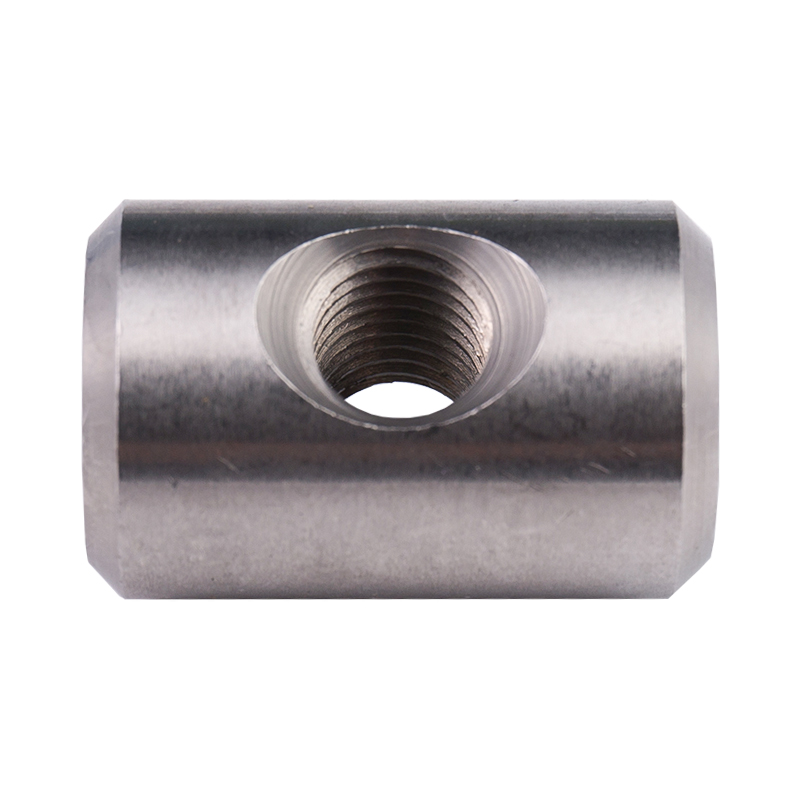
The automotive drive shaft core is a load-bearing component used in the connection of the transmission device to the upper and lower parts of automotive components. Its role is to transmit torque, support part of the machine's weight, and ensure transmission accuracy and stability. It is located between the engine and the wheels, responsible for transmitting the power generated by the engine to the wheels, driving the vehicle forward. Additionally, the drive shaft also has the function of absorbing vibration and reducing noise, providing passengers with a more comfortable riding experience. Our automotive drive shaft cores are made of high-strength, wear-resistant materials, ensuring stable performance under complex and changing road conditions. Through precise craftsmanship and strict quality control, we enhance the efficiency of power transmission in vehicles, improve handling sensitivity and stability, and provide drivers with a smoother and safer driving experience.
About
Kunshan Hong Yong Sheng Precision Hardware Products Co.,Ltd.
Kunshan Hong Yongsheng Precision Hardware Products Co., Ltd. was established in September 2006, is a professional China Automotive Movable Shaft Core manufacturer and Automotive Movable Shaft Core suppliers, the production of various types of precision parts, PEM series of standard fasteners, non-standard parts of the custom enterprise, the company's production equipment imported from Japan CNC computer numerically-controlled lathes, Taiwan CAM walking knife type high-precision automatic lathes, and various types of auxiliary equipment, precision testing equipment, totaling more than 100 units, monthly output of up to 5 million pieces. Our products are used in many fields such as electronic communications, computer monitors and chassis, automotive parts, 3C household appliances, medical equipment, pneumatic machinery, sports equipment, furniture, lighting, aerospace, military, photovoltaic, intelligent industry and so on, and we have the technical ability to develop new products.
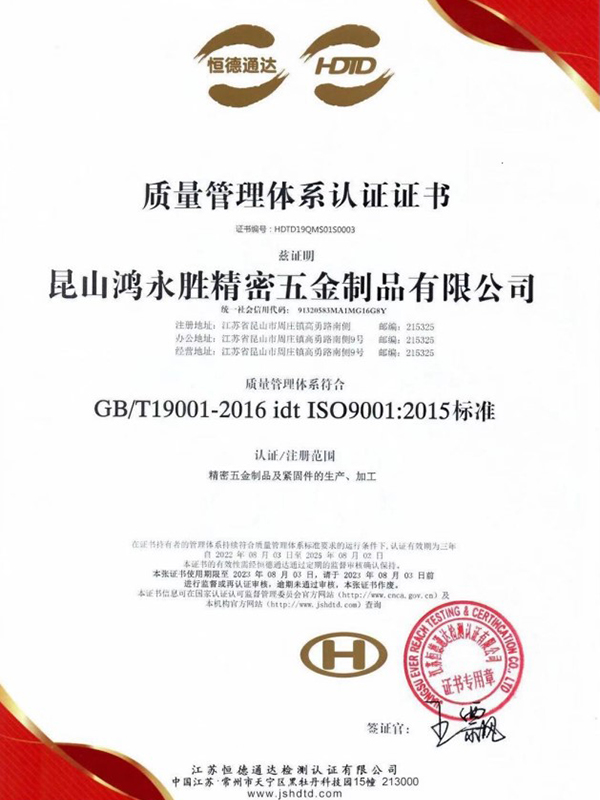
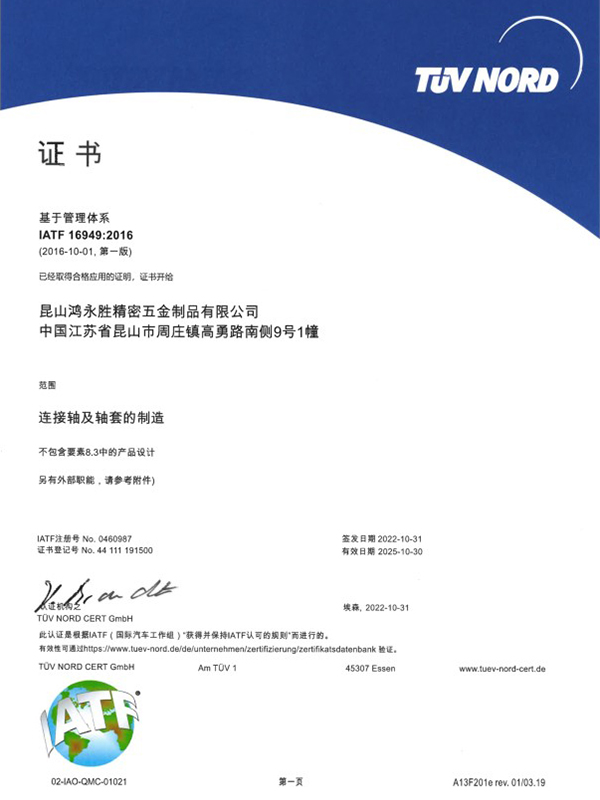
The company has obtained two quality system management certificates of ISO9001:2015 and IATF16949:2016.
At present, the company has been for Japan, Sweden, the United States, Singapore, Malaysia, Hong Kong and the Pearl River Delta and many other customers to provide services, now the main customers are: Japan Sharp (SHARP), Japan SMC, Japan Panasonic (Panasonic), the Swedish automobile VOVOL, etc., all the fixed assets investment of more than 30 million dollars, welcome friends from all walks of life to the factory to visit, study, consulting and come! We welcome friends from all walks of life to visit our factory, investigate, consult and come to us for sample processing.
We are looking forward to establishing a good business partnership with you with mutual trust and reciprocity!
The company has obtained two quality system management certificates of ISO9001:2015 and IATF16949:2016.
At present, the company has been for Japan, Sweden, the United States, Singapore, Malaysia, Hong Kong and the Pearl River Delta and many other customers to provide services, now the main customers are: Japan Sharp (SHARP), Japan SMC, Japan Panasonic (Panasonic), the Swedish automobile VOVOL, etc., all the fixed assets investment of more than 30 million dollars, welcome friends from all walks of life to the factory to visit, study, consulting and come! We welcome friends from all walks of life to visit our factory, investigate, consult and come to us for sample processing.
We are looking forward to establishing a good business partnership with you with mutual trust and reciprocity!
Certificate Of Honor
News
-
-
Imagine you are sourcing a precision shaft that carries a bearing on one end and slides through a hydraulic seal along its length. The drawing shows a circularity tolerance of 0.01 mm on the bearing ...
READ MORE -
What Is a Steel Sleeve and Where It Is Used A steel sleeve is a hollow cylindrical component used to protect a shaft, reduce friction, provide a wear-resistant bearing surface, or act as a spacer betw...
READ MORE -
When you have a batch of cylindrical components to machine, the CNC turning lathe is usually the first machine tool that comes to mind. It solves a straightforward problem: rotate the workpiece while...
READ MORE
Automotive Movable Shaft Core Industry knowledge
How is the lubrication system of the automotive movable shaft core designed?
The design of the lubrication system for automotive movable shaft cores is a crucial aspect to ensure transmission efficiency and extend service life. Below are several key design points and their detailed explanations:
Choice of Lubrication Method:The lubrication of the drive shaft core typically employs either pressure lubrication or splash lubrication. Pressure lubrication uses an oil pump to deliver lubricating oil to various parts of the drive shaft core under a certain pressure, ensuring thorough lubrication. Splash lubrication, on the other hand, utilizes the splashing action of the oil as the drive shaft rotates, bringing oil to the core surface. The most suitable lubrication method should be selected based on the working conditions, load, and speed of the drive shaft core.
Selection and Supply of Lubricating Oil:Choosing the appropriate lubricating oil is crucial to reducing friction and wear. The lubricating oil needs to have a good viscosity index, oxidation resistance, extreme pressure performance, and thermal stability. The viscosity of the oil should be considered during the design to accommodate working conditions at different temperatures. Additionally, the design of the oil pump and oil circuits must ensure that the lubricating oil is continuously and evenly supplied to the drive shaft core.
Oil Circuit and Pressure Control:The oil circuit design must ensure that the lubricating oil can smoothly flow to every lubrication point of the drive shaft core. This typically involves precise pipeline layout and oil circuit design to avoid blockages or leaks. Oil pressure control is achieved through oil pressure regulating valves, ensuring that the drive shaft core receives appropriate lubrication pressure under various operating conditions.
Temperature Control:Lubricating oil tends to oxidize and degrade at high temperatures, so temperature control needs to be considered in the lubrication system design. This may include using oil coolers to reduce oil temperature or designing effective heat dissipation structures to maintain the lubricating oil at an ideal working temperature.
Maintenance and Monitoring:A well-designed lubrication system should also include convenient maintenance interfaces and monitoring systems. For instance, designing oil level inspection windows, oil quality monitoring points, and warning systems facilitates regular inspection and maintenance, enabling timely detection and resolution of lubrication issues.
Simulation and Optimization:Before practical application, simulating the working conditions of the lubrication system using simulation software can predict the flow, pressure distribution, and temperature changes of the lubricating oil. This helps identify potential issues during the design phase and allows for optimization to improve the performance and reliability of the lubrication system.
By focusing on the aforementioned design points, the lubrication system for automotive movable shaft cores can meet functional requirements while maintaining efficient and long-lasting operation.

If you are interested in our products, please consult us
Kunshan Hong Yong Sheng Precision Hardware Products Co.,Ltd. All Rights Reserved. Custom Automotive Movable Shaft Core Manufacturer
