русский
 Español
 中文简体
中文简体

Drilling the correct hole is one of the most fundamental steps in any precision assembly. Whether you are installing a simple screw, preparing a threaded hole, or mounting a rivet nut, the diameter o...
READ MORENon-Standard Carbon Steel Round Welding Nails Manufacturer
-
HYS-0070
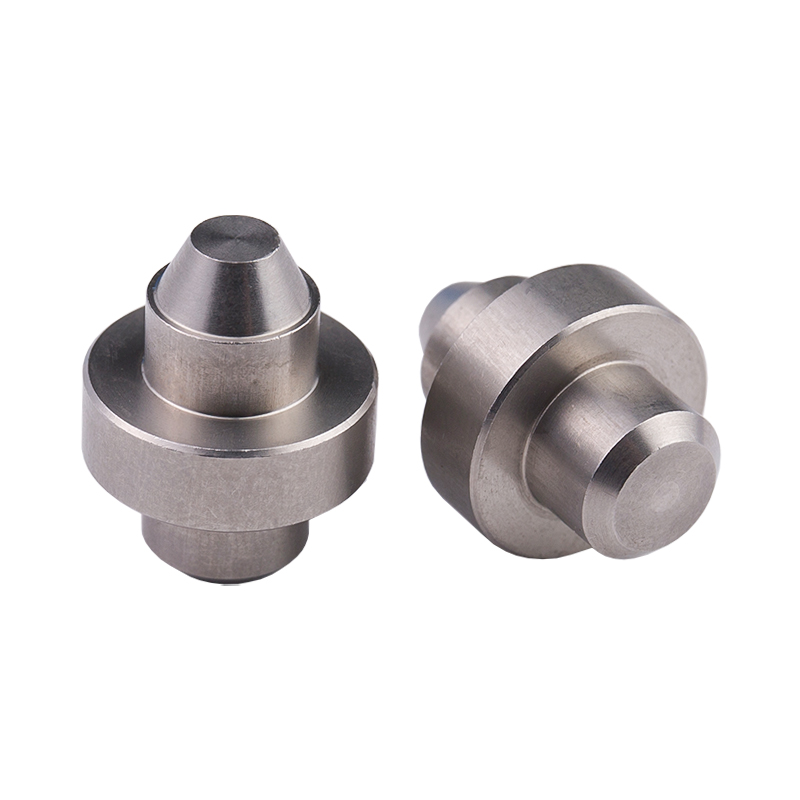
The main application areas of non-standard carbon steel welding studs include construction, mechanical manufacturing, bridge construction, shipbuilding, petrochemicals, and other industries. In these industries, welding studs are crucial connecting components, and their quality directly affects the safety of structures. The main characteristics of non-standard welding studs are high strength, good toughness, and welding performance. Because they do not need to meet specific standard requirements, they can be customized to meet the needs of special applications. They can be customized according to requirements such as head shape, length, diameter, etc.
We have our own Non-Standard Carbon Steel Round Welding Nails factory in China, so we can OEM/ODM standard and non-standard fasteners, Precision Hardware Parts and accessories. We export and wholesale Non-Standard Carbon Steel Round Welding Nails since 2006.
About
Kunshan Hong Yong Sheng Precision Hardware Products Co.,Ltd.
Kunshan Hong Yongsheng Precision Hardware Products Co., Ltd. was established in September 2006, is a professional China Non-Standard Carbon Steel Round Welding Nails manufacturer and factory, the production of various types of precision parts, PEM series of standard fasteners, non-standard parts of the custom enterprise, the company's production equipment imported from Japan CNC computer numerically-controlled lathes, Taiwan CAM walking knife type high-precision automatic lathes, and various types of auxiliary equipment, precision testing equipment, totaling more than 100 units, monthly output of up to 5 million pieces. Our products are used in many fields such as electronic communications, computer monitors and chassis, automotive parts, 3C household appliances, medical equipment, pneumatic machinery, sports equipment, furniture, lighting, aerospace, military, photovoltaic, intelligent industry and so on, and we have the technical ability to develop new products.
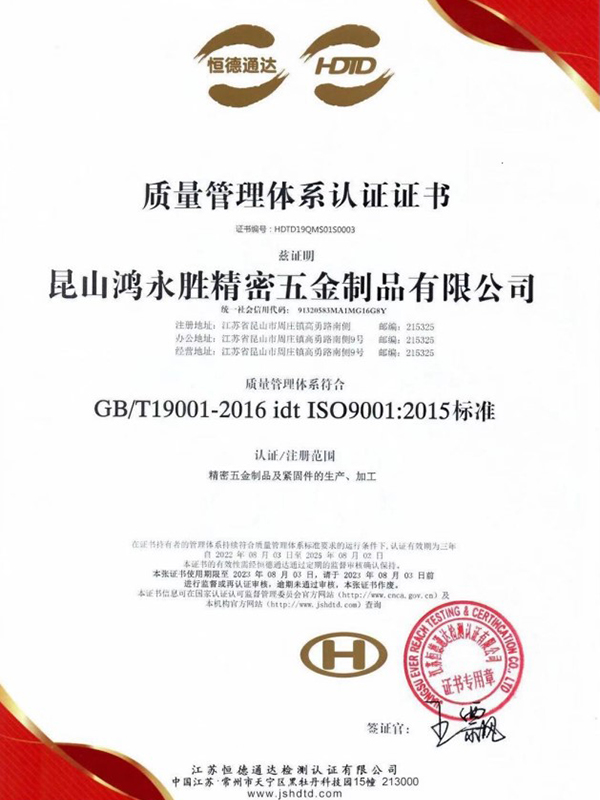
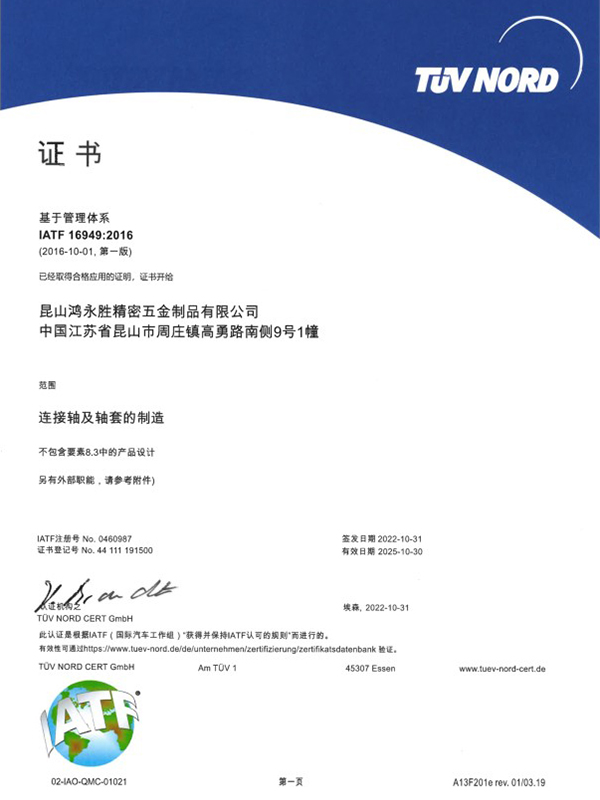
The company has obtained two quality system management certificates of ISO9001:2015 and IATF16949:2016.
At present, the company has been for Japan, Sweden, the United States, Singapore, Malaysia, Hong Kong and the Pearl River Delta and many other customers to provide services, now the main customers are: Japan Sharp (SHARP), Japan SMC, Japan Panasonic (Panasonic), the Swedish automobile VOVOL, etc., all the fixed assets investment of more than 30 million dollars, welcome friends from all walks of life to the factory to visit, study, consulting and come! We welcome friends from all walks of life to visit our factory, investigate, consult and come to us for sample processing.
We are looking forward to establishing a good business partnership with you with mutual trust and reciprocity!
The company has obtained two quality system management certificates of ISO9001:2015 and IATF16949:2016.
At present, the company has been for Japan, Sweden, the United States, Singapore, Malaysia, Hong Kong and the Pearl River Delta and many other customers to provide services, now the main customers are: Japan Sharp (SHARP), Japan SMC, Japan Panasonic (Panasonic), the Swedish automobile VOVOL, etc., all the fixed assets investment of more than 30 million dollars, welcome friends from all walks of life to the factory to visit, study, consulting and come! We welcome friends from all walks of life to visit our factory, investigate, consult and come to us for sample processing.
We are looking forward to establishing a good business partnership with you with mutual trust and reciprocity!
Certificate Of Honor
News
-
-
Non-Standard Custom Fasteners for Specialized Industrial Requirements Standard screws and fasteners are suitable for many general assembly applications, but modern industrial equipment often requires ...
READ MORE -
Imagine you are sourcing a precision shaft that carries a bearing on one end and slides through a hydraulic seal along its length. The drawing shows a circularity tolerance of 0.01 mm on the bearing ...
READ MORE -
What Is a Steel Sleeve and Where It Is Used A steel sleeve is a hollow cylindrical component used to protect a shaft, reduce friction, provide a wear-resistant bearing surface, or act as a spacer betw...
READ MORE
Non-Standard Carbon Steel Round Welding Nails Industry knowledge
How do these studs contribute to the structural integrity in construction and manufacturing?
These studs are used to securely fasten various components together, such as beams, columns, and plates. By providing a strong connection, they enable the transfer of loads between structural elements, ensuring stability and strength in the overall structure.
In construction, welding studs are often employed to reinforce joints, particularly in critical areas where additional strength is needed. This reinforcement helps prevent failures due to bending, shear, or torsion, enhancing the structural integrity of the assembly.
Welding studs can enhance a structure's ability to withstand seismic forces by improving connections between elements. In earthquake-prone regions, properly installed studs help distribute forces more effectively, reducing the risk of structural damage or collapse during seismic events.
The high strength and toughness of non-standard welding studs make them capable of withstanding cyclic loading and fatigue, which are common challenges in dynamic structures like bridges and industrial equipment. By resisting fatigue, these studs help maintain structural integrity over the long term.
Non-standard carbon steel round welding studs can be customized according to specific project requirements, such as head shape, length, and diameter. This flexibility allows engineers to tailor connections to the demands of different applications, optimizing structural performance while minimizing material waste.
Carbon steel welding studs can be coated or treated to enhance their resistance to corrosion, especially in environments exposed to moisture, chemicals, or saltwater. By mitigating corrosion, these studs maintain their strength and integrity over time, prolonging the lifespan of structures.
Welding studs offer a fast and efficient method of assembly compared to traditional bolting or riveting techniques. Their quick installation reduces construction time and labor costs while ensuring reliable connections, contributing to overall project efficiency.
What is the composition of non-standard carbon steel round welding studs?
The composition of non-standard carbon steel round welding studs typically consists of primarily carbon steel alloyed with small amounts of other elements to achieve specific mechanical properties and welding characteristics. The exact composition can vary depending on the desired strength, toughness, weldability, and corrosion resistance required for the application.
Carbon (C): Carbon is the main alloying element in carbon steel, contributing to its strength and hardness. Higher carbon content generally increases strength but may reduce weldability and toughness if not properly controlled.
Manganese (Mn): Manganese is often added to improve the strength, hardenability, and weldability of carbon steel. It also helps remove impurities and enhance the steel's cleanability during manufacturing.
Silicon (Si): Silicon improves the steel's strength and hardness and helps deoxidize the molten weld pool during welding, reducing the formation of defects like porosity.
Sulfur (S) and Phosphorus (P): These elements are typically considered impurities in steel and are kept as low as possible to maintain good weldability and mechanical properties. Higher levels of sulfur and phosphorus can lead to brittleness and reduced toughness.

If you are interested in our products, please consult us
Kunshan Hong Yong Sheng Precision Hardware Products Co.,Ltd. All Rights Reserved. OEM/ODM Non-Standard Carbon Steel Round Welding Nails Manufacturer