русский
 Español
 中文简体
中文简体

Non-Standard Custom Fasteners for Specialized Industrial Requirements Standard screws and fasteners are suitable for many general assembly applications, but modern industrial equipment often requires ...
READ MOREStainless Steel Nut Manufacturer
-
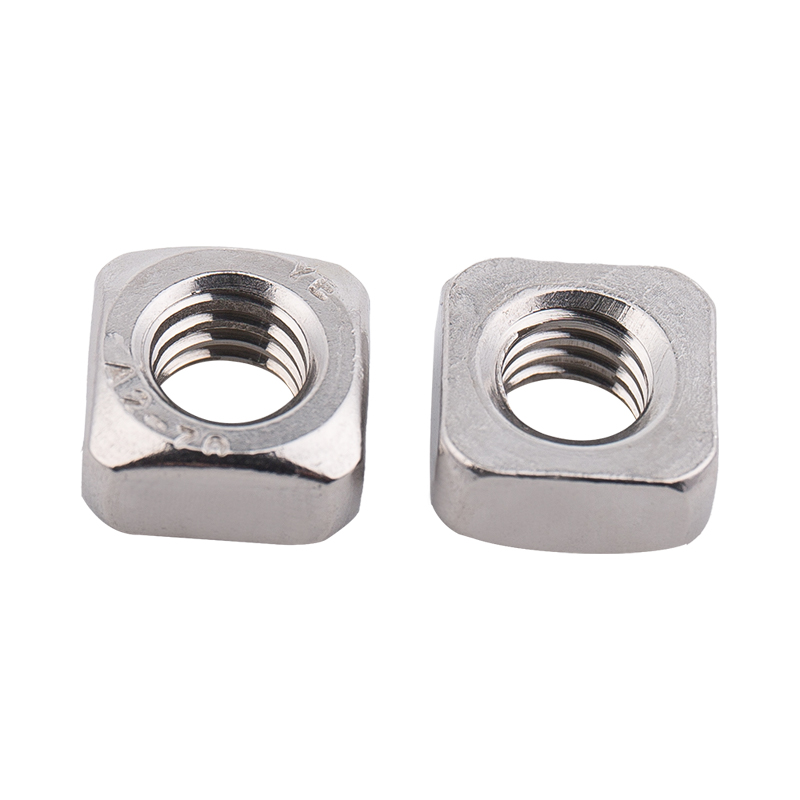
HYS-0197
-
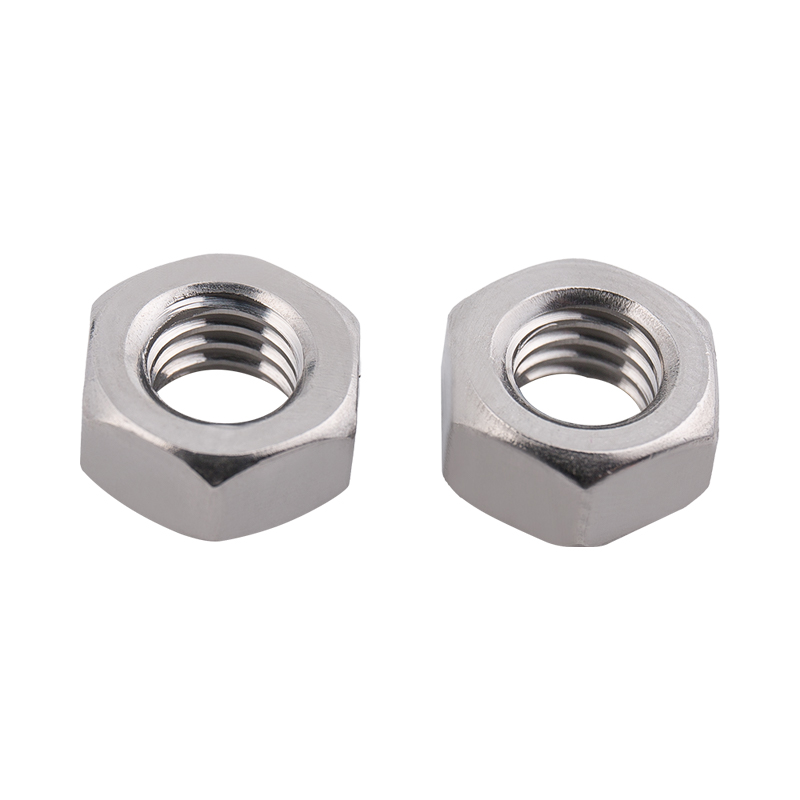
HYS-0198
-
HYS-0199
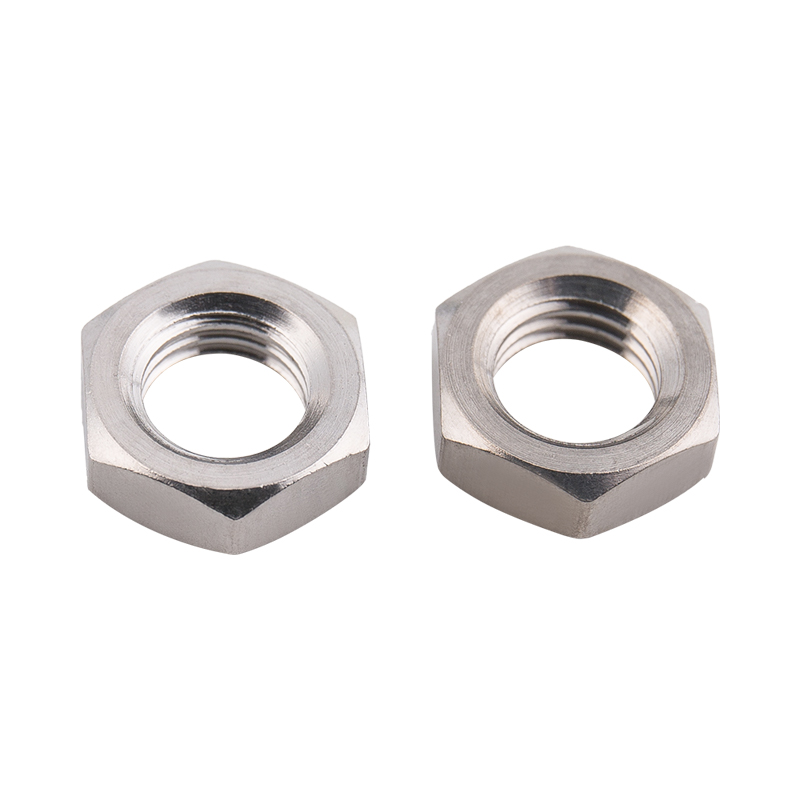
-
HYS-0200
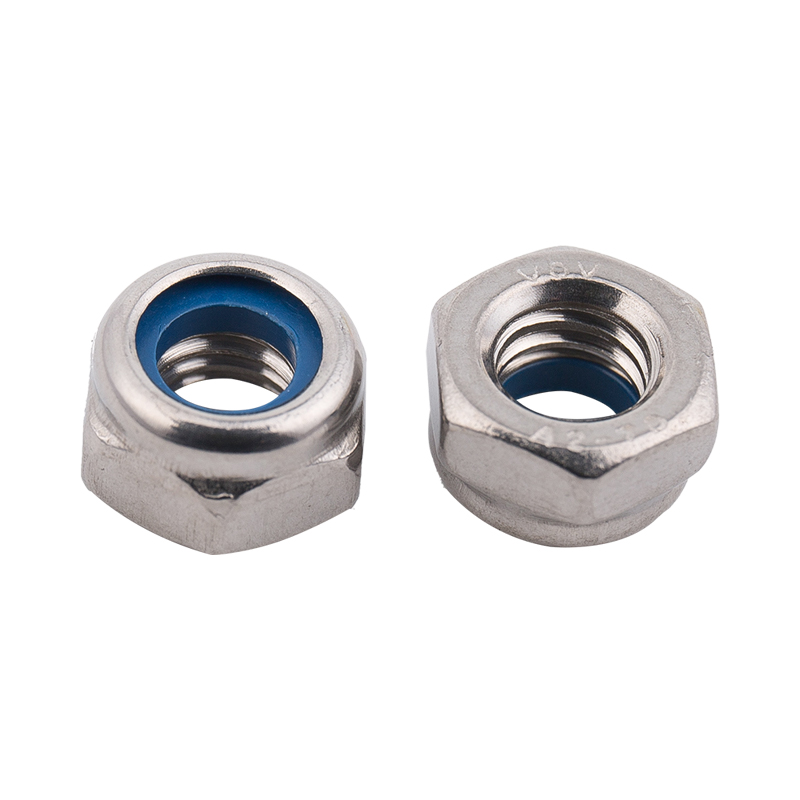
-
HYS-0201
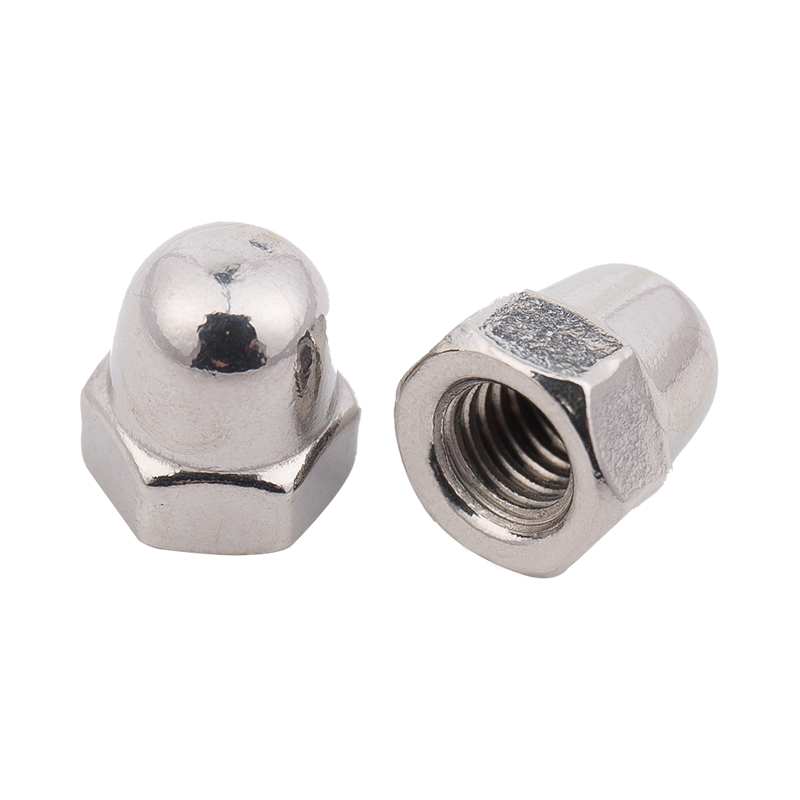
-
HYS-0202
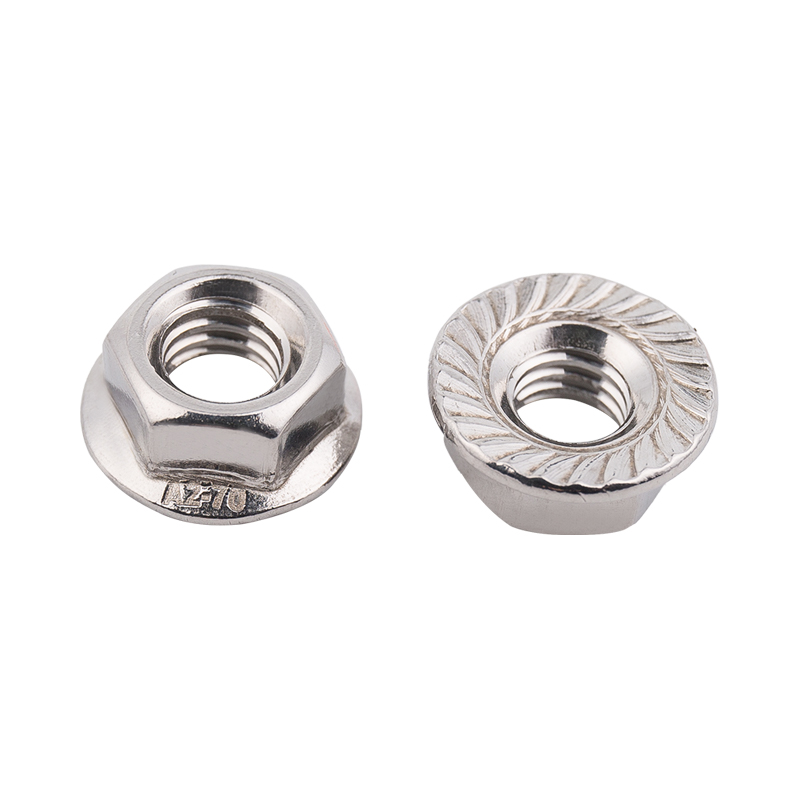
-
HYS-0203
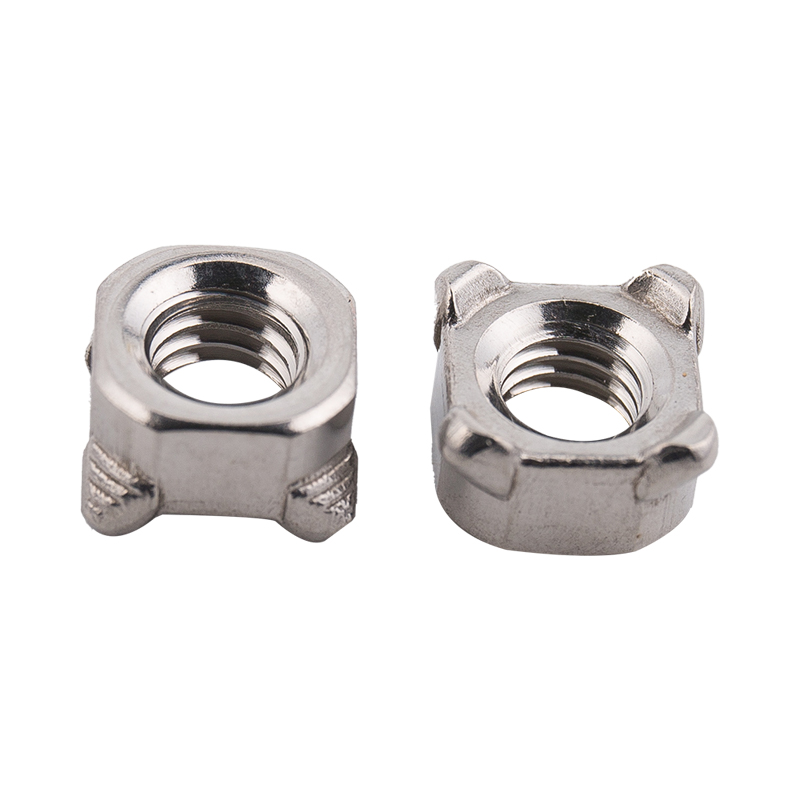
Stainless steel nut refers to a kind of threaded connector made of stainless steel. Stainless steel nuts have good corrosion resistance and aesthetics, suitable for some demanding occasions, such as chemical, aviation, medical and other fields. However, the strength and hardness of stainless steel nuts are low, and they are susceptible to stress loosening.
We have our own Stainless Steel Nut factory in China, so we can OEM/ODM standard and non-standard fasteners, Precision Hardware Parts and accessories. We export and wholesale Stainless Steel Nut since 2006.
About
Kunshan Hong Yong Sheng Precision Hardware Products Co.,Ltd.
Kunshan Hong Yongsheng Precision Hardware Products Co., Ltd. was established in September 2006, is a professional China Stainless Steel Nut manufacturer and factory, the production of various types of precision parts, PEM series of standard fasteners, non-standard parts of the custom enterprise, the company's production equipment imported from Japan CNC computer numerically-controlled lathes, Taiwan CAM walking knife type high-precision automatic lathes, and various types of auxiliary equipment, precision testing equipment, totaling more than 100 units, monthly output of up to 5 million pieces. Our products are used in many fields such as electronic communications, computer monitors and chassis, automotive parts, 3C household appliances, medical equipment, pneumatic machinery, sports equipment, furniture, lighting, aerospace, military, photovoltaic, intelligent industry and so on, and we have the technical ability to develop new products.
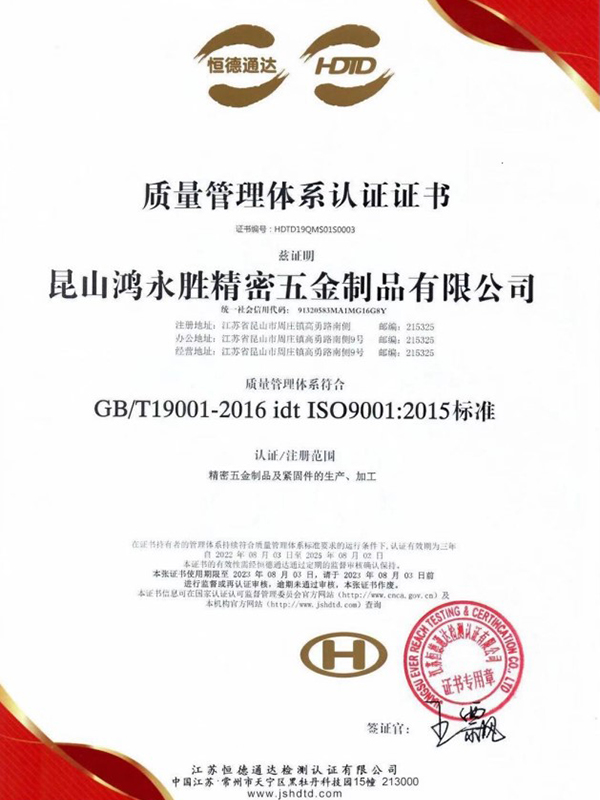
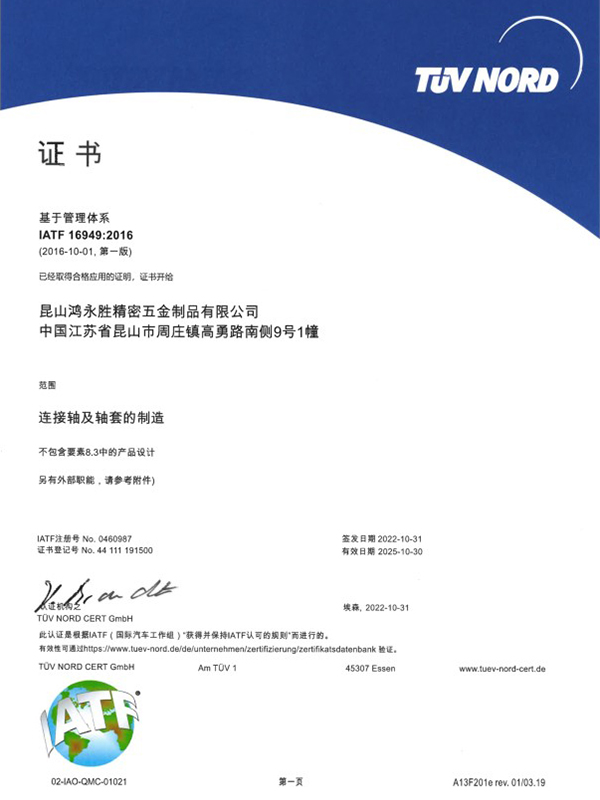
The company has obtained two quality system management certificates of ISO9001:2015 and IATF16949:2016.
At present, the company has been for Japan, Sweden, the United States, Singapore, Malaysia, Hong Kong and the Pearl River Delta and many other customers to provide services, now the main customers are: Japan Sharp (SHARP), Japan SMC, Japan Panasonic (Panasonic), the Swedish automobile VOVOL, etc., all the fixed assets investment of more than 30 million dollars, welcome friends from all walks of life to the factory to visit, study, consulting and come! We welcome friends from all walks of life to visit our factory, investigate, consult and come to us for sample processing.
We are looking forward to establishing a good business partnership with you with mutual trust and reciprocity!
The company has obtained two quality system management certificates of ISO9001:2015 and IATF16949:2016.
At present, the company has been for Japan, Sweden, the United States, Singapore, Malaysia, Hong Kong and the Pearl River Delta and many other customers to provide services, now the main customers are: Japan Sharp (SHARP), Japan SMC, Japan Panasonic (Panasonic), the Swedish automobile VOVOL, etc., all the fixed assets investment of more than 30 million dollars, welcome friends from all walks of life to the factory to visit, study, consulting and come! We welcome friends from all walks of life to visit our factory, investigate, consult and come to us for sample processing.
We are looking forward to establishing a good business partnership with you with mutual trust and reciprocity!
Certificate Of Honor
News
-
-
Imagine you are sourcing a precision shaft that carries a bearing on one end and slides through a hydraulic seal along its length. The drawing shows a circularity tolerance of 0.01 mm on the bearing ...
READ MORE -
What Is a Steel Sleeve and Where It Is Used A steel sleeve is a hollow cylindrical component used to protect a shaft, reduce friction, provide a wear-resistant bearing surface, or act as a spacer betw...
READ MORE -
When you have a batch of cylindrical components to machine, the CNC turning lathe is usually the first machine tool that comes to mind. It solves a straightforward problem: rotate the workpiece while...
READ MORE
Stainless Steel Nut Industry knowledge
What is the importance of stainless steel nuts in construction?
In the world of mechanical engineering, there is one small but mighty component that often goes unnoticed – the stainless steel nut. While it may seem insignificant, these nuts play a crucial role in ensuring the stability and longevity of various structures and machinery.
Stainless steel nuts are not your average nuts. Made from a durable and corrosion-resistant alloy, they are designed to withstand harsh environments and extreme temperatures. Whether it's a construction project, automotive assembly, or industrial machinery, stainless steel nuts provide a secure and long-lasting connection. Their resistance to corrosion makes them ideal for outdoor applications, such as bridges, pipelines, and marine structures. Furthermore, their ability to withstand high temperatures ensures their reliability in industries like aerospace and power generation.
Apart from their durability, stainless steel nuts offer several other advantages that contribute to their growing popularity. Firstly, they are non-magnetic, making them suitable for applications where magnetic interference could cause issues. Secondly, stainless steel nuts have excellent mechanical properties, including high tensile strength and resistance to deformation. This ensures that the nuts can handle heavy loads without compromising their integrity. Lastly, stainless steel nuts are easy to clean and maintain, making them a cost-effective choice in the long run.
The demand for stainless steel nuts has been on the rise, and for good reason. With industries becoming increasingly aware of the importance of sustainability, stainless steel nuts align perfectly with this ethos. Unlike their counterparts made from carbon steel, stainless steel nuts are recyclable, reducing waste and environmental impact. Additionally, their long lifespan minimizes the need for frequent replacements, further reducing resource consumption. These factors have led to a surge in popularity for stainless steel nuts, with more industries opting for their reliable and eco-friendly solutions.
While often overlooked, stainless steel nuts deserve recognition for their crucial role in ensuring mechanical stability. Their exceptional durability, resistance to corrosion, and eco-friendly properties make them an ideal choice for various industries. As the demand for sustainable and long-lasting solutions continues to grow, stainless steel nuts are emerging as the unsung heroes of mechanical engineering. So, the next time you encounter a structure or machinery that stands tall against the test of time, remember to appreciate the unsung stars – stainless steel nuts.

If you are interested in our products, please consult us
Kunshan Hong Yong Sheng Precision Hardware Products Co.,Ltd. All Rights Reserved. OEM/ODM Stainless Steel Nut Manufacturer