

 русский
 Español
 中文简体
中文简体

What Are Automotive Square Nut Weld Nails and How Do You Choose the Right Specification?
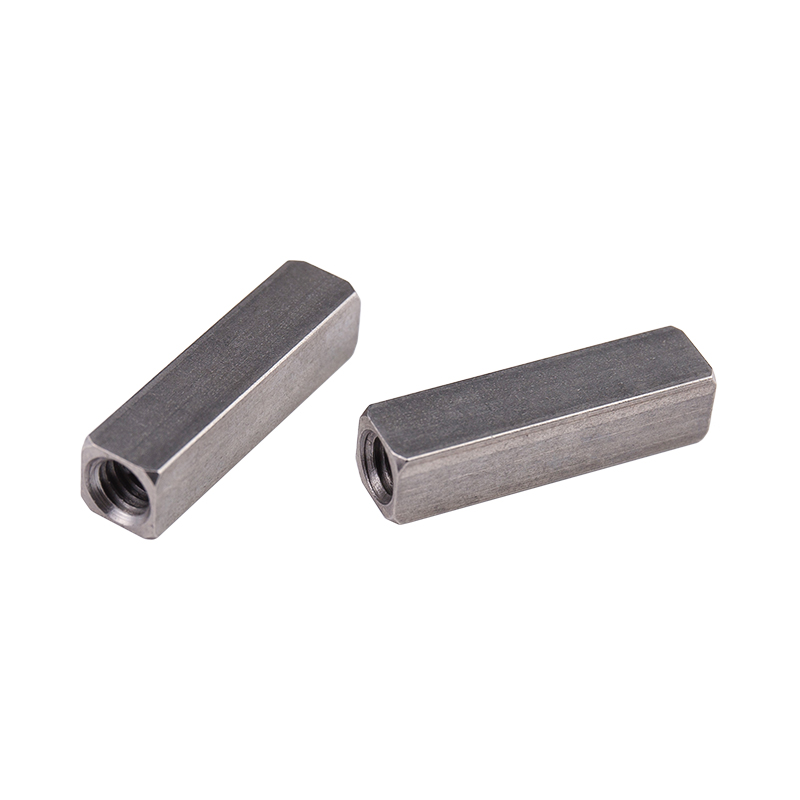
Industry News-Automotive square nut weld nails are precision-machined fasteners designed to be permanently welded onto sheet metal components during vehicle assembly and fabrication. Manufactured from carbon steel using turning processes, these nuts are engineered to bond with punched or drilled holes in sheet metal panels, creating a fixed threaded anchor point that can accept bolts, screws, or studs without any additional backing hardware. Their compact square profile, consistent thread quality, and strong post-weld retention make them indispensable across automotive body assembly, chassis fabrication, and related metalworking industries.
Understanding what these components are, how they are produced, what specifications matter, and how to select the correct variant for a given application is essential knowledge for engineers, procurement specialists, and fabricators working in automotive manufacturing or sheet metal processing environments.
Content
- 1 What Are Automotive Square Nut Weld Nails
- 2 Material Composition and Manufacturing Process
- 3 Key Specifications and What They Mean
- 4 Common Specifications Table
- 5 Welding Process and Installation Considerations
- 6 Applications Across Automotive Sheet Metal Assembly
- 7 How to Select the Right Specification for Your Application
- 8 Quality Standards and Inspection Criteria
What Are Automotive Square Nut Weld Nails
Automotive square nut weld nails — sometimes referred to as weld nuts, projection weld nuts, or welding square nuts — are a category of fastener specifically designed for resistance welding or spot welding directly onto a metal substrate. Unlike standard hex nuts that are installed post-assembly with a wrench, weld nuts are permanently fused to the workpiece during fabrication, becoming an integral structural element of the panel or bracket they are attached to.
The square body geometry serves a dual purpose. First, it resists rotation during bolt torquing, eliminating the need for any anti-spin feature or secondary retention method. Second, the flat seating faces of the square form ensure flush, stable contact with the sheet metal surface before and during the weld cycle, promoting consistent weld quality across production runs. The turned carbon steel body provides a clean, precise thread bore and exterior profile that satisfies the dimensional tolerances required by automotive OEM and tier-one supplier standards.
Material Composition and Manufacturing Process
The material of choice for automotive square nut weld nails is carbon steel, typically low to medium carbon grades such as AISI 1008, 1010, or 1018. These grades offer a well-balanced combination of machinability, weldability, and mechanical strength. Low carbon content is particularly important for weld nuts because high carbon steels tend to form brittle martensite in the heat-affected zone during welding, which can compromise joint integrity under vibration or dynamic loading conditions typical in automotive use.
The manufacturing process begins with bar stock feeding into CNC turning centers or automatic lathes, where the outer square profile, thread bore, and any projection features are machined to precise tolerances. Turning produces a cleaner, more consistent surface finish compared to cold-forged alternatives, which is particularly important for the weld contact faces where surface flatness directly affects weld nugget formation and pull-out strength. After machining, parts are typically cleaned, inspected dimensionally, and may receive a zinc plating or phosphate coating to provide corrosion protection during storage and pre-assembly handling.
Key Specifications and What They Mean
Automotive square nut weld nails are available in a wide range of specifications to suit different sheet metal thicknesses, load requirements, and hole geometries. The following parameters define a complete specification:
- Thread size and pitch: Metric threads from M4 to M16 are most common in automotive applications, with M6, M8, and M10 covering the majority of body and chassis fastening points. Thread pitch follows standard coarse series unless fine pitch is specified for thin-wall or vibration-sensitive joints.
- Body width across flats: The square body dimension determines how much bearing area contacts the sheet metal surface and influences rotational resistance once welded. Larger body widths provide greater anti-rotation performance and are used where higher bolt torque values are required.
- Nut height (thickness): Nut height must provide sufficient thread engagement length to achieve the required clamp load. Automotive standards typically specify a minimum of one times the nominal thread diameter in engagement length.
- Pilot diameter: Many weld nut designs include a circular pilot projection on the weld face that locates into the pre-punched hole in the sheet metal, ensuring accurate positioning before welding and concentrating weld energy at the projection points.
- Projection height and count: Projection weld nut variants feature raised contact points on the weld face that collapse during the resistance welding cycle to form the weld nuggets. Projection geometry — height, diameter, and number of projections — directly governs weld strength and consistency.
Common Specifications Table
| Thread Size | Body Width (mm) | Nut Height (mm) | Pilot Dia. (mm) | Typical Sheet Thickness |
| M4 | 9 | 4.0 | 5.5 | 0.8 – 1.5 mm |
| M6 | 13 | 6.0 | 8.0 | 1.0 – 2.0 mm |
| M8 | 16 | 8.0 | 10.5 | 1.2 – 2.5 mm |
| M10 | 20 | 10.0 | 13.0 | 1.5 – 3.0 mm |
| M12 | 22 | 12.0 | 15.5 | 2.0 – 4.0 mm |
Welding Process and Installation Considerations
Automotive square nut weld nails are installed using resistance projection welding, a process where electrical current and mechanical pressure are applied simultaneously through the weld projections. As current flows through the raised projection contacts, resistive heating causes the projections to soften and collapse, forming solid-state weld nuggets that bond the nut to the sheet metal substrate. The entire weld cycle typically completes in under one second, making it compatible with high-volume automated production environments.
Welding Parameter Considerations
Correct welding parameters are critical to achieving consistent weld quality. Key variables include weld current, weld time, electrode force, and hold time. Insufficient current produces cold welds with low pull-out strength; excessive current burns through thin sheet metal or expels weld material, creating spatter and thread contamination. Electrode force must be adequate to maintain contact throughout the weld cycle without crushing projections prematurely before sufficient heat has developed.
Thread Protection During Welding
Heat and spatter generated during welding can damage thread profiles if the nut is not properly designed or if welding parameters are poorly controlled. Quality automotive square nut weld nails incorporate a thread relief or chamfer at the weld-face end of the bore to provide clearance from the weld zone. In high-risk applications, temporary thread plugs or anti-spatter coatings may be used to protect threads during the welding process, ensuring that fastener assembly post-weld proceeds without rework or tapping operations.
Applications Across Automotive Sheet Metal Assembly
The range of applications for automotive square nut weld nails spans virtually every major assembly area of a vehicle. Their ability to create a permanent, high-strength threaded anchor in thin sheet metal without access to the rear face of the panel makes them uniquely suited to closed section structures and panels where a secondary nut or clip would otherwise be required.
- Body-in-white panels: Door inners, floor pans, firewall assemblies, and roof rails use weld nuts extensively to provide attachment points for trim clips, sealing components, and structural brackets.
- Chassis and underbody: Suspension mounting brackets, cross-members, and subframe attachment points rely on weld nuts to handle the high dynamic loads imposed during vehicle operation.
- Engine bay components: Battery trays, fuse box brackets, air intake supports, and coolant reservoir mounts use weld nuts to simplify assembly and enable clean removal for servicing.
- Seat and interior structures: Seat rail mounting points and seatbelt anchor brackets frequently incorporate weld nuts to meet the stringent structural load requirements mandated by occupant safety regulations.
- Aftermarket and custom fabrication: Roll cage mounting plates, custom bracket fabrication, and vehicle conversion projects all benefit from the simplicity and reliability of square weld nuts in custom sheet metal work.
How to Select the Right Specification for Your Application
Selecting the correct automotive square nut weld nail requires evaluating several application-specific factors simultaneously. No single parameter determines the correct choice in isolation — thread size, sheet thickness, load requirement, and available welding equipment must all be considered together.
Begin by confirming the required thread size based on the mating fastener and the calculated clamp load for the joint. Once thread size is established, match the pilot diameter to the pre-punched hole in the sheet metal — an oversized or undersized hole will prevent correct nut location and compromise weld quality. Next, verify that the nut body width is compatible with the available clearance around the weld location, as cramped surrounding geometry may prevent correct electrode placement.
Sheet metal thickness is the final critical check. The projection height on the weld face must be proportionate to the sheet thickness — excessively tall projections on thin sheet will burn through, while undersized projections on heavy gauge material will not generate sufficient weld heat. Always cross-reference the nut specification against the welding equipment manufacturer's recommended parameters for the specific projection geometry being used, and perform pull-out and torque-out testing on sample welds before committing to full production quantities.
Quality Standards and Inspection Criteria
Automotive square nut weld nails used in OEM supply chains are typically manufactured and inspected to international standards including ISO 4161, DIN 928, or customer-specific engineering specifications. Incoming inspection criteria normally cover thread gauge acceptance (GO/NO-GO), dimensional checks on body width, height and pilot diameter, surface coating thickness and adhesion, and hardness verification to confirm material grade compliance.
Post-weld inspection in production focuses on weld nugget integrity through destructive testing of sample joints, measurement of flush height after welding to confirm correct projection collapse, and thread function verification using a calibrated plug gauge. Consistent weld quality in volume production depends equally on part quality and process control — even a perfectly specified nut will produce inconsistent results if electrode wear, surface contamination, or parameter drift goes unmonitored on the welding cell.
Our Products //
Hot Products

If you are interested in our products, please consult us
Kunshan Hong Yong Sheng Precision Hardware Products Co.,Ltd. All Rights Reserved. Customised Fastener Manufacturer in China
