русский
 Español

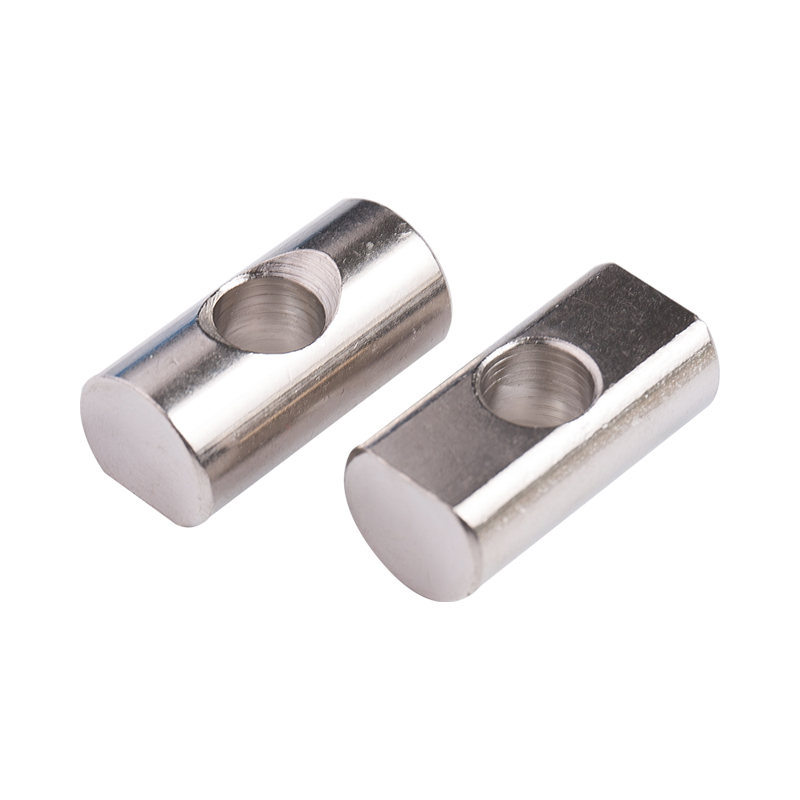
Precision Slotted Oval Head Shoulder Screws for Customized Industrial Applications Slotted oval head shoulder screws are specialized fasteners designed for applications that require accurate positioni...
READ MOREAutomotive Carbon Steel Retaining Pins Manufacturer
-
HYS-0111
-
HYS-0112
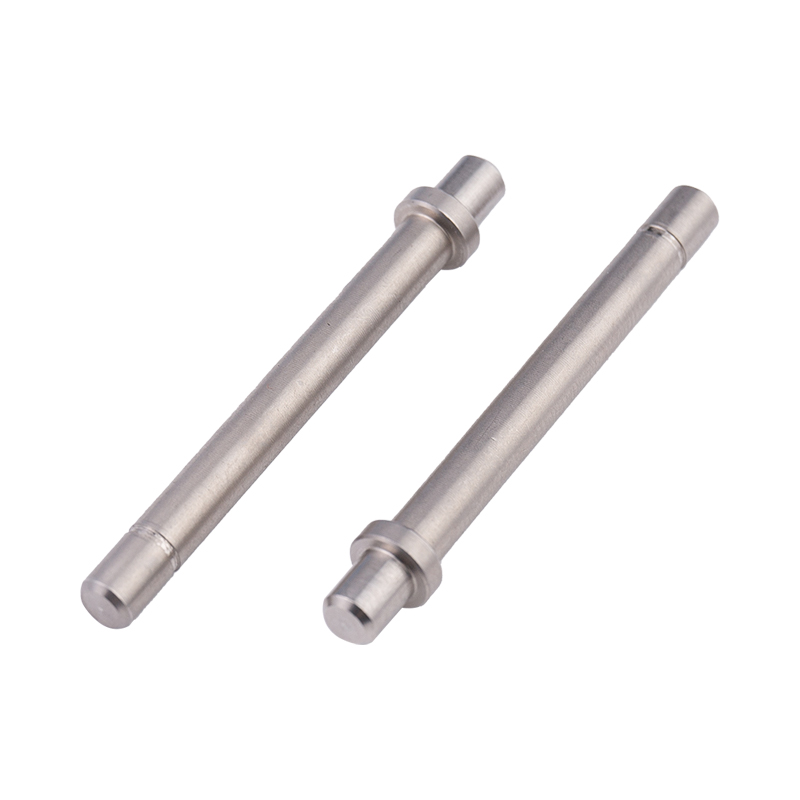
Automotive carbon steel retaining pins are commonly used to connect and secure different components in automobile structures. They are usually made of carbon steel, a common metal material that has enough strength and hardness to withstand the various forces and pressures during car operation. These carbon steel retaining pins, which typically take the form of retaining pins, spring pins, pins, etc., are designed to ensure that automotive components remain securely connected while in operation to ensure vehicle safety and reliability. They may be used to connect body structures, engine components, chassis components, etc., playing an important role in fixing and connecting. Also used to achieve relative position and angle adjustment between components. For example, in the suspension system, the fixed pin can change the relative position of the wheel and the body by adjusting its position and angle, thereby adjusting the vehicle's suspension height, suspension stiffness and handling performance. This flexibility makes retaining pins important in a wide range of applications in automotive manufacturing and repair.
We have our own Automotive Carbon Steel Retaining Pins factory in China, so we can OEM/ODM standard and non-standard fasteners, Precision Hardware Parts and accessories. We export and wholesale Automotive Carbon Steel Retaining Pins since 2006.
About
Kunshan Hong Yong Sheng Precision Hardware Products Co.,Ltd.
Kunshan Hong Yongsheng Precision Hardware Products Co., Ltd. was established in September 2006, is a professional China Automotive Carbon Steel Retaining Pins manufacturer and factory, the production of various types of precision parts, PEM series of standard fasteners, non-standard parts of the custom enterprise, the company's production equipment imported from Japan CNC computer numerically-controlled lathes, Taiwan CAM walking knife type high-precision automatic lathes, and various types of auxiliary equipment, precision testing equipment, totaling more than 100 units, monthly output of up to 5 million pieces. Our products are used in many fields such as electronic communications, computer monitors and chassis, automotive parts, 3C household appliances, medical equipment, pneumatic machinery, sports equipment, furniture, lighting, aerospace, military, photovoltaic, intelligent industry and so on, and we have the technical ability to develop new products.
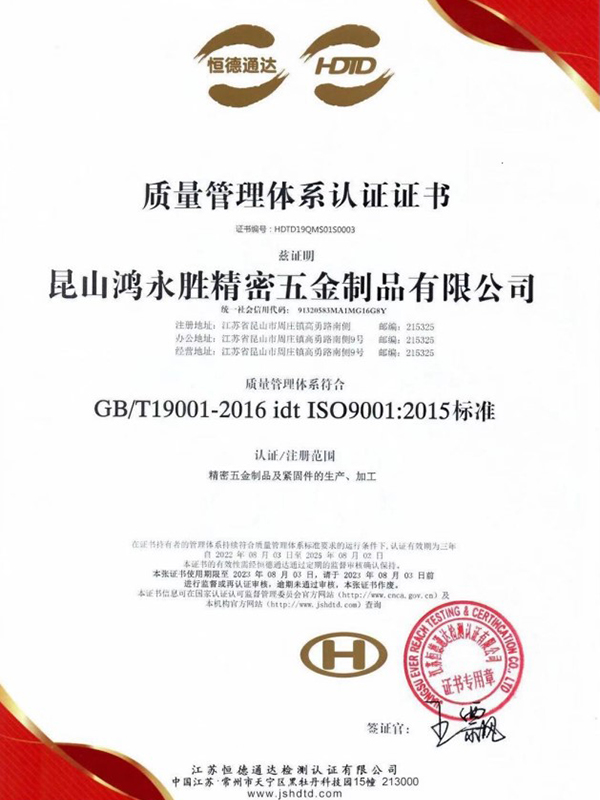
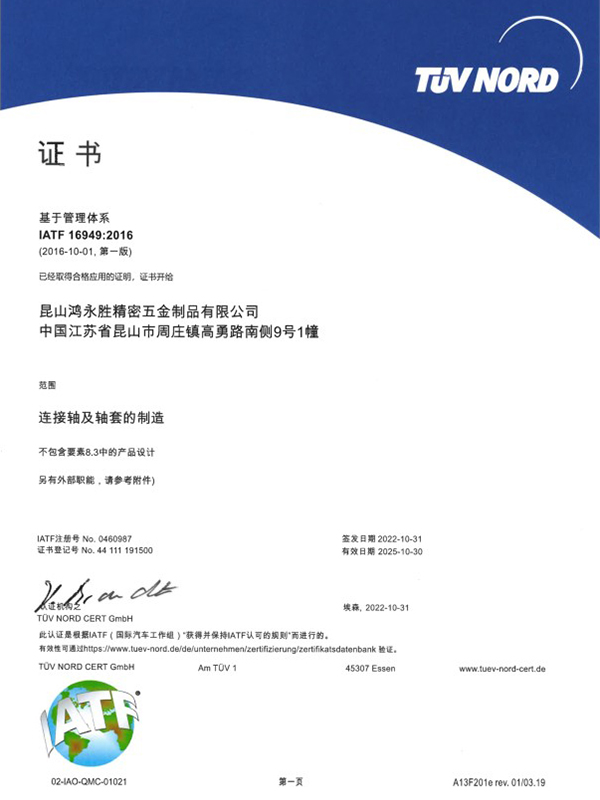
The company has obtained two quality system management certificates of ISO9001:2015 and IATF16949:2016.
At present, the company has been for Japan, Sweden, the United States, Singapore, Malaysia, Hong Kong and the Pearl River Delta and many other customers to provide services, now the main customers are: Japan Sharp (SHARP), Japan SMC, Japan Panasonic (Panasonic), the Swedish automobile VOVOL, etc., all the fixed assets investment of more than 30 million dollars, welcome friends from all walks of life to the factory to visit, study, consulting and come! We welcome friends from all walks of life to visit our factory, investigate, consult and come to us for sample processing.
We are looking forward to establishing a good business partnership with you with mutual trust and reciprocity!
The company has obtained two quality system management certificates of ISO9001:2015 and IATF16949:2016.
At present, the company has been for Japan, Sweden, the United States, Singapore, Malaysia, Hong Kong and the Pearl River Delta and many other customers to provide services, now the main customers are: Japan Sharp (SHARP), Japan SMC, Japan Panasonic (Panasonic), the Swedish automobile VOVOL, etc., all the fixed assets investment of more than 30 million dollars, welcome friends from all walks of life to the factory to visit, study, consulting and come! We welcome friends from all walks of life to visit our factory, investigate, consult and come to us for sample processing.
We are looking forward to establishing a good business partnership with you with mutual trust and reciprocity!
Certificate Of Honor
News
-
-
Understanding OEM/ODM Gear Manufacturing OEM/ODM gear manufacturing refers to producing gears according to a buyer's specifications (OEM) or designing and producing gears based on a buyer's functional...
READ MORE -
What Automotive Embedded Bushings Do Inside a Vehicle Automotive embedded bushings are components permanently molded or pressed into plastic, rubber, or metal housings to create a fixed bearing surfac...
READ MORE -
From Raw Bar Stock to Finished Fastener: How CNC Machining Works Precision fasteners such as hex nuts, PEM standard fasteners, and custom non-standard hardware all begin as plain metal bar stock, usua...
READ MORE
Automotive Carbon Steel Retaining Pins Industry knowledge
What should we pay attention to when assembling automotive carbon steel retaining pins?
In the process of automotive manufacturing and maintenance, automotive carbon steel retaining pins play an indispensable role. They are used to ensure precise alignment and secure connections between automotive components. However, assembling automotive carbon steel retaining pins is not simply an insertion process; it requires following certain steps and precautions to ensure their correct and effective operation.
Cleaning and Inspection: Before assembling automotive carbon steel retaining pins, it is essential to ensure cleanliness in the assembly area. Any oil, dust, or debris could affect the assembly quality of the automotive carbon steel retaining pins. Additionally, inspect the automotive carbon steel retaining pins and assembly holes for any damage or deformation. If necessary, replace with new automotive carbon steel retaining pins or repair the assembly holes.
Proper Selection of automotive carbon steel retaining pins: Different models and specifications of vehicles may require the use of different types of automotive carbon steel retaining pins. Before assembly, ensure that the selected automotive carbon steel retaining pins match the automotive components and assembly holes. Incorrect automotive carbon steel retaining pins may lead to assembly difficulties, inaccurate positioning, or component looseness.
Correct Assembly:
Pre-lubrication: Before assembly, apply a sufficient amount of lubricating oil or grease on the automotive carbon steel retaining pins and assembly holes to reduce friction and resistance during assembly.
Alignment: Ensure that the automotive carbon steel retaining pins align with the assembly holes, avoiding forced insertion or misalignment. Misaligned automotive carbon steel retaining pins may cause assembly difficulties or damage to components.
Moderate Force: Use appropriate tools (such as wrenches, screwdrivers, etc.) to gently push the automotive carbon steel retaining pins into the assembly holes. Avoid using excessive force to prevent damage to the automotive carbon steel retaining pins or assembly holes.
Position Check: After assembly, check whether the automotive carbon steel retaining pins are fully inserted and in the correct position. If necessary, use calipers or other measuring tools for verification.
Safety Precautions:
During the assembly process, observe safety practices. Avoid placing debris or tools in the assembly area to prevent accidents. Also, ensure that assembly personnel have the relevant knowledge and skills and follow operating procedures and safety standards.
Assembling automotive carbon steel retaining pins in automobiles requires careful attention and patience. Following the above precautions can ensure the correct assembly and effective operation of automotive carbon steel retaining pins, thereby ensuring the safety and stability of automotive operations.

If you are interested in our products, please consult us
Kunshan Hong Yong Sheng Precision Hardware Products Co.,Ltd. All Rights Reserved. OEM/ODM Automotive Carbon Steel Retaining Pins Manufacturer