

 русский
 Español
 中文简体
中文简体

Nuts, Bolts and Cotter Pins: How They Work, How to Measure, and More
Industry News-Content
- 1 How Do Nuts and Bolts Work
- 2 How Is the Length of a Bolt Measured
- 3 What Size Bolt Has a 9/16 Head and What Size Has a 7/16 Head
- 4 Next Size Up from 5/8 Inch Bolt
- 5 Bolt with Hole for Cotter Pin: How Castellated and Drilled Shank Bolts Work
- 6 How Do You Measure a Cotter Pin
- 7 How to Remove Anchor Bolts from Concrete
- 8 Common Fastener Measurement Questions: Quick Reference
How Do Nuts and Bolts Work
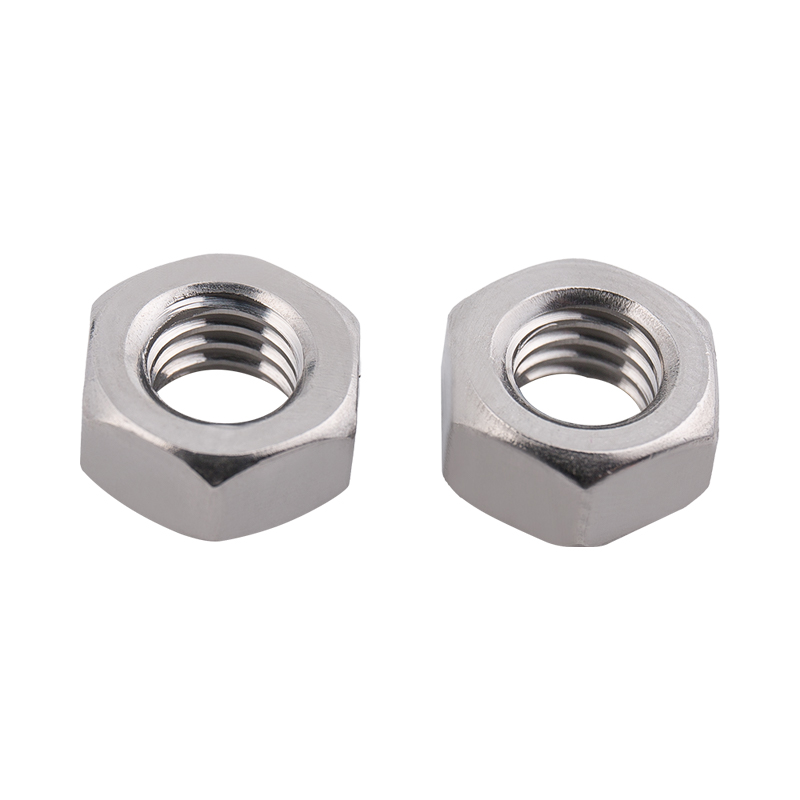
Nuts and bolts work by converting rotational force (torque) into linear clamping force. When a bolt is threaded through a hole and a nut is tightened onto the threaded shank, the helical thread form acts as an inclined plane wrapped around the bolt shaft. Tightening the nut advances it along the thread helix, drawing the clamped materials together and generating a compressive clamping load -- the tensile preload in the bolt -- that holds the joint together.
The joint does not rely primarily on the bolt head and nut physically blocking separation. It relies on friction generated by the clamping force between mating surfaces. As long as the external load trying to separate the joint does not exceed the clamping force the bolt exerts, the fastened parts stay together. This is why proper torquing of bolts is essential: undertightening leaves insufficient clamping force; overtightening can yield the bolt shank, permanently reducing its clamping capacity or breaking it entirely.
The thread form most common in industrial fasteners -- the unified (UN) thread in imperial measurement and the ISO metric thread -- has a specific flank angle, pitch, and root radius designed to maximize load-carrying capacity while minimizing the risk of thread stripping. The nut thread and bolt thread are manufactured to mating tolerances so that they engage over a defined contact length, distributing the clamping load across multiple thread turns rather than concentrating it at a single point.
Bolts differ from screws in a precise technical sense: a bolt passes through a clearance hole and is secured by a nut on the opposite side, while a screw threads directly into a tapped hole or a material. In common usage the distinction is often blurred, but the mechanical principle -- thread-generated clamping force -- is the same in both cases.
How Is the Length of a Bolt Measured
Bolt length is measured differently depending on the head type, and using the wrong measurement convention is a common source of specification errors.
For most bolt head types -- hex head, socket head cap screw, carriage bolt, and pan head -- length is measured from the underside of the head to the end of the threaded shank. The head itself is not included in the stated length. This is the dimension that determines how much of the bolt will pass through the material being fastened and engage the nut or tapped hole on the other side.
The exception is countersunk (flat head) fasteners. Because a countersunk head sits flush with or below the surface of the material, the entire fastener including the head is embedded in the joint. For countersunk bolts and screws, length is therefore measured from the top of the head to the end of the shank -- the full overall length of the fastener.
When selecting bolt length for a given application, the required grip length (the thickness of all materials being clamped together) plus the engagement length in the nut or tapped hole determines the minimum shank length needed. For hex nuts, the standard engagement is approximately equal to the nominal bolt diameter. A bolt that is too short will not achieve full nut engagement; a bolt that is excessively long wastes material and may interfere with adjacent components or require a non-standard nut.
What Size Bolt Has a 9/16 Head and What Size Has a 7/16 Head
Hex bolt head sizes in the unified inch (imperial) system follow a defined relationship between the bolt's nominal diameter and the across-flats (AF) dimension of the hex head. These are the standard relationships for unified coarse (UNC) and unified fine (UNF) hex bolts manufactured to ASME B18.2.1:
| Bolt Nominal Diameter | Standard Hex Head Width (Across Flats) | Typical Wrench / Socket Size |
|---|---|---|
| 1/4 inch | 7/16 inch | 7/16 inch |
| 5/16 inch | 1/2 inch | 1/2 inch |
| 3/8 inch | 9/16 inch | 9/16 inch |
| 7/16 inch | 5/8 inch | 5/8 inch |
| 1/2 inch | 3/4 inch | 3/4 inch |
| 9/16 inch | 13/16 inch | 13/16 inch |
| 5/8 inch | 15/16 inch | 15/16 inch |
| 3/4 inch | 1-1/8 inch | 1-1/8 inch |
A bolt with a 9/16 inch head is a 3/8 inch bolt. A 9/16 inch wrench or socket is what you need to tighten or remove it.
A bolt with a 7/16 inch head is a 1/4 inch bolt. The 7/16 inch across-flats dimension is standard for 1/4-20 UNC and 1/4-28 UNF hex bolts.
Note that some bolt grades and manufacturers use a reduced-height or reduced-width head as a deliberate design choice (flange bolts, structural bolts, and some metric equivalents), so the relationship above applies to standard full-size hex bolts. If the head dimension does not match the table, checking whether the fastener is metric, a non-standard grade, or a reduced-head variant is the next step.
Next Size Up from 5/8 Inch Bolt
In the unified inch fastener series, the standard nominal bolt diameters increase in defined steps. The progression above 5/8 inch is as follows: 5/8 inch, 3/4 inch, 7/8 inch, 1 inch, and so on in 1/8 inch increments for the most common sizes.
The next standard size up from a 5/8 inch bolt is 3/4 inch. A 3/4-10 UNC bolt (coarse thread) or 3/4-16 UNF bolt (fine thread) is the standard next step in the unified inch series. The corresponding hex head width across flats for a 3/4 inch bolt is 1-1/8 inches, and the standard nut size is also 1-1/8 inches across flats.
If the application is metric, the closest metric equivalents to 5/8 inch (15.875mm) are M16 (16mm diameter) as the practical equivalent, with M20 (20mm) as the next size up in the standard metric coarse thread series. However, metric and unified inch fasteners are not interchangeable -- thread pitch and form differ, and mixing standards in a joint is a serious engineering and safety error.
Bolt with Hole for Cotter Pin: How Castellated and Drilled Shank Bolts Work
A bolt with a hole through the threaded end of the shank -- often called a drilled shank bolt, cotter pin bolt, or clevis bolt -- is designed to be secured against loosening by a cotter pin (also called a split pin or cotter key) inserted through the hole after the nut has been tightened. The cotter pin is bent after insertion so that it cannot back out, creating a positive mechanical lock that prevents the nut from rotating and backing off the bolt regardless of vibration, shock, or cyclic loading.
This locking method is used in safety-critical applications where thread friction alone is considered insufficient to guarantee that the nut will not loosen under service conditions. Common applications include wheel bearing retention, steering linkages, brake clevis pins, agricultural implement pivot joints, and landing gear assemblies in aviation. Anywhere that nut loosening could lead to catastrophic assembly separation, a cotter-pinned fastener provides positive retention that does not depend on friction or prevailing torque features.
Castellated nuts (also called castle nuts or slotted nuts) are specifically designed to work with drilled shank bolts. The nut has a series of radial slots around its top face. After the nut is tightened to the specified torque, the bolt hole and one pair of nut slots are aligned (by adjusting torque within an allowed range or by advancing slightly past the specified torque), and a cotter pin is inserted through both. This arrangement locks the nut positively to the bolt while still allowing the assembly to be disassembled by removing the cotter pin.
Drilled shank bolts are specified by nominal diameter, thread pitch, and grip length in the same way as standard hex bolts, with the additional specification of the cotter pin hole diameter and its distance from the end of the shank. The hole diameter must be matched to the cotter pin size to ensure the pin seats correctly and can be bent without excessive deformation or risk of breakage during installation.
How Do You Measure a Cotter Pin
A cotter pin (split pin) is measured by two dimensions: wire diameter and length. Understanding both is necessary to select the correct pin for a given application.
Wire Diameter
The wire diameter is the diameter of the individual wire leg of the cotter pin before it is folded into its hairpin shape. A cotter pin is formed by folding a single length of wire in half, so the loop end and both legs have the same wire diameter. The wire diameter determines which hole size the cotter pin fits: the pin must pass freely through the hole in the bolt shank without excessive play. Standard cotter pin wire diameters in the unified inch series range from 1/32 inch through 1/2 inch, with corresponding recommended hole sizes specified in ASME B18.8.1.
When measuring an existing cotter pin, measure the diameter of one of the straight legs (not the loop end, which may be slightly deformed) with a vernier caliper or micrometer. The overall loop width of the assembled pin is approximately twice the wire diameter plus a small gap between the two legs, but this overall width is not the dimension used to specify or match a cotter pin to a hole.
Length
Cotter pin length is measured from the inside of the loop (the closed end) to the tip of the shorter leg. This represents the usable length of the pin -- the amount available to pass through the hole and be bent to retain the pin in place. The length must be sufficient to extend far enough beyond the hole to allow both legs to be bent: one leg bent over the flat end of the bolt and the other bent back against the nut or shank surface. A pin that is too short cannot be bent adequately; a pin that is excessively long produces a bent end that protrudes and creates an interference or injury hazard.
Standard selection practice is to choose a cotter pin whose length is approximately 1.5 to 2 times the diameter of the bolt shank at the hole location. This provides adequate material for bending without excessive overhang.
| Cotter Pin Wire Diameter | Recommended Hole Diameter (Min) | Typical Bolt Diameter Range |
|---|---|---|
| 1/16 inch | 0.075 inch | 3/16 to 5/16 inch |
| 3/32 inch | 0.109 inch | 5/16 to 1/2 inch |
| 1/8 inch | 0.141 inch | 1/2 to 3/4 inch |
| 5/32 inch | 0.172 inch | 3/4 to 1 inch |
| 3/16 inch | 0.213 inch | 1 to 1-1/4 inch |
How to Remove Anchor Bolts from Concrete
Anchor bolt removal from concrete depends on the type of anchor installed and the condition of the surrounding concrete. The approach varies significantly between cast-in-place anchor bolts (set during concrete pouring), mechanical expansion anchors, chemical adhesive anchors, and wedge anchors. Each type requires a different removal strategy.
Cutting Flush with the Surface
The simplest and most commonly used approach for anchor bolts that do not need to be reused is cutting the bolt flush with the concrete surface using an angle grinder with a metal cutting disc, a reciprocating saw with a metal blade, or an oxy-acetylene torch for larger diameter anchors. Cutting flush is appropriate when the anchor will not be needed again and the remaining embedded portion does not create a structural or interference problem. The cut end can be ground smooth and, if necessary, the stub can be capped with epoxy filler to prevent moisture ingress into the anchor hole.
Removing Expansion and Wedge Anchors
Mechanical expansion anchors (wedge anchors, sleeve anchors, and drop-in anchors) work by expanding a mechanical element against the walls of the drilled hole. Once expanded, they cannot be unscrewed or pulled out cleanly without damaging the surrounding concrete. The practical removal options are:
- Drive the anchor deeper into the concrete: For through-hole applications where the back face of the concrete is accessible and the bolt is not needed again, the anchor can sometimes be driven further into the hole using a punch and hammer, below the surface level, allowing the hole to be filled. This works for smaller anchors in concrete that is not heavily reinforced.
- Core drill around the anchor: A diamond core drill bit of appropriate diameter can be used to core out the concrete surrounding the anchor, removing the entire anchor and a cylinder of concrete together. The resulting void is then filled with non-shrink grout and the surface leveled. This is the cleanest option but requires core drilling equipment and generates significant debris.
- Chisel and break out: For exposed anchors in accessible locations, a cold chisel and heavy hammer or an electric chipping hammer can break the concrete around the anchor to free it. This method damages the surrounding concrete surface and is not suitable where a clean finish is required.
Removing Cast-In Anchor Bolts
Cast-in anchor bolts set in concrete during pouring -- L-bolts, J-bolts, and headed anchor rods -- are embedded with a hooked or headed end that provides mechanical interlock with the cured concrete. Removing these without breaking the surrounding concrete is generally not possible. The options are cutting flush at the surface (as above), coring around the bolt, or in some cases heating the bolt to soften any non-structural fill material around the embedded shank if the concrete design allows thermal exposure.
For structural applications -- foundation anchor bolts for steel columns, equipment base plates, or load-bearing connections -- anchor bolt removal or modification should be evaluated by a structural engineer before any work is undertaken. The anchor bolts are part of the load path of the structure, and removing or weakening them without understanding the structural implications can compromise the integrity of the connection.
Removing Chemical Adhesive Anchors
Chemical adhesive anchors -- threaded rods or bolts set in epoxy, polyester, or vinylester adhesive -- bond through chemical adhesion and mechanical interlock with the roughened walls of the drilled hole. The adhesive bond is effectively permanent at room temperature, and most chemical anchors cannot be removed without either cutting the exposed portion flush or coring out the surrounding concrete. Heating the concrete locally with a heat gun can soften some adhesive formulations sufficiently to reduce bond strength, but this approach is unreliable on standard structural epoxy adhesives and risks damaging the surrounding concrete if excessive heat is applied.
Common Fastener Measurement Questions: Quick Reference
The following answers address the most frequently encountered fastener measurement and identification questions in practical maintenance and assembly work.
How to Identify an Unknown Bolt Size
To identify an unknown bolt, measure three things: the shank diameter (measured across the unthreaded portion of the shank with a caliper), the thread pitch (using a thread pitch gauge or by counting threads over a known length), and the overall grip length. The shank diameter and thread pitch together define the bolt specification -- for example, 3/8-16 UNC means 3/8 inch diameter and 16 threads per inch, coarse series. Comparing these measurements to a standard fastener chart confirms the designation. If the bolt appears to be metric, measure the diameter in millimeters and the pitch in millimeters per thread using a metric pitch gauge.
Why the Grip Length Matters
Using a bolt that is too short for the joint places the thread engagement zone -- the weakest part of the bolt in shear -- within the shear plane of the joint rather than in the clear zone above the nut. Bolts in shear applications (structural connections, clevis joints, pivot pins) should be sized so that the unthreaded shank passes through the shear plane, with threads emerging only in the clamped material zone above or below the shear line. Thread engagement in the shear plane significantly reduces the effective shear strength of the connection and is a common source of fastener failure in improperly specified joints.
Metric vs. Imperial Fastener Identification
Metric and imperial fasteners are not interchangeable and attempting to mix them is a common and potentially dangerous error. The fastest way to distinguish them without a thread gauge is to attempt to thread a known metric nut onto the bolt and a known imperial nut onto the bolt -- only the correct match will thread on smoothly without binding or cross-threading. A vernier caliper reading in millimeters will show that common metric bolt diameters (M6, M8, M10, M12) produce round millimeter values, while imperial bolts produce fractional inch values that convert to non-round millimeter numbers (3/8 inch equals 9.525mm, for example).
Grade markings on the bolt head also provide identification guidance: imperial grade 5 bolts carry three radial lines, grade 8 bolts carry six radial lines, while metric property class bolts are marked with a numerical designation (8.8, 10.9, 12.9) that indicates the tensile strength and yield ratio of the fastener material.
Our Products //
Hot Products

If you are interested in our products, please consult us
Kunshan Hong Yong Sheng Precision Hardware Products Co.,Ltd. All Rights Reserved. Customised Fastener Manufacturer in China
