русский
 Español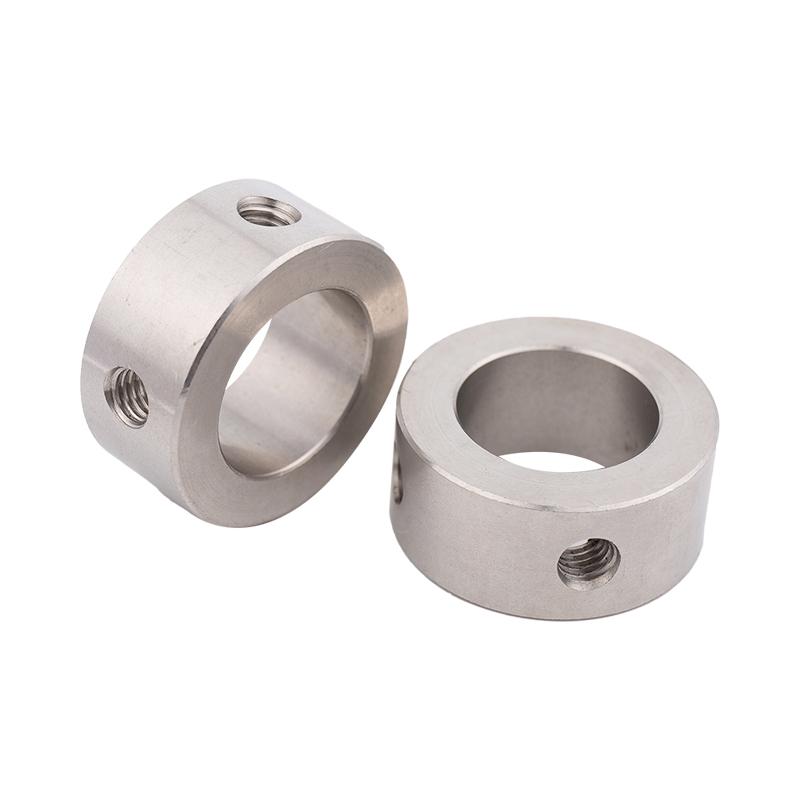
A #10 screw has a major diameter of 0.190 inches (4.83 mm), a standard screw nut has six sides (hexagonal), and a wood screw is measured by three dimensions: shank diameter (gauge number), length fro...
READ MORELocking Retaining Ring Manufacturer
Locking retaining ring is a common mechanical connector, mainly used in mechanisms that make it detachable through mechanical hooks to achieve fastening and connection between parts. This kind of retaining ring is usually made of metal materials, has elastic and adjustable characteristics, and can be used in different engineering and assembly scenarios. It is designed to provide a reliable connection while allowing the user to disassemble and reconnect when needed, simplifying maintenance and repairs. Due to the characteristics of locking retaining rings, they are widely used in mechanical assembly and equipment maintenance in various fields, such as automobile manufacturing, mechanical engineering, furniture manufacturing, etc.
We have our own Locking Retaining Ring factory in China, so we can OEM/ODM standard and non-standard fasteners, Precision Hardware Parts and accessories. We export and wholesale Locking Retaining Ring since 2006.
About
Kunshan Hong Yong Sheng Precision Hardware Products Co.,Ltd.
Kunshan Hong Yongsheng Precision Hardware Products Co., Ltd. was established in September 2006, is a professional China Locking Retaining Ring manufacturer and factory, the production of various types of precision parts, PEM series of standard fasteners, non-standard parts of the custom enterprise, the company's production equipment imported from Japan CNC computer numerically-controlled lathes, Taiwan CAM walking knife type high-precision automatic lathes, and various types of auxiliary equipment, precision testing equipment, totaling more than 100 units, monthly output of up to 5 million pieces. Our products are used in many fields such as electronic communications, computer monitors and chassis, automotive parts, 3C household appliances, medical equipment, pneumatic machinery, sports equipment, furniture, lighting, aerospace, military, photovoltaic, intelligent industry and so on, and we have the technical ability to develop new products.
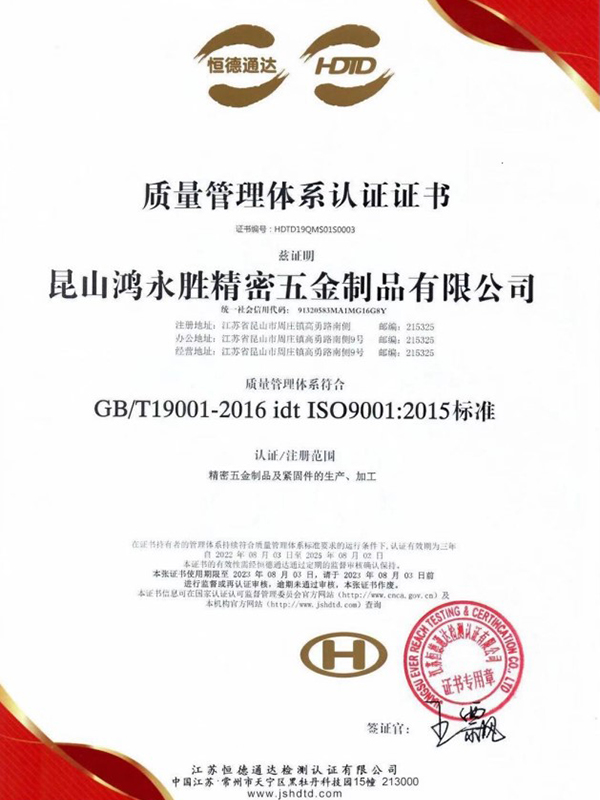
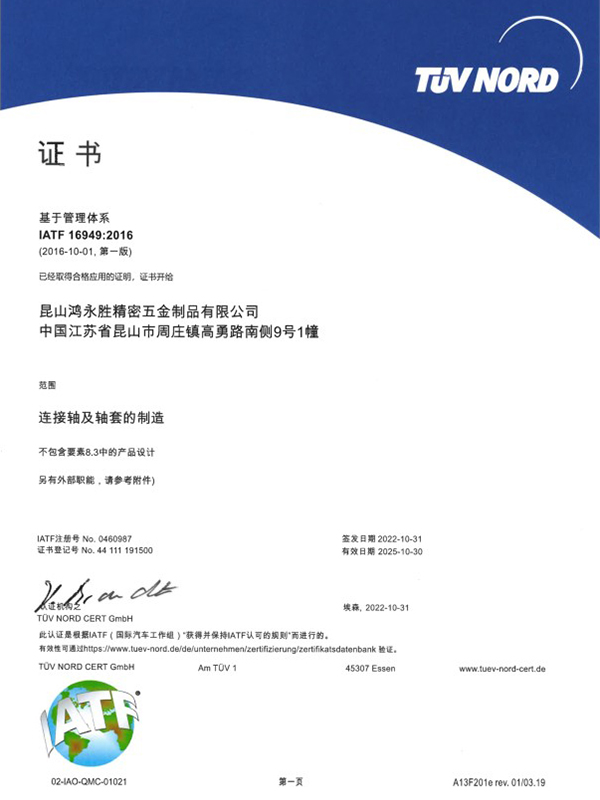
The company has obtained two quality system management certificates of ISO9001:2015 and IATF16949:2016.
At present, the company has been for Japan, Sweden, the United States, Singapore, Malaysia, Hong Kong and the Pearl River Delta and many other customers to provide services, now the main customers are: Japan Sharp (SHARP), Japan SMC, Japan Panasonic (Panasonic), the Swedish automobile VOVOL, etc., all the fixed assets investment of more than 30 million dollars, welcome friends from all walks of life to the factory to visit, study, consulting and come! We welcome friends from all walks of life to visit our factory, investigate, consult and come to us for sample processing.
We are looking forward to establishing a good business partnership with you with mutual trust and reciprocity!
The company has obtained two quality system management certificates of ISO9001:2015 and IATF16949:2016.
At present, the company has been for Japan, Sweden, the United States, Singapore, Malaysia, Hong Kong and the Pearl River Delta and many other customers to provide services, now the main customers are: Japan Sharp (SHARP), Japan SMC, Japan Panasonic (Panasonic), the Swedish automobile VOVOL, etc., all the fixed assets investment of more than 30 million dollars, welcome friends from all walks of life to the factory to visit, study, consulting and come! We welcome friends from all walks of life to visit our factory, investigate, consult and come to us for sample processing.
We are looking forward to establishing a good business partnership with you with mutual trust and reciprocity!
Certificate Of Honor
News
-
-
Quick-Reference Answers to the Most Common Fastener Size Questions Most fastener sizing questions have a single definitive answer. Here are the most-searched ones up front: What size bolt has a 7/16...
READ MORE -
We are pleased to announce the launch of our new product showcase video, now available on our website. This video provides visitors with an comprehensive overview of Kunshan Hongyongsheng Hardware Pro...
READ MORE -
Kunshan Hong Yong Sheng Precision Hardware Products Co., Ltd. officially resumed operations with a traditional opening ceremony at its facility. The celebration began at the factory entrance, where fi...
READ MORE
Locking Retaining Ring Industry knowledge
What are the advantages and applications of locking retaining rings?
In the ever-evolving world of manufacturing, innovative solutions are constantly being developed to enhance efficiency and safety. One such groundbreaking invention is the locking retaining ring. These simple yet powerful devices are revolutionizing the industry, providing secure fastening solutions in a wide range of applications.
Locking retaining rings, also known as snap rings or circlips, are small, versatile components used to secure and locate various parts in mechanical assemblies. Unlike traditional retaining rings, locking retaining rings feature a unique design that ensures a more secure and reliable hold. They are typically made from durable materials such as stainless steel or carbon steel, making them resistant to corrosion and capable of withstanding high pressures and temperatures.
One of the key advantages of locking retaining rings is their ease of installation. Unlike other fastening methods that require complex tools or machinery, locking retaining rings can be easily installed and removed using simple hand tools, saving valuable time and effort in the manufacturing process. This simplicity also allows for quick repairs and maintenance, minimizing downtime in production lines.
The applications of locking retaining rings are vast and varied. They are commonly used in industries such as automotive, aerospace, electronics, and machinery manufacturing. In automotive applications, locking retaining rings secure components like gears, axles, and bearings, ensuring their precise alignment and preventing any unwanted movement. In the aerospace industry, these rings are used to secure critical components in aircraft engines, maintaining the highest levels of safety and reliability.
Locking retaining rings are a game-changer in the manufacturing industry, providing a reliable and efficient fastening solution for a wide range of applications. Their ease of installation, durability, and versatility make them an indispensable tool for engineers and technicians alike. As manufacturing processes continue to evolve, it is clear that locking retaining rings are here to stay, reshaping the industry one secure hold at a time.

If you are interested in our products, please consult us
Kunshan Hong Yong Sheng Precision Hardware Products Co.,Ltd. All Rights Reserved. OEM/ODM Locking Retaining Ring Manufacturer