русский
 Español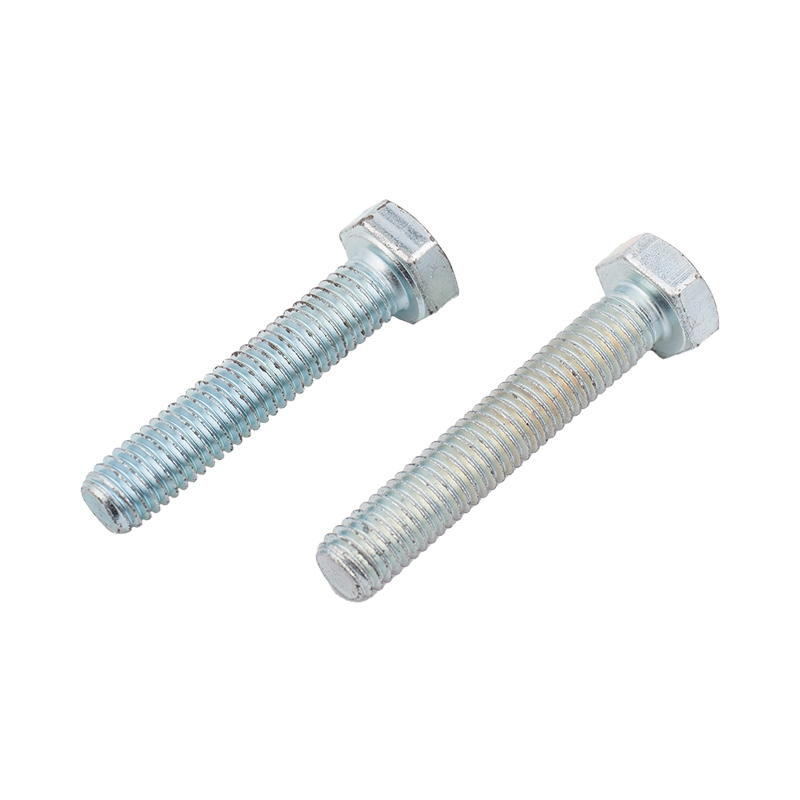
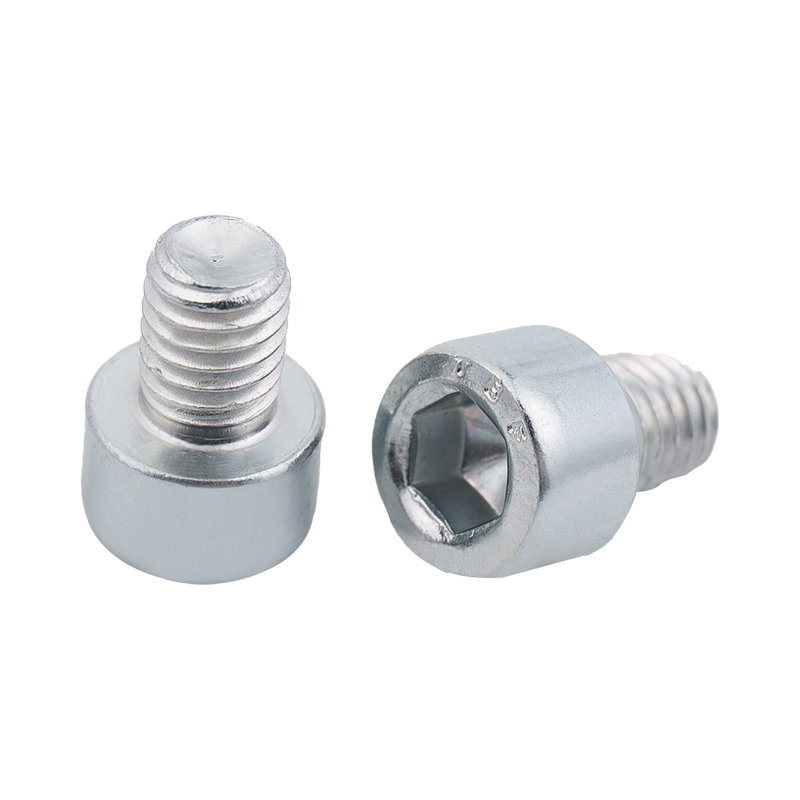
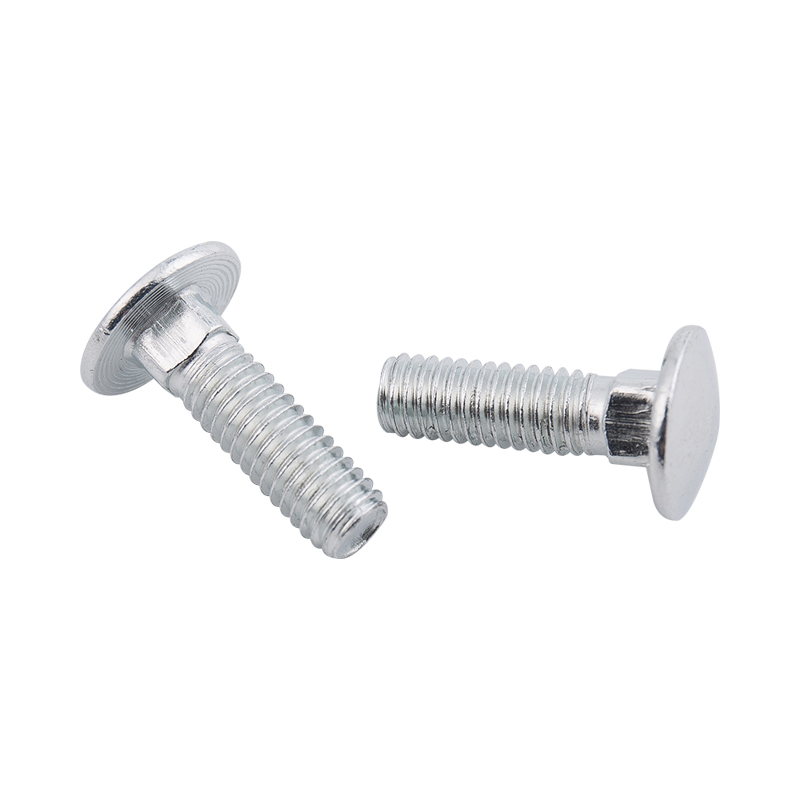
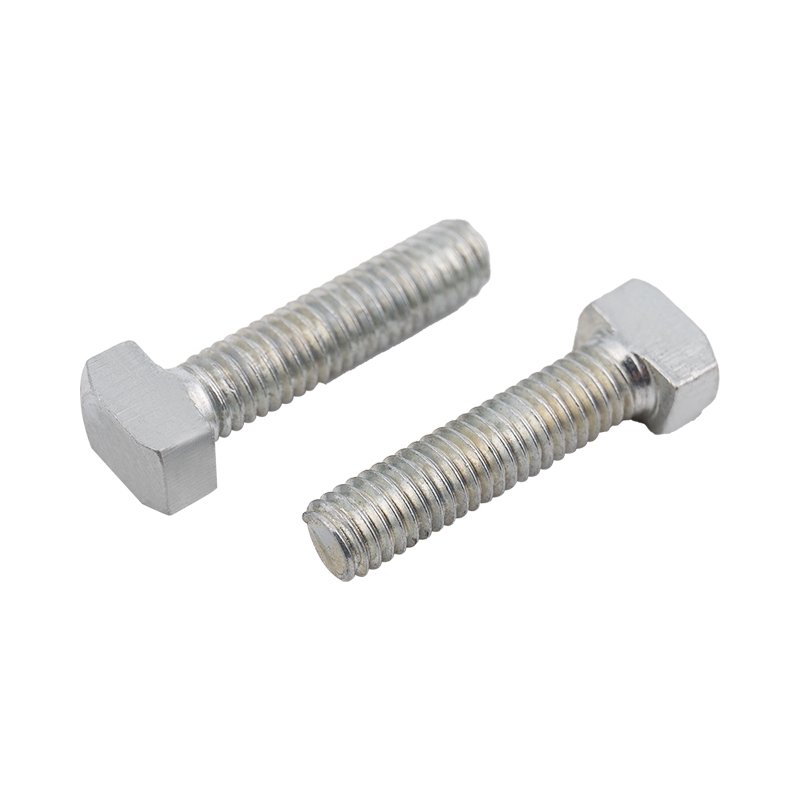
A #10 screw has a major diameter of 0.190 inches (4.83 mm), a standard screw nut has six sides (hexagonal), and a wood screw is measured by three dimensions: shank diameter (gauge number), length fro...
READ MORECarbon Steel Bolt Manufacturer
Carbon steel bolt is a common mechanical connecting part, usually composed of screw, nut, spiral spring pad and flat pad, used to connect various mechanical equipment and structural components. With simple structure, easy installation, uniform force, good reliability and sealing, they are widely used in various fields such as industry, mining, ship, machinery and so on.
We have our own Carbon Steel Bolt factory in China, so we can OEM/ODM standard and non-standard fasteners, Precision Hardware Parts and accessories. We export and wholesale Carbon Steel Bolt since 2006.
About
Kunshan Hong Yong Sheng Precision Hardware Products Co.,Ltd.
Kunshan Hong Yongsheng Precision Hardware Products Co., Ltd. was established in September 2006, is a professional China Carbon Steel Bolt manufacturer and factory, the production of various types of precision parts, PEM series of standard fasteners, non-standard parts of the custom enterprise, the company's production equipment imported from Japan CNC computer numerically-controlled lathes, Taiwan CAM walking knife type high-precision automatic lathes, and various types of auxiliary equipment, precision testing equipment, totaling more than 100 units, monthly output of up to 5 million pieces. Our products are used in many fields such as electronic communications, computer monitors and chassis, automotive parts, 3C household appliances, medical equipment, pneumatic machinery, sports equipment, furniture, lighting, aerospace, military, photovoltaic, intelligent industry and so on, and we have the technical ability to develop new products.
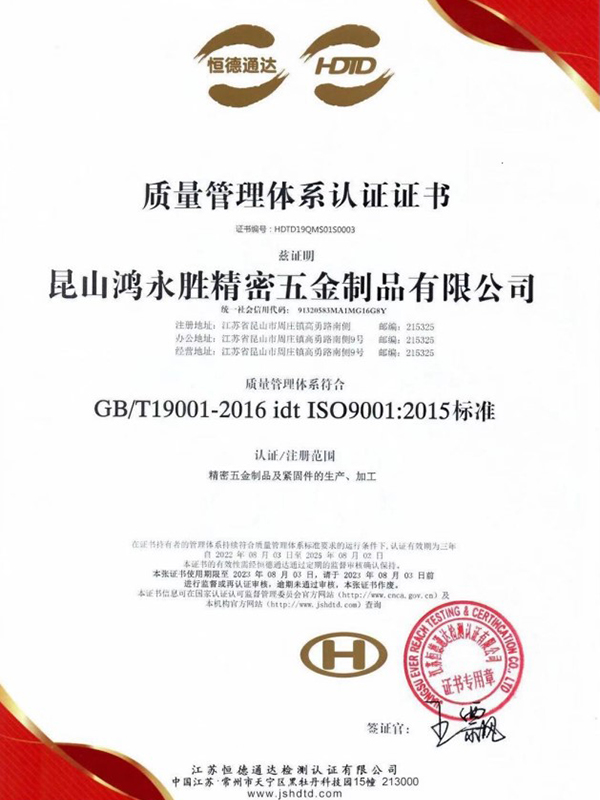
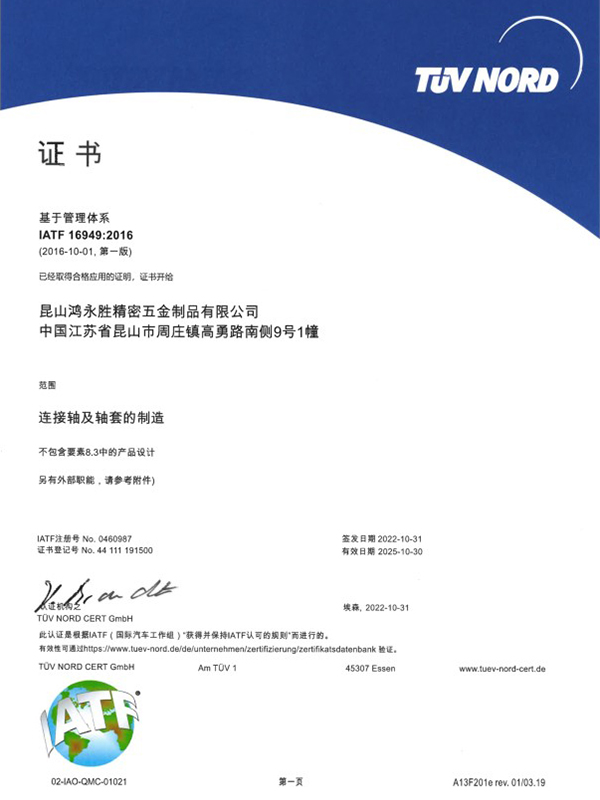
The company has obtained two quality system management certificates of ISO9001:2015 and IATF16949:2016.
At present, the company has been for Japan, Sweden, the United States, Singapore, Malaysia, Hong Kong and the Pearl River Delta and many other customers to provide services, now the main customers are: Japan Sharp (SHARP), Japan SMC, Japan Panasonic (Panasonic), the Swedish automobile VOVOL, etc., all the fixed assets investment of more than 30 million dollars, welcome friends from all walks of life to the factory to visit, study, consulting and come! We welcome friends from all walks of life to visit our factory, investigate, consult and come to us for sample processing.
We are looking forward to establishing a good business partnership with you with mutual trust and reciprocity!
The company has obtained two quality system management certificates of ISO9001:2015 and IATF16949:2016.
At present, the company has been for Japan, Sweden, the United States, Singapore, Malaysia, Hong Kong and the Pearl River Delta and many other customers to provide services, now the main customers are: Japan Sharp (SHARP), Japan SMC, Japan Panasonic (Panasonic), the Swedish automobile VOVOL, etc., all the fixed assets investment of more than 30 million dollars, welcome friends from all walks of life to the factory to visit, study, consulting and come! We welcome friends from all walks of life to visit our factory, investigate, consult and come to us for sample processing.
We are looking forward to establishing a good business partnership with you with mutual trust and reciprocity!
Certificate Of Honor
News
-
-
Quick-Reference Answers to the Most Common Fastener Size Questions Most fastener sizing questions have a single definitive answer. Here are the most-searched ones up front: What size bolt has a 7/16...
READ MORE -
We are pleased to announce the launch of our new product showcase video, now available on our website. This video provides visitors with an comprehensive overview of Kunshan Hongyongsheng Hardware Pro...
READ MORE -
Kunshan Hong Yong Sheng Precision Hardware Products Co., Ltd. officially resumed operations with a traditional opening ceremony at its facility. The celebration began at the factory entrance, where fi...
READ MORE
Carbon Steel Bolt Industry knowledge
What are the importance and characteristics of carbon steel bolts?
When it comes to construction and engineering, one tiny but crucial component often goes unnoticed—the carbon steel bolt. These unassuming fasteners play a vital role in holding structures together, ensuring safety, and preventing disasters.
Carbon steel bolts are the workhorses of the fastener world. Made from a combination of iron and carbon, they possess exceptional strength and durability, making them ideal for heavy-duty applications. Their ability to withstand immense pressure and stress is due to the carbon content, which enhances their hardness and toughness. This means that carbon steel bolts are less likely to deform or break under extreme conditions, providing a reliable and secure connection.
The versatility of carbon steel bolts is another reason for their widespread use. No matter the industry, these bolts find their place in construction, automotive, machinery, and many other sectors. Their ability to resist corrosion and oxidation, thanks to the addition of carbon, makes them suitable for both indoor and outdoor applications. Whether it's joining steel beams, securing heavy machinery, or building bridges, carbon steel bolts are the go-to choice for engineers and builders alike.
To ensure the highest quality and reliability, it is crucial to select the right type of carbon steel bolt for the job. Different grades of carbon steel bolts exist, each with its unique properties and characteristics. For instance, Grade 8.8 bolts are commonly used in structural applications due to their high tensile strength, while Grade 4.6 bolts are suitable for less demanding tasks. By consulting with experts and adhering to industry standards, engineers can make informed decisions to guarantee the structural integrity and safety of their projects.
Although often overlooked, carbon steel bolts are the unsung heroes of construction and engineering. Their remarkable strength, versatility, and resistance to corrosion make them indispensable in various industries. By understanding their significance and selecting the appropriate grade for each application, engineers can ensure the reliability and safety of their projects. So, the next time you marvel at a towering skyscraper or a sturdy bridge, remember that it's the carbon steel bolts holding it all together—the unsung heroes of our built environment.

If you are interested in our products, please consult us
Kunshan Hong Yong Sheng Precision Hardware Products Co.,Ltd. All Rights Reserved. OEM/ODM Carbon Steel Bolt Manufacturer