

 русский
 Español
 中文简体
中文简体

What Material Should You Choose for a Flanged Bushing, and When Is Bronze the Right Answer?
Industry News-Choosing the correct material for a flanged bushing is one of the most consequential engineering decisions in any rotating or sliding assembly. Get it right, and the bushing quietly does its job for years—absorbing radial and axial loads, reducing friction, and protecting the shaft and housing from wear. Get it wrong, and you face premature failure, escalating maintenance costs, contamination of lubrication systems, and unplanned downtime. Among all the materials available for flanged bushings, bronze remains the benchmark against which others are measured. This article explains why, and provides a practical framework for evaluating whether bronze—and specifically which bronze alloy—is the right choice for your application, or whether an alternative material would serve better.
Content
- 1 What Is a Bronze Flanged Bushing and Where Is It Used
- 2 Understanding the Core Material Properties That Matter for Bushings
- 3 Why Bronze Is the Leading Material for Flanged Bushings
- 4 Comparing the Main Bronze Alloys for Flanged Bushing Applications
- 5 How Load, Speed, and Lubrication Conditions Guide Material Selection
- 6 When to Consider Alternatives to Bronze for Flanged Bushings
- 7 Practical Steps for Selecting the Right Bushing Material for Your Application
What Is a Bronze Flanged Bushing and Where Is It Used
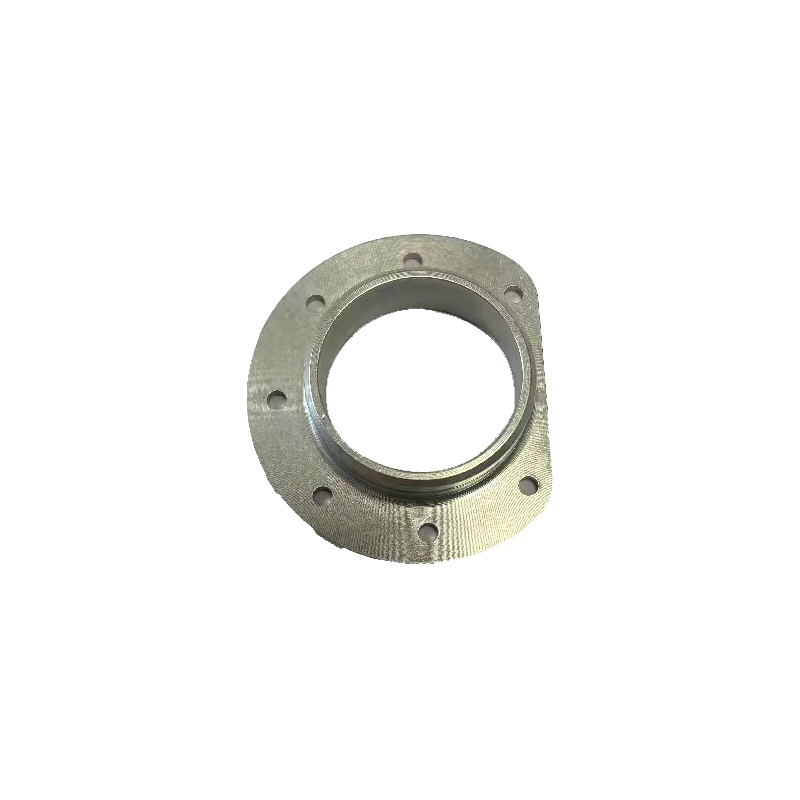
A flanged bushing is a plain bearing with a cylindrical inner bore and an outward-projecting collar—the flange—at one end. The flange serves a dual purpose: it positions the bushing axially within the housing, preventing it from being pushed through under thrust loads, and it provides a bearing surface that absorbs axial forces in addition to the radial loads handled by the cylindrical body. This geometry makes flanged bushings particularly valuable in applications where combined radial and thrust loading occurs simultaneously, such as in pivot joints, gearbox output shafts, agricultural machinery linkages, hydraulic cylinder pins, and industrial conveyor systems.
When these bushings are manufactured from bronze, they inherit a set of mechanical and tribological properties that have made the material the dominant choice in plain bearing applications for over a century. Bronze alloys offer an exceptional balance of compressive strength, conformability, embeddability of contaminant particles, thermal conductivity, and compatibility with steel shafts—all of which are critical for a bearing material operating under realistic service conditions.
Understanding the Core Material Properties That Matter for Bushings
Before comparing bronze to alternative bushing materials, it is essential to establish which material properties actually determine performance in service. Selecting a bushing material based on a single property—such as hardness or cost—without considering the full operating environment is a common and costly mistake. The following properties should drive every bushing material selection decision.
- Compressive strength: The bushing must resist deformation under the maximum load applied by the shaft. Insufficient compressive strength leads to bore distortion, loss of dimensional accuracy, and accelerated wear.
- PV rating (pressure × velocity): This combined parameter expresses the maximum allowable product of bearing pressure and sliding velocity. Every bushing material has a PV limit above which the friction-generated heat exceeds the material's ability to dissipate it, leading to thermal failure.
- Coefficient of friction: Lower friction means less heat generation, less power loss, and longer service life. Bushing materials must exhibit low friction against the shaft material—typically hardened or polished steel.
- Thermal conductivity: Materials that conduct heat away from the bearing interface more effectively maintain lower operating temperatures, which directly extends service life and expands the usable PV range.
- Embeddability: The ability to absorb small hard particles—such as dirt, metal debris, or wear products—into the bearing surface prevents these particles from acting as abrasives against the shaft. This is especially important in contaminated or outdoor environments.
- Corrosion resistance: In wet, marine, chemical, or food processing environments, the bushing material must resist oxidation and chemical attack that would compromise dimensional integrity and surface quality.
- Machinability and dimensional stability: The material must be machinable to tight tolerances and must maintain those tolerances under thermal cycling and mechanical loading in service.
Why Bronze Is the Leading Material for Flanged Bushings
Bronze alloys—copper-based materials alloyed primarily with tin, lead, aluminum, or manganese—address nearly all of the critical bushing material requirements simultaneously, which is why they dominate the flanged bushing market. Tin bronze alloys such as C93200 (SAE 660) and C90500 are the most widely used, offering compressive yield strengths in the range of 120–180 MPa, excellent conformability to shaft surface irregularities, good thermal conductivity relative to polymer alternatives, and a natural lubricity that comes from the low-shear-strength lead phase distributed through the microstructure in leaded grades.
The embeddability of bronze is particularly valuable in real-world industrial environments. When fine abrasive particles enter the bearing interface, the relatively soft bronze matrix allows these particles to become embedded below the surface rather than remaining free to score the shaft. This self-protecting behavior significantly extends shaft life in applications where perfect cleanliness cannot be guaranteed—which describes the majority of practical installations. Cast bronze flanged bushings also exhibit excellent machinability, allowing bore diameters, flange dimensions, and surface finishes to be held to tight tolerances during manufacturing, which is essential for achieving the correct interference fit in the housing and the proper running clearance on the shaft.
Comparing the Main Bronze Alloys for Flanged Bushing Applications
Not all bronze alloys perform equally across all operating conditions. Selecting the correct bronze alloy for your specific flanged bushing application requires understanding how composition affects the key performance parameters.
| Alloy | Composition | Strengths | Best Applications |
| C93200 (SAE 660) | Cu-Sn-Pb-Zn | Excellent machinability, good general-purpose bearing properties | General industrial, moderate load and speed |
| C90500 (Gun Metal) | Cu-Sn-Zn-Pb | Higher strength than SAE 660, good corrosion resistance | Marine, hydraulics, moderate-heavy loads |
| C95400 (Aluminum Bronze) | Cu-Al-Fe | Very high strength, excellent corrosion resistance, no lead | Heavy loads, corrosive environments, food/pharma |
| C86300 (Manganese Bronze) | Cu-Zn-Mn-Fe-Al | Highest strength among bronze bushing alloys | Extreme loads, low-speed pivots, structural joints |
| Oilite (Sintered Bronze) | Porous Cu-Sn | Self-lubricating, maintenance-free | Light loads, inaccessible locations, low maintenance |
How Load, Speed, and Lubrication Conditions Guide Material Selection
High Load, Low Speed Applications
In applications such as excavator bucket pins, press tooling guides, crane hook pivots, or heavy agricultural linkages, the dominant concern is compressive strength rather than PV rating. The shaft moves slowly or oscillates, so velocity is low and frictional heating is minimal. In these conditions, manganese bronze (C86300) or aluminum bronze (C95400) flanged bushings are the preferred choice. Their significantly higher compressive yield strength—often exceeding 300 MPa—ensures the bore geometry is maintained under extreme loading without permanent deformation. The relatively poor embeddability of these harder alloys is an acceptable trade-off because the slow movement velocity minimizes the impact of any abrasive particles that enter the interface.
Moderate Load, Moderate Speed Applications
For the broad middle ground of industrial applications—electric motor housings, gearbox auxiliary shafts, conveyor roller bearings, pump impeller shafts—the leaded tin bronzes such as C93200 and C90500 offer the best overall combination of properties. The lead phase provides inherent lubricity that reduces friction even when the oil film is temporarily disrupted, while the tin content provides adequate strength for the moderate loading these applications typically impose. These alloys machine cleanly to tight tolerances and are available in a wide range of standard flanged bushing sizes from stock, minimizing lead time and procurement cost.
Lubrication-Restricted or Maintenance-Free Requirements
Where regular relubrication is impractical—sealed assemblies, remote locations, food processing equipment where lubricant contamination is unacceptable, or consumer products designed for zero maintenance—sintered bronze (Oilite) flanged bushings or graphite-plugged solid bronze bushings are the appropriate solution. Sintered bronze is manufactured by compacting and sintering bronze powder to create a porous structure that is then vacuum-impregnated with oil. In service, heat generated at the bearing interface causes the oil to bleed from the pores onto the shaft surface, providing continuous lubrication without any external supply. These self-lubricating bronze bushings are limited to lower PV conditions than solid cast bronze, but within their operating envelope they are extraordinarily reliable.
When to Consider Alternatives to Bronze for Flanged Bushings
Despite bronze's outstanding credentials as a bushing material, there are specific operating scenarios where alternative materials offer superior performance and should be seriously evaluated.
- PTFE composite bushings: In applications involving very low loads, intermittent motion, or environments where any metallic wear debris is unacceptable—such as semiconductor equipment, precision instruments, or medical devices—PTFE-lined composite bushings offer an extremely low coefficient of friction (as low as 0.04) with no lubrication required. They cannot match bronze in compressive strength or thermal conductivity but excel in clean, light-duty service.
- Cast iron bushings: In very high-temperature applications above 200°C—such as furnace conveyor systems or engine components near exhaust passages—cast iron with graphite inclusions retains its mechanical properties better than most bronze alloys, which begin to soften at elevated temperatures. Cast iron's graphite phase provides dry lubrication at temperatures where oil-based lubrication is impractical.
- Engineered polymer bushings: For extremely corrosive chemical environments—strong acids, alkalis, or solvents that would attack even aluminum bronze—PEEK, nylon, or acetal flanged bushings provide chemical inertness combined with adequate mechanical properties for light-to-moderate loading. They are also significantly lighter than bronze, which matters in aerospace and weight-sensitive mobile equipment.
- Bimetal steel-backed bushings: Where the housing requires a steel or iron outer surface for structural reasons but a bronze bearing surface on the bore is needed for shaft compatibility, steel-backed bronze bushings—thin bronze or lead-bronze liners bonded to a steel backing strip—provide the bearing properties of bronze with the structural rigidity and interference fit security of a steel outer shell.
Practical Steps for Selecting the Right Bushing Material for Your Application
Translating the above principles into a concrete selection decision requires a systematic evaluation of your specific application parameters. Working through the following steps will lead you reliably to the correct material choice for your flanged bushing.
- Define the load: Calculate the maximum radial and axial forces the bushing must support. Divide the radial load by the projected bearing area (bore diameter × length) to determine the bearing pressure in MPa, and confirm it falls below the material's compressive yield strength with an adequate safety factor.
- Determine the operating speed: Calculate the surface velocity at the bore in m/s. Multiply this by the bearing pressure to obtain the PV value and compare against the material's rated PV limit under your lubrication conditions.
- Assess the environment: Identify exposure to water, chemicals, extreme temperatures, abrasive contamination, or regulatory restrictions on materials (such as lead-free requirements in food or drinking water applications). These constraints may eliminate certain alloys regardless of their mechanical suitability.
- Evaluate lubrication availability: Determine whether continuous, periodic, or zero external lubrication is practical. This directly governs whether a standard solid bronze, sintered self-lubricating bronze, graphite-plugged bronze, or polymer alternative is most appropriate.
- Consider total cost of ownership: A premium aluminum bronze flanged bushing costs more than a standard C93200 unit, but if it eliminates three maintenance interventions per year in a critical machine, the lifetime cost is lower. Factor in installation, lubrication, inspection, and replacement labor costs alongside the purchase price when making the final selection.
Bronze flanged bushings represent the most thoroughly proven and widely applicable solution for the majority of industrial plain bearing requirements. By understanding the specific properties of each bronze alloy and matching them systematically against your application's load, speed, environmental, and lubrication conditions, you can select a flanged bushing material with confidence—one that will deliver reliable, long-service performance and justify the engineering attention invested in the selection process.
Our Products //
Hot Products

If you are interested in our products, please consult us
Kunshan Hong Yong Sheng Precision Hardware Products Co.,Ltd. All Rights Reserved. Customised Fastener Manufacturer in China
