

 русский
 Español
 中文简体
中文简体

What Are Hexagonal Rivet Nuts and How Do They Work
Industry News-Content
Definition and Basic Concept of Hexagonal Rivet Nuts
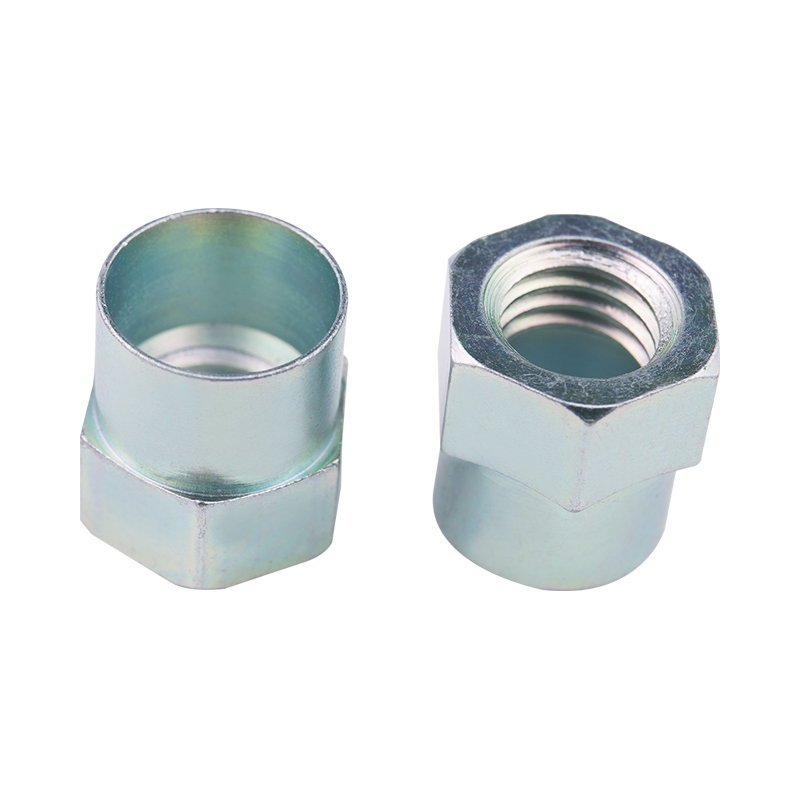
Hexagonal rivet nuts are internally threaded fasteners designed to create strong, load-bearing threads in thin or hollow materials where conventional tapping is not feasible. Unlike standard rivet nuts with round bodies, hexagonal rivet nuts feature a hex-shaped outer profile that fits into a pre-punched hexagonal hole. This geometry provides enhanced resistance to rotation once installed, making them suitable for applications requiring higher torque or vibration resistance.
Structural Design and Key Components
The structure of a hexagonal rivet nut is optimized to balance ease of installation with mechanical stability. Each design element contributes to its functional performance during and after installation.
Hexagonal Body
The hexagonal outer body is the defining feature of this fastener. When pressed into a matching hexagonal hole, the flat sides of the nut mechanically lock against the base material. This prevents the rivet nut from spinning during bolt tightening or removal, which is a common issue with round-body rivet nuts in high-torque conditions.
Internal Thread
The internal thread is manufactured to standard metric or imperial specifications, allowing compatibility with common bolts and screws. Once installed, the internal thread functions like a tapped hole, enabling repeated assembly and disassembly without damaging the base material.
Deformable Shank Section
The shank section of the rivet nut is designed to plastically deform during installation. As axial force is applied, this section collapses and clamps onto the backside of the material, creating a secure mechanical grip even in blind installations where rear access is not possible.
How Hexagonal Rivet Nuts Work During Installation
Hexagonal rivet nuts are installed using a controlled deformation process that permanently anchors the fastener within the host material. The installation sequence is straightforward but mechanically precise.
Hole Preparation
A hexagonal hole is created in the base material using punching, broaching, or laser cutting methods. Accurate hole dimensions are critical, as the hexagonal profile must closely match the rivet nut body to achieve effective anti-rotation performance.
Insertion and Setting
The rivet nut is inserted into the prepared hole, and a specialized installation tool pulls on the internal thread while supporting the flange. This action causes the shank to collapse against the backside of the material, forming a tight clamp. Once set, the tool is removed, leaving a permanent threaded insert.
Functional Advantages of the Hexagonal Design
The hexagonal form offers practical advantages over round rivet nuts, particularly in demanding mechanical environments.
- Improved resistance to rotation under high tightening torque
- Stable fastening performance in vibration-prone assemblies
- Reliable thread integrity in thin sheet metal or tubular structures
Typical Materials and Surface Treatments
Hexagonal rivet nuts are manufactured from various materials to match different mechanical and environmental requirements. Material selection influences strength, corrosion resistance, and long-term performance.
| Carbon Steel | General industrial assemblies, structural components |
| Stainless Steel | Corrosion-resistant environments, outdoor equipment |
| Aluminum | Lightweight assemblies, transportation applications |
Common Applications and Use Cases
Hexagonal rivet nuts are widely used in applications where secure threads must be created in thin or closed-profile components. Typical use cases include automotive body panels, industrial enclosures, machinery frames, metal furniture, and electrical cabinets. Their ability to provide stable threads from one side of the workpiece makes them especially valuable in blind assembly conditions.
Summary of Working Principles
Hexagonal rivet nuts work by combining mechanical deformation with geometric anti-rotation locking. The hexagonal body prevents spinning, while the collapsed shank securely clamps the base material. This results in a durable, reusable internal thread that performs reliably in thin materials, high-torque assemblies, and environments where access to the backside is limited.
Our Products //
Hot Products

If you are interested in our products, please consult us
Kunshan Hong Yong Sheng Precision Hardware Products Co.,Ltd. All Rights Reserved. Customised Fastener Manufacturer in China
