

 русский
 Español
 中文简体


UNF Meaning in Threads: What the Unified Fine Pitch Standard Specifies
Industry News-If you have ever squinted at a drawing, a parts bin label or a supplier's catalogue and wondered what "UNF" is short for, you are in good company. The abbreviation turns up on everything from hydraulic fittings to instrument screws, yet it is rarely spelled out. In plain terms, UNF means Unified National Fine: an inch-based screw thread with a 60-degree profile and a finer pitch than the coarse version of the same nominal diameter.
That one-sentence answer is only the beginning. Knowing what the letters stand for does not tell you whether a 1/4-28 UNF screw will fit your part, which thread class to specify, or why a designer chose fine over coarse in the first place. The notes below walk through the practical side — how a callout is built, how the unified series differ, and what is worth checking before a drawing reaches the shop floor.
Content
- 1 What UNF Stands For and Where the Definition Comes From
- 2 Reading a UNF Callout, Piece by Piece
- 3 UNF vs UNC vs UNEF: The Difference That Matters
- 4 Thread Classes 1A, 2A and 3A: the Part Most People Skip
- 5 Where UNF Threads Earn Their Place
- 6 How to Confirm a UNF Thread in Five Minutes
- 7 What We Watch For When Cutting Fine Inch Threads
- 8 A Final Word on Fit and Locking
What UNF Stands For and Where the Definition Comes From
UNF belongs to the Unified Thread Standard, the inch-based system defined in ASME/ANSI B1.1. The standard grew out of a 1948 agreement between the United States, the United Kingdom and Canada that merged the older American National thread form with British practice, which is why the word "Unified" appears in the name rather than "American".
The profile itself is straightforward: a 60-degree included angle with flat crests and roots, truncated by one-eighth of the pitch. That is the same angle ISO metric threads use, so the two families look almost identical at a glance even though one is measured in inches and the other in millimetres. Inside the standard there are three pitch series — UNC (coarse), UNF (fine) and UNEF (extra fine) — alongside constant-pitch UN designations for special cases. UNF sits in the middle: more threads per inch than UNC at the same diameter, fewer than UNEF.
Reading a UNF Callout, Piece by Piece
A designation such as 1/4-28 UNF-2A is a compact instruction, and every element carries meaning. Read it left to right and nothing is left to guesswork, which is exactly why the system has survived for decades in aerospace, automotive and instrumentation work.
| Element | What it tells you | Example |
|---|---|---|
| 1/4 | Nominal major diameter in inches (0.250 in, about 6.35 mm) | 1/4 |
| 28 | Threads per inch; pitch equals 25.4 ÷ 28 ≈ 0.907 mm | 28 |
| UNF | Unified National Fine series | UNF |
| 2A | Thread class 2, external thread (A = external, B = internal) | 2A |
When a drawing leaves the class out, the usual default is 2A for screws and 2B for nuts. It is still better to state it explicitly, because a machinist who has to assume will eventually assume something different from what the designer intended.
UNF vs UNC vs UNEF: The Difference That Matters
At the same nominal diameter, a UNF thread carries more threads per inch than UNC. That single change ripples through the whole joint. The thread is shallower, the minor diameter of the screw is larger, and the tensile stress area therefore grows — a 1/4-28 UNF bolt is slightly stronger in tension than a 1/4-20 UNC bolt of the same material. The finer helix angle also resists loosening under vibration and allows finer adjustment, which is why fine threads dominate instrument and hydraulic work.
The trade-offs are real too. Fine threads are more easily damaged, less forgiving of grit and burrs, and slower to assemble. In cast iron or a rough aluminium housing, coarse threads usually win because there is more material between the flanks and cross-threading is less likely.
| Nominal size | UNC (TPI) | UNF (TPI) | UNF pitch (mm) |
|---|---|---|---|
| 1/4 | 20 | 28 | 0.907 |
| 5/16 | 18 | 24 | 1.058 |
| 3/8 | 16 | 24 | 1.058 |
| 7/16 | 14 | 20 | 1.270 |
| 1/2 | 13 | 20 | 1.270 |
| 5/8 | 11 | 18 | 1.411 |
| 3/4 | 10 | 16 | 1.588 |
| 7/8 | 9 | 14 | 1.814 |
| 1 | 8 | 12 | 2.117 |
Thread Classes 1A, 2A and 3A: the Part Most People Skip
The class suffix defines how tight the fit is between mating parts, and it is where a lot of confusion lives. The letter tells you the side of the joint; the number tells you the tolerance band.
- 1A / 1B: the loosest fit, with an allowance on the external thread. Useful for quick assembly, coated parts or threads that will be dirty in service.
- 2A / 2B: general purpose and by far the most common. Commercial bolts and nuts are usually made to class 2.
- 3A / 3B: no allowance and a close fit, used where high preload or precise location is required, including safety-critical assemblies.
There is also the UNJ profile, which keeps the same 60-degree angle but adds a controlled root radius. That radius reduces stress concentration, so UNJ fasteners appear in fatigue-critical aerospace joints where a standard UNF thread would be more likely to crack at the root. Mixing the two is a common and expensive mistake.
 Aerospace-Grade Double-Lug and Single-Ear Self-Locking NutsExplore double-lug and single-ear aerospace-grade self-locking nut variants with OEM/ODM supply for standard and custom fastener requirements.View Product →
Where UNF Threads Earn Their Place
Look closely at the hardware around you and the fine inch thread shows up in predictable places: brake and fuel lines, hydraulic fitting ports, thin-wall aluminium housings where a coarse thread would strip, optical mounts that need fine adjustment, and machine tool fixtures that must hold position. The common thread in all of them is a need for holding power and adjustment precision rather than sheer assembly speed.
Hydraulic and pneumatic components are a good illustration. A valve body with a fine-pitch port thread gives more engaged threads per millimetre of wall thickness, which means better sealing and less chance of pull-out under pressure cycling.
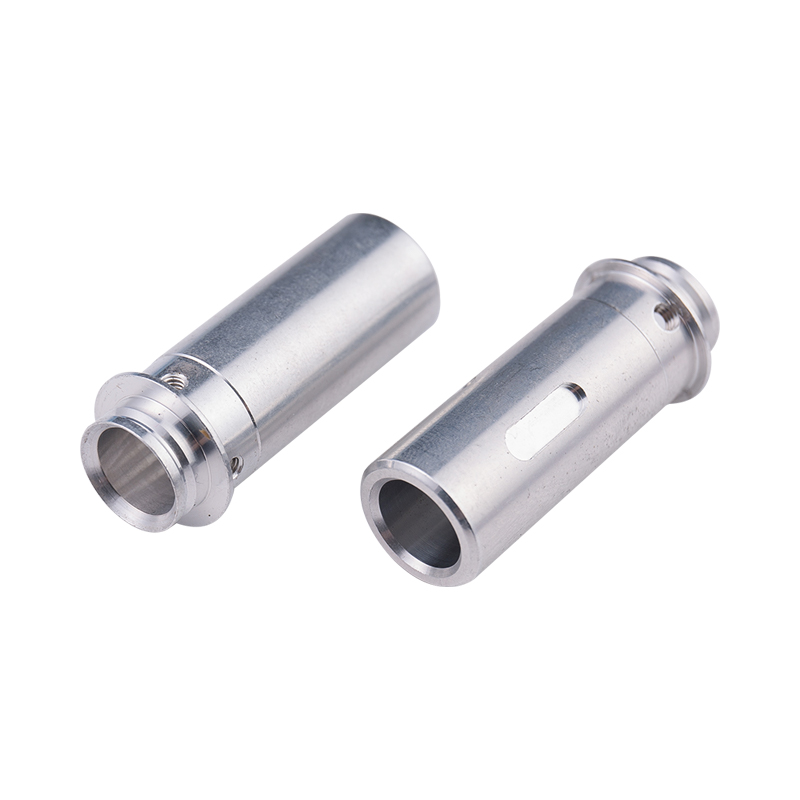 Custom Stainless Steel Air Flow Control Valve BodyCustom-turned stainless steel valve body for air flow control inner chambers, made to requested specifications and surface treatment for B2B applications.View Product →
How to Confirm a UNF Thread in Five Minutes
- Measure the major diameter of the screw or the internal thread with a caliper and convert to inches if your tool reads metric.
- Count the threads over a full inch, or use a pitch gauge. A thread pitch gauge for unified threads is inexpensive and far more reliable than eyeballing.
- Match diameter and pitch against a unified thread chart. If the count falls between two listed values, check for a special or constant-pitch UN thread.
- Verify the 60-degree flank angle with a thread profile gauge or an optical comparator, especially if the part may be metric — 1/4-28 and M6×1 are close enough to fool a quick look.
- Confirm the class with a calibrated ring gauge for external threads or a plug gauge for internal threads before the part goes into production.
What We Watch For When Cutting Fine Inch Threads
Fine threads are less tolerant of tool wear than coarse ones. A slightly worn insert that would still pass on a 1/4-20 thread can push the pitch diameter of a 1/4-28 thread out of its tolerance band, so gauging frequency has to go up as the pitch gets finer. Flank surface finish matters as well: a torn flank on a fine thread raises assembly torque and encourages galling, particularly in stainless steel.
That is why our production routine leans on calibrated gauging rather than feel, and why we document the measuring and inspection routines behind each batch. The same discipline applies whether we are running a standard fastener or a custom non-standard fastener to a customer drawing.
In practice most of the work is in the setup: confirming the drawing really calls for UNF rather than UNC or a metric pitch, agreeing on the thread class, and checking thread length and runout before the first part is cut. Getting those three points settled at the quotation stage saves far more time than any downstream inspection can.
A Final Word on Fit and Locking
Once the thread form and class are settled, the next question is usually how to keep the joint tight. Nylon-insert lock nuts, prevailing-torque designs and thread adhesives all behave differently on a fine thread than on a coarse one, because the shallower flank and finer helix change the torque needed to reach a given preload. If you are unsure which combination suits your assembly, send us the drawing and the service conditions — the answer is usually obvious once the loads and the mating material are known.
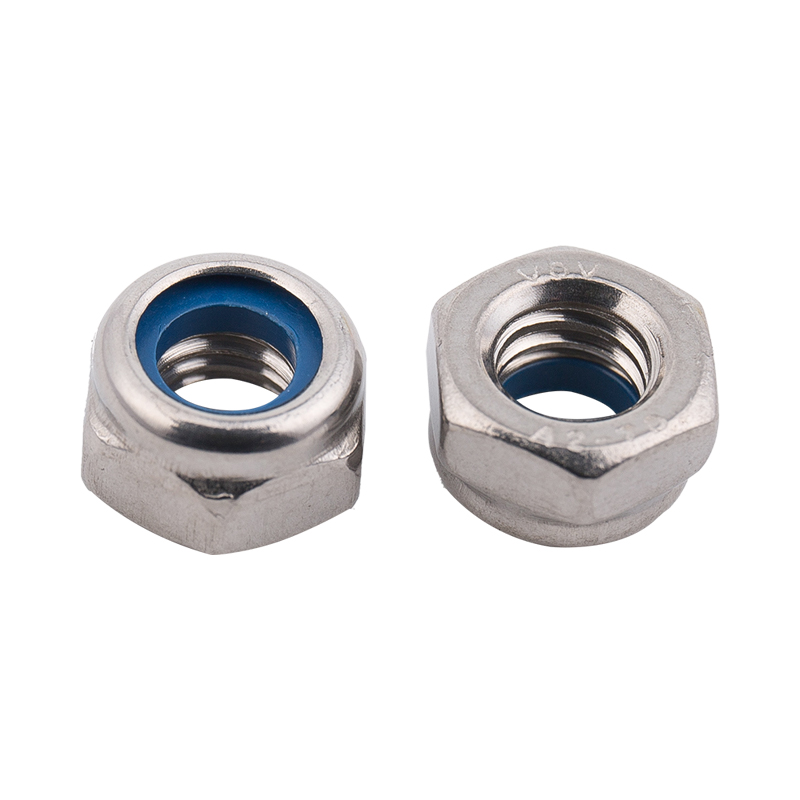 Stainless Steel Nylon Self-Locking NutsNylon-ring self-locking nuts in stainless steel, customizable to international specifications and surface treatments for B2B precision fastening needs.View Product →
UNF, in the end, is simply a label for a familiar idea: an inch-based 60-degree thread with a pitch tuned for holding power and precision. Knowing what the letters mean is the easy part; matching the right class and pitch to the job is where the experience pays off.
Our Products //
Hot Products

If you are interested in our products, please consult us
Kunshan Hong Yong Sheng Precision Hardware Products Co.,Ltd. All Rights Reserved. Customised Fastener Manufacturer in China
