

 русский
 Español
 中文简体
中文简体

How Have Injection Moulded Plastic Parts Transformed the Automotive Manufacturing Industry?
Industry News-Content
- 1 The Shift from Metal to Plastic in Automotive Manufacturing
- 2 Weight Reduction and Fuel Efficiency Gains
- 3 Design Freedom and Functional Integration
- 4 Cost Reduction Across the Manufacturing Value Chain
- 5 Material Innovation Driving New Automotive Capabilities
- 6 Comparison: Injection Moulded Plastic vs Traditional Metal in Key Automotive Parts
- 7 Quality, Safety, and Regulatory Compliance Improvements
- 8 Sustainability and the Future of Automotive Plastic Injection Moulding
The Shift from Metal to Plastic in Automotive Manufacturing
For the first several decades of automotive history, cars were built almost entirely from metal — steel stampings, cast iron blocks, aluminum castings, and brass fittings defined the material palette of vehicle construction. The transition toward plastic components began in earnest during the 1950s and 1960s, accelerated through the 1970s fuel crisis, and has continued at pace ever since. Today, the average passenger vehicle contains between 100 and 150 kilograms of plastic, representing roughly 50% of the vehicle's total volume despite accounting for only about 10% of its weight. Injection moulding is the manufacturing process responsible for producing the vast majority of these plastic components, and its adoption has fundamentally restructured how vehicles are designed, engineered, and assembled.
Injection moulding works by melting thermoplastic or thermosetting polymer pellets and injecting the molten material under high pressure into a precision steel mould cavity. Upon cooling, the material solidifies into the exact shape of the mould, and the finished part is ejected automatically. Cycle times range from a few seconds for small components to several minutes for large structural parts, and the process is highly repeatable — producing thousands or millions of identical parts with tolerances measured in fractions of a millimeter. It is this combination of precision, speed, complexity capability, and material versatility that has made Automotive plastic parts injection moulded a transformative force in automotive manufacturing.
Weight Reduction and Fuel Efficiency Gains
Perhaps the most quantifiable impact of Automotive plastic parts injection moulded on automotive manufacturing is the contribution to vehicle weight reduction and the consequent improvement in fuel economy and emissions performance. Steel has a density of approximately 7.85 g/cm³, while engineering thermoplastics used in automotive injection moulding — polypropylene, polyamide, ABS, polycarbonate, and their glass-fiber-reinforced variants — typically have densities between 0.9 and 1.6 g/cm³. Replacing a steel component with an injection moulded plastic equivalent of equivalent structural performance reduces part weight by 25% to 70% depending on the specific application.
The automotive industry operates under stringent fleet average fuel economy (CAFE) and CO₂ emission regulations in all major markets. Every 100 kg reduction in vehicle curb weight produces a fuel economy improvement of approximately 0.3 to 0.5 liters per 100 km in a typical passenger car. Across a vehicle model produced in volumes of 200,000 units per year, even a modest 20 kg weight saving through plastics substitution generates enormous aggregate reductions in fleet fuel consumption and lifecycle carbon emissions. Injection moulded components such as instrument panels, door panels, center consoles, front-end carrier modules, engine covers, air intake manifolds, and underbody shields collectively account for a substantial portion of this weight saving.
In the rapidly growing electric vehicle segment, weight reduction is even more strategically critical because battery weight is fixed and every kilogram saved in the body and interior directly extends driving range — the most important consumer purchase criterion for battery electric vehicles. Injection moulded structural plastic components in EV battery housings, thermal management systems, and lightweight body panels are accelerating weight reduction programs beyond what was achievable with conventional metal-intensive architectures.
Design Freedom and Functional Integration
Injection moulding offers a degree of geometric design freedom that is simply unachievable with metal stamping, casting, or machining. Complex three-dimensional shapes, undercuts, internal channels, snap-fit features, living hinges, integrated clips, and surface textures can all be produced in a single moulding operation — eliminating secondary operations and assembly steps that add cost and time when working with metal. This capability has enabled automotive designers and engineers to consolidate multiple parts into single injection moulded components, reducing part counts, assembly complexity, and potential failure points simultaneously.
A classic example of this functional integration is the modern automotive front-end carrier module — a large injection moulded structural component that integrates mounting points for the headlights, radiator, hood latch, bumper beam, pedestrian protection structures, and aerodynamic air guides into a single plastic assembly. What previously required a dozen or more separate metal stampings welded and bolted together is now produced as two or three injection moulded parts assembled with snap fits and screws. The reduction in assembly time, tooling cost, and logistics complexity is transformative for production economics.
Examples of Multi-Function Injection Moulded Automotive Parts
- Instrument panels that integrate air vents, speaker grilles, airbag deployment seams, display bezels, and structural cross-car beam attachment in one moulded assembly
- Door inner panels that incorporate armrest padding, speaker housings, window switch bezels, map pockets, and decorative trim in a single component
- Air intake manifolds with integrated charge air cooling passages, resonators, and sensor mounting bosses replacing cast aluminum assemblies
- Battery module housings that integrate coolant channels, cell retention features, high-voltage connector mounts, and thermal runaway venting in a single moulded structure
Cost Reduction Across the Manufacturing Value Chain
The economic impact of Automotive plastic parts injection moulded on automotive manufacturing extends across the entire value chain, from raw material cost through tooling investment, production cycle time, assembly labor, and warranty cost. On a per-kilogram basis, engineering thermoplastics are generally less expensive than the steel, aluminum, or magnesium alloys they replace, particularly when the full cost of metal processing — blanking, stamping, welding, surface treatment, and painting — is included in the comparison.
Automotive plastic parts injection moulded typically emerge from the mould in their finished color and surface texture, eliminating the painting operations that represent a major cost center in traditional metal body panel production. Automotive paint shops are among the most expensive and environmentally complex facilities in a vehicle assembly plant, requiring solvent management, air quality controls, curing ovens, and extensive quality inspection infrastructure. Every exterior and interior plastic component that is moulded in color rather than painted removes a unit from the paint shop process, reducing operating cost, energy consumption, and VOC emissions simultaneously.
The high-volume economics of injection moulding are also compelling. While mould tooling represents a significant upfront investment — a production injection mould for a large automotive component can cost $200,000 to $1,000,000 — the per-part cost at production volumes is extremely low. A mould with a service life of 500,000 to 1,000,000 shots amortizes the tooling cost to a few dollars per part, and the automated, fast cycle time of the injection moulding process keeps direct manufacturing labor to a minimum.
Material Innovation Driving New Automotive Capabilities
The range of engineering thermoplastics and composite materials available for automotive injection moulding has expanded dramatically over the past three decades, enabling plastic components to penetrate applications that were previously considered exclusively the domain of metal. Long glass fiber reinforced polypropylene (LGF-PP) and short glass fiber reinforced polyamide (PA6-GF30, PA66-GF30) now produce structural components with stiffness and impact resistance approaching that of sheet steel at a fraction of the weight. These materials are used in semi-structural applications including door impact beams, seat structures, pedal brackets, and instrument panel cross-car beams.
Under-the-hood applications have benefited particularly from advances in high-temperature thermoplastics. Polyamide 66 and polyphthalamide (PPA) grades with heat stabilizers and glass reinforcement withstand continuous operating temperatures above 150°C, enabling injection moulded plastic to replace aluminum die castings in engine covers, valve covers, thermostat housings, coolant manifolds, and oil pans. These substitutions reduce weight, eliminate machining operations, improve thermal insulation, and often reduce manufacturing cost — a compelling combination that continues to expand the share of plastic in powertrain systems.
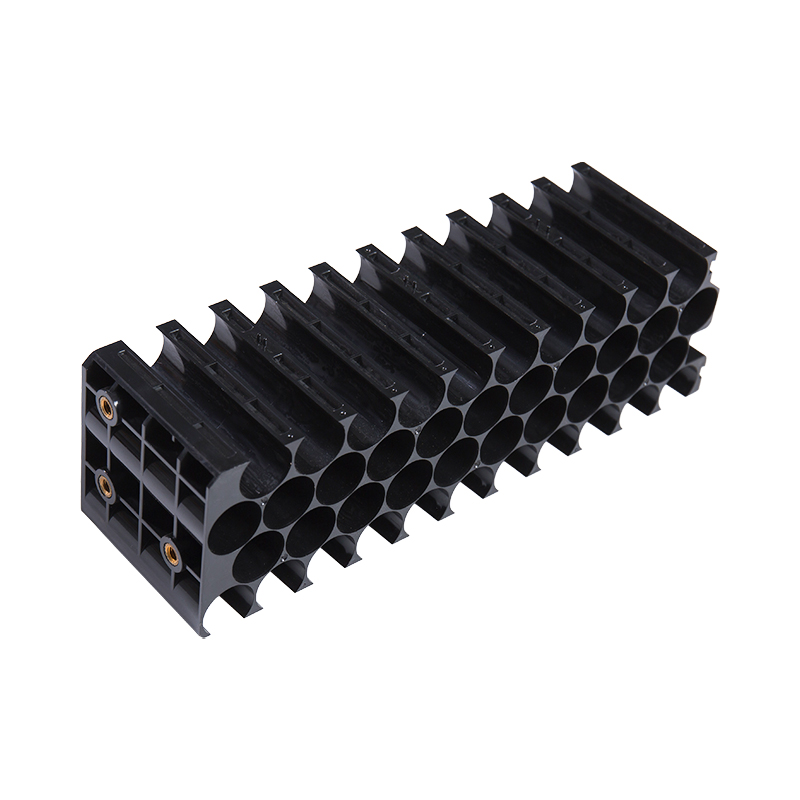
Comparison: Injection Moulded Plastic vs Traditional Metal in Key Automotive Parts
| Component | Traditional Material | Injection Moulded Plastic | Key Benefit of Plastic |
| Air Intake Manifold | Cast aluminum | PA66-GF30 | 40–50% weight reduction, smoother bore |
| Front-End Module | Steel stampings (12+ parts) | LGF-PP (2–3 parts) | Part consolidation, weight saving |
| Instrument Panel | Steel and aluminum sub-assemblies | PP/ABS blend | Design freedom, no painting needed |
| Fuel Tank | Steel (welded) | HDPE (blow moulded/injection) | Complex shapes, corrosion-free |
| Door Panel | Steel inner panel + separate trim | PP composite with soft-touch skin | Integrated features, reduced assembly |
| Engine Cover / Valve Cover | Cast aluminum or magnesium | PA66 heat-stabilized | Weight reduction, acoustic damping |
Quality, Safety, and Regulatory Compliance Improvements
Automotive plastic parts injection moulded have contributed significantly to improvements in vehicle safety performance, particularly in interior crash energy management and pedestrian protection. Thermoplastic materials used in instrument panels, door trim, and pillar covers are engineered to deform progressively during impact, absorbing crash energy and reducing occupant injury risk in ways that rigid metal alternatives cannot. Airbag deployment seams moulded into instrument panels and door panels use precisely controlled weakening lines that open predictably under airbag inflation pressure, ensuring correct deployment geometry without secondary fragmentation — a performance characteristic that is only achievable through injection moulding's ability to control wall thickness and material distribution with precision.
Pedestrian safety regulations, which have become progressively more stringent in Europe, Japan, and increasingly in North America, require vehicle front structures to deform in ways that reduce leg and head injury risk to pedestrians struck by the vehicle. Injection moulded thermoplastic front bumper systems, hood liners, and headlamp housings can be engineered to provide the specific deformation response required by UN Regulation No. 127 and equivalent standards — a much more flexible engineering tool than equivalent metal structures that are difficult to tune for controlled deformation behavior.
Sustainability and the Future of Automotive Plastic Injection Moulding
As the automotive industry intensifies its focus on lifecycle sustainability, injection moulded plastic components are evolving to meet new environmental expectations through material innovation, recycled content integration, and end-of-life recyclability improvements. Automotive-grade polypropylene components are already widely recycled at end of vehicle life, with established reverse logistics networks in Europe, Japan, and North America recovering and reprocessing bumper fascias, interior trim, and fluid reservoirs into secondary raw material for new components.
Leading OEMs and their tier-one suppliers are now specifying minimum recycled content requirements for injection moulded plastic components — typically 25% to 50% post-consumer recycled (PCR) content — as part of corporate sustainability commitments and in response to emerging regulatory requirements such as the EU End-of-Life Vehicles Regulation revision. Bio-based thermoplastics derived from renewable feedstocks such as sugarcane, corn starch, and cellulose are entering automotive injection moulding applications, reducing dependence on petrochemical raw materials and lowering the embodied carbon of vehicle components.
- Closed-loop recycling programs for bumper fascias and interior trim panels are operational at several major OEMs, recovering post-shredder plastic fractions for reuse in new injection moulded components
- Chemical recycling technologies are being scaled to handle mixed plastic fractions that mechanical recycling cannot process, converting them back to polymer feedstock suitable for high-specification automotive injection moulding
- Natural fiber reinforced thermoplastics — using flax, hemp, and kenaf fibers as partial replacements for glass fiber — reduce the environmental footprint of reinforced injection moulded automotive parts while maintaining competitive mechanical performance
- Digital design tools including mould flow simulation software allow engineers to optimize gate locations, wall thickness, and cooling channel design before cutting steel, reducing mould development waste and shortening time to production
The transformation that Automotive plastic parts injection moulded have brought to automotive manufacturing is not a historical event — it is an ongoing process of continuous innovation that continues to reshape vehicle architecture, manufacturing economics, safety performance, and environmental impact. As electric vehicle platforms, autonomous driving systems, and circular economy requirements reshape the industry over the coming decades, injection moulded plastic components will remain at the center of automotive engineering solutions, evolving in material composition and process technology while delivering the same fundamental advantages of weight reduction, design freedom, cost efficiency, and functional integration that first made them indispensable to the modern automobile.
Our Products //
Hot Products

If you are interested in our products, please consult us
Kunshan Hong Yong Sheng Precision Hardware Products Co.,Ltd. All Rights Reserved. Customised Fastener Manufacturer in China
