

 русский
 Español
 中文简体
中文简体

How Do You Source the Right OEM/ODM Gear for Your Machinery?
Industry News-Content
- 1 Understanding OEM/ODM Gear Manufacturing
- 2 Key Gear Components That Affect Performance
- 3 Common Gear Types and Their Applications
- 4 Standard Versus Non-Standard Gear Sourcing
- 5 Material and Treatment Choices That Affect Gear Durability
- 6 What to Communicate When Requesting an OEM/ODM Gear Quote
- 7 Working With an Experienced Gear Manufacturer
Understanding OEM/ODM Gear Manufacturing
OEM/ODM gear manufacturing refers to producing gears according to a buyer's specifications (OEM) or designing and producing gears based on a buyer's functional requirements (ODM). In both cases, the gear itself remains a mechanical element built from two or more toothed profiles that mesh together to transmit power and motion between machine components. What changes is the level of design input from the manufacturer versus the buyer, and this distinction matters significantly when sourcing gears for a specific application.
Gears operate by transferring rotational force through contact between meshing tooth profiles. As one gear rotates, its teeth press against the teeth of a mating gear, and this contact transmits torque while adjusting rotational speed based on the ratio of teeth between the two gears. Understanding this basic mechanism helps buyers communicate requirements clearly when working with an OEM/ODM manufacturer, since even small deviations in tooth profile or module size can significantly affect how a gear performs once installed.
Key Gear Components That Affect Performance
Every gear consists of several structural elements, and each one plays a specific role in how the gear functions under load. Buyers working on custom gear projects benefit from understanding these components before finalizing specifications with a manufacturer.
- Teeth, which make direct contact with a mating gear to transmit force
- Grooves, the spaces between teeth that allow proper meshing clearance
- Root ring, the base circle from which teeth extend, affecting structural strength
- Tip ring, the outer boundary of the teeth that determines the gear's overall diameter
- Module and pitch, which define tooth size and spacing, directly affecting how gears of different sizes mesh together
Getting these dimensions right during the design phase prevents costly rework later, particularly for non-standard gears built for a specific machine assembly rather than a universal replacement part.
Common Gear Types and Their Applications
Different tooth shapes and gear structures suit different mechanical demands. Selecting the right type upfront affects noise levels, load capacity, and how efficiently power transfers through a system.
| Gear Type | Tooth Orientation | Typical Use Case |
| Spur Gear | Straight teeth | Simple gearboxes, low-speed machinery |
| Helical Gear | Angled teeth | Automotive transmissions, quieter high-speed operation |
| Bevel Gear | Straight or spiral, angled shaft | Right-angle power transmission, differentials |
| Spiral Gear | Curved teeth | Aerospace and precision machine tools requiring smooth engagement |
Cylindrical gears, which include spur and helical types, are among the most common in general machinery, while bevel gears handle applications where power needs to change direction between intersecting shafts.
Standard Versus Non-Standard Gear Sourcing
Buyers sourcing gears generally fall into one of two categories: those needing standard gears that match established industry sizing, and those needing non-standard or fully customized gears designed around a specific machine's geometry and load requirements.
Standard Gear Sourcing
Standard gears follow established module, pitch, and tooth count conventions, making them easier to source quickly and often at lower cost due to economies of scale in production. These work well for replacement parts or systems built around widely used mechanical standards.
Non-Standard and Custom Gear Sourcing
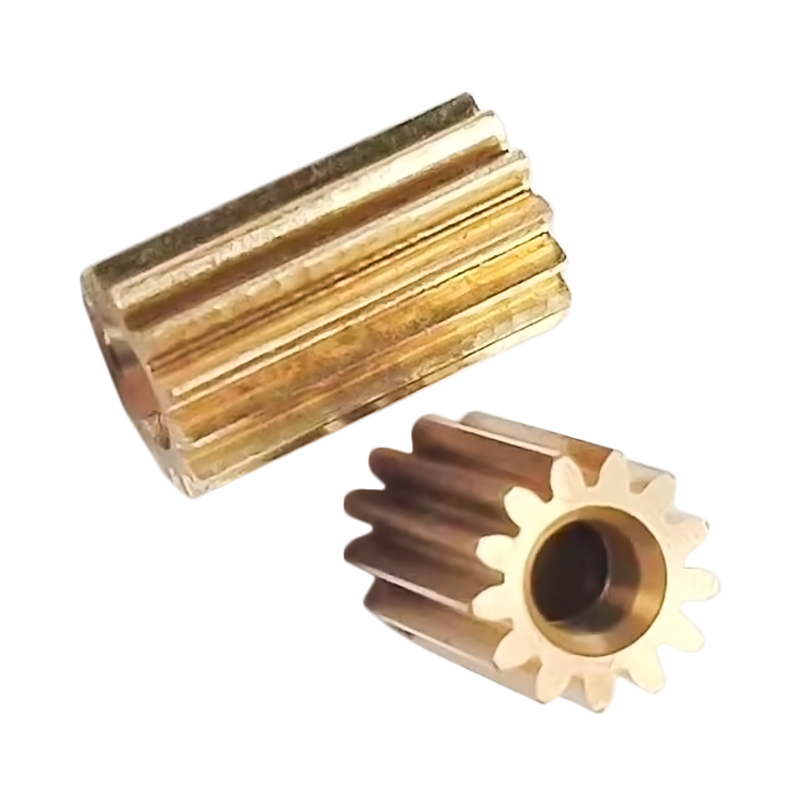
Custom gears are designed to match a specific application's shaft size, housing dimensions, load requirements, or unique tooth profile. This route requires closer collaboration with the manufacturer's engineering team, since tolerances, material selection, and heat treatment all need to align precisely with the intended use case.
Material and Treatment Choices That Affect Gear Durability
Material selection and post-machining treatment determine how well a gear withstands repeated stress, friction, and load cycling over its service life. These decisions should be made based on the specific operating environment the gear will face.
- Carbon steel gears for general-purpose applications with moderate load requirements
- Alloy steel gears for higher-strength applications such as automotive or industrial machinery
- Stainless steel gears for corrosion-resistant needs in humid or chemically exposed environments
- Case hardening or carburizing treatments to increase surface hardness while retaining a tougher core
- Precision grinding after heat treatment to correct any dimensional distortion and improve meshing accuracy
Discussing these options directly with a manufacturer, rather than assuming a default material choice, often leads to a gear that performs better and lasts longer in its intended application.
What to Communicate When Requesting an OEM/ODM Gear Quote
Getting an accurate quote and avoiding revision delays depends on providing clear technical information upfront. Manufacturers can move faster and price more accurately when buyers supply complete specifications from the start.
- Module, number of teeth, and pressure angle
- Gear type, such as spur, helical, or bevel
- Material preference and any required surface treatment
- Shaft bore diameter and keyway specifications if applicable
- Expected load, operating speed, and environmental conditions
- Order quantity and whether the project involves prototyping before full production
Providing a drawing or 3D model alongside these details, when available, further reduces back-and-forth communication and speeds up the quoting and sampling process.
Working With an Experienced Gear Manufacturer
Kunshan Hong Yong Sheng Precision Hardware Products Co., Ltd operates as a gear company and exporter based in China, producing both OEM and ODM standard and non-standard fasteners along with customized gear components. Working with a manufacturer experienced in both standard and custom gear production gives buyers flexibility, whether the project calls for a straightforward replacement part or a fully engineered component built around a unique mechanical assembly. Requesting sample parts before committing to full production runs remains one of the most effective ways to confirm that tooth profile, material, and dimensional tolerances all meet the intended application's demands.
Our Products //
Hot Products

If you are interested in our products, please consult us
Kunshan Hong Yong Sheng Precision Hardware Products Co.,Ltd. All Rights Reserved. Customised Fastener Manufacturer in China
