

 русский
 Español
 中文简体
中文简体

CNC Turning Lathe: A Complete Precision Machining Guide for Custom Components
Industry News-When you have a batch of cylindrical components to machine, the CNC turning lathe is usually the first machine tool that comes to mind. It solves a straightforward problem: rotate the workpiece while the cutting tool removes material to create a precise round shape. The real procurement risk is not the machine itself, but how accurately you understand the relationship between part drawings, tooling, and achievable tolerances. A good CNC turning process starts with realistic expectations about what the machine can do.
Content
- 1 What Is a CNC Turning Lathe?
- 2 Key Operations You Can Perform on a CNC Turning Lathe
- 3 CNC Turning Lathe vs CNC Turning Center: What Matters for Your Parts
- 4 Materials and Workpiece Considerations
- 5 Precision Requirements and Tolerance Callouts
- 6 Applications in Industrial Hardware
- 7 Selecting a CNC Turning Partner
What Is a CNC Turning Lathe?
A CNC turning lathe is a computer-controlled machine tool that rotates a workpiece on a spindle while a stationary cutting tool moves along two or more axes to remove material. Unlike manual lathes, the movement of the tool is governed by G-code generated from a CAD/CAM program. This removes operator variability and allows repeatable production of tight-tolerance parts.
The core components include the headstock, which houses the spindle and chuck; the bed and carriage, which guide the tool post; the tailstock, which supports long workpieces; and the control panel, where the program is loaded and monitored. On a typical two-axis machine, the tool can move in the X and Z directions, which is sufficient for most turning operations.
Key Operations You Can Perform on a CNC Turning Lathe
A CNC turning lathe can perform a wide range of operations on rotational parts. Understanding these capabilities helps you decide whether a simple lathe is enough for your project.
- Facing and straight turning: flatten the end face and reduce the outer diameter to the required size.
- Taper and profile turning: create conical surfaces or curved profiles using coordinated axial and radial feed.
- Threading: cut external and internal threads with consistent pitch and depth.
- Grooving and parting: machine grooves for O-rings or cut finished parts from the bar.
- Boring and drilling: enlarge or create internal holes with high positional accuracy.
- Knurling: produce a textured surface for grip or press-fit applications.
Each operation contributes to the final geometry. For example, if a bushing requires an internal groove, a CNC turning lathe can bore the hole and then switch to a grooving tool without repositioning the part.
CNC Turning Lathe vs CNC Turning Center: What Matters for Your Parts
CNC turning centers are often mentioned in the same breath as CNC turning lathes. The practical difference matters for parts with complex features.
| Aspect | CNC Turning Lathe | CNC Turning Center |
|---|---|---|
| Axis configuration | Typically 2 axes (X, Z) | Adds live tooling and a C axis |
| Spindle options | Single spindle | Multiple spindles for secondary operations |
| Tool capacity | Limited to turning tools | Tool turret with milling, drilling, and tapping tools |
| Part complexity | Ideal for round, symmetric parts | Handles off-center holes, slots, and milled flats |
| Cost per part | Lower for simple production | Higher but can consolidate operations |
If your part only needs external turning, threading, and boring, a basic CNC turning lathe will usually deliver the lowest cost per piece. If the drawing calls for cross-drilled holes, milled slots, or a secondary spindle for back-end machining, a turning center becomes the more economical choice because it eliminates additional setups.
Materials and Workpiece Considerations
Material selection is the first decision that influences cutting speeds, tool wear, and surface finish. A CNC turning lathe handles a wide range of metals and plastics, but each family behaves differently.
Carbon steel is easy to machine and offers good strength for structural components. Stainless steel resists corrosion but requires lower feeds and harder tooling. Copper alloys provide excellent thermal and electrical conductivity, often used in valve seats and bushings. Alloy structural steel is chosen when higher tensile strength is needed without increasing section size. Aluminum machines quickly and is common in lightweight assemblies. Engineering plastics like PEEK and PSU are increasingly specified in medical and aerospace components, but their heat sensitivity demands careful parameter control.
A reliable manufacturer will document recommended feeds and speeds for every material change. This documentation becomes your audit trail when lot-to-lot consistency matters.
Precision Requirements and Tolerance Callouts
Precision might be the most misunderstood part of quoting a turning project. Drawings usually call out dimensions with tolerances like IT7 or IT8, but the achievable tolerance also depends on the material, the rigidity of the machine, and the skill of the operator. A practical approach is to ask your supplier how they control the variables from programming to inspection.
Surface roughness values such as Ra 1.6 or Ra 0.8 are not achieved by the machine alone. They result from the right insert geometry, feed rate, and coolant application. When a supplier can show you a documented process for dimensional accuracy, you reduce the risk of receiving parts that fall outside the drawing. We use CMM and profile projectors to verify critical dimensions, and our process control follows the same principles described in our article on ensuring accurate dimensions.
Applications in Industrial Hardware
The industrial applications of CNC turning lathes are broad. In the automotive sector, shafts, bushings, and valve components are produced in large volumes with tight quality control. General machinery relies on precise turning for hydraulic fittings, pneumatic valve bodies, and pump shafts. Medical and aerospace industries demand even higher levels of cleanliness and traceability.
A good example of a typical turned part is an optical shaft. It requires consistent outer diameter, circular runout, and a smooth surface — all achievable with a properly set-up turning lathe. This kind of component is common in laptops and small electronic devices.
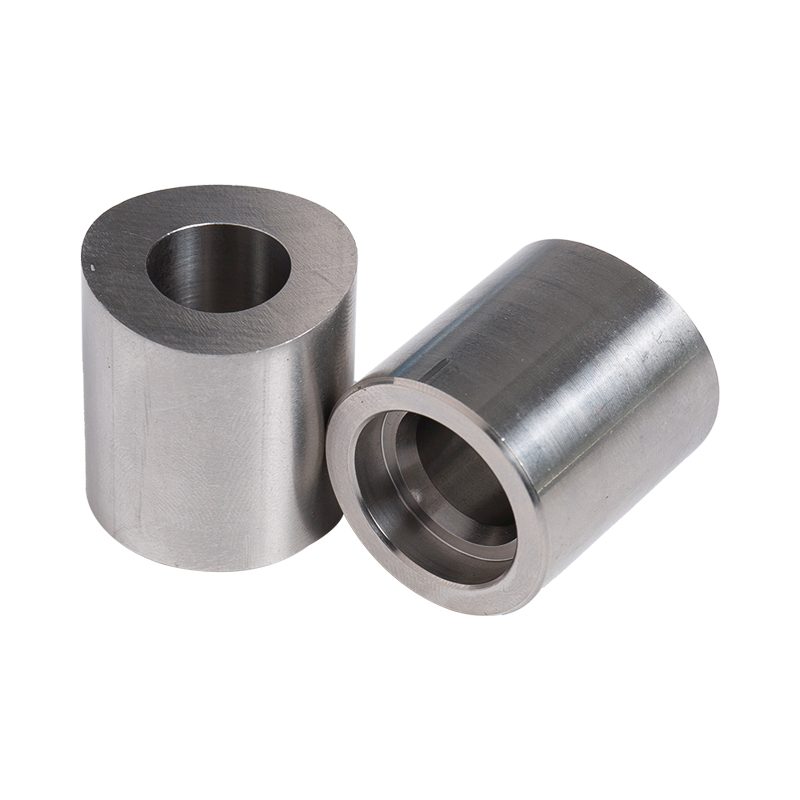 Precision Optical Shaft for Laptops and Small Electronic DevicesThe optical shaft shown here suits applications requiring consistent outer diameter and circular runout. Its smooth surface reduces friction and energy loss, while high precision and rigidity support high loads and torque in compact assemblies.View Product →
Bushings are another classic turning product. A steel bushing needs precise inner and outer diameters, often with a flanged shape that supports axial loading. In hydraulic cylinders and pneumatic systems, these parts guide shafts and absorb side loads.
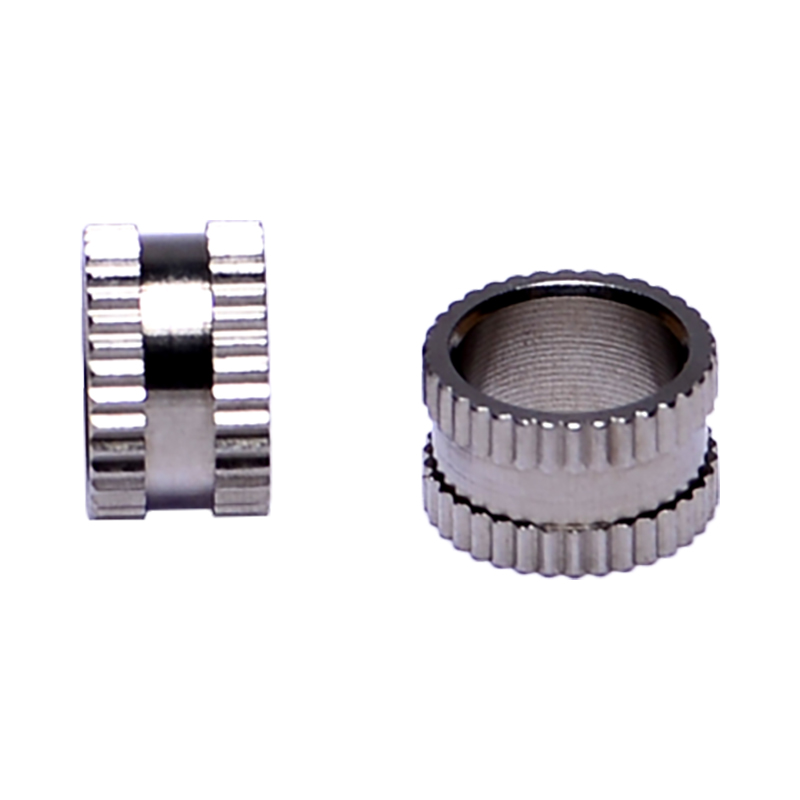 Steel Bushing with Flanged Shape for Hydraulic and Pneumatic SystemsThis steel bushing provides precise inner and outer diameters, often with a flange to handle axial loading. In cylinders and pneumatic systems, it guides shafts and absorbs side loads for reliable operation.View Product →
Valve bodies combine turning with threading and sealing surfaces. A steel airflow control valve body, for example, may require internal threads, a machined seat, and an O-ring groove. CNC turning lathe handles these features in one clamping operation when the geometry is rotationally symmetric.
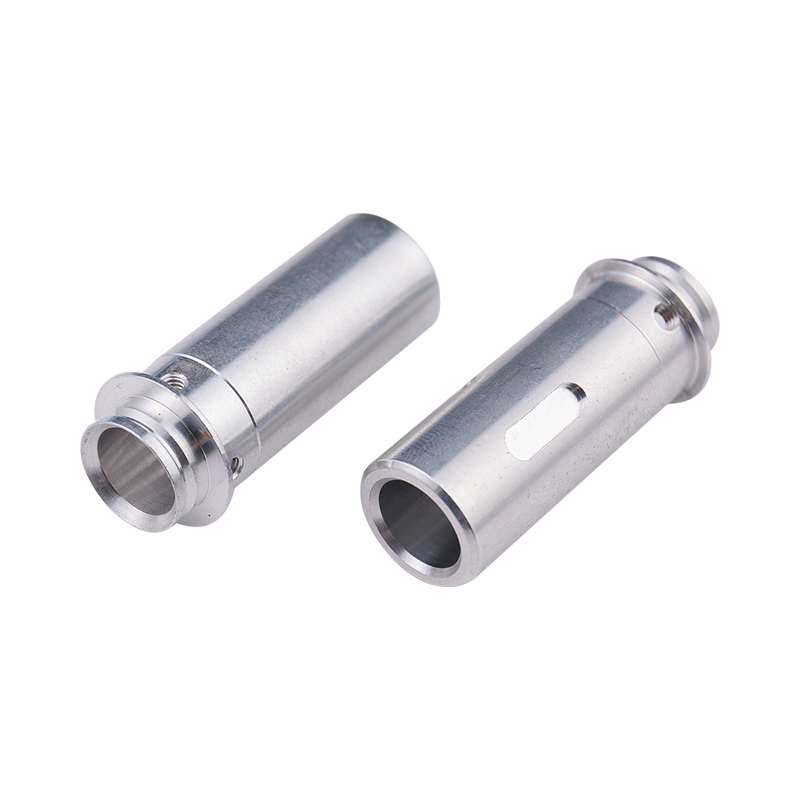 Steel Air Flow Control Valve Body with Threads and Sealing SurfacesThis valve body combines turning with threading and sealing surfaces, featuring internal threads, a machined seat, and an O-ring groove. Machined in one clamping, it ensures accurate geometry for flow control.View Product →
Selecting a CNC Turning Partner
Choosing a supplier for CNC turning work is about confirming their ability to deliver consistent geometry, on time, at a predictable cost. Start by asking about their machine fleet and the range of materials they run. Then look for evidence of process control: how they start-up a program, how often they inspect during production, and what kind of corrective feedback they use.
A manufacturer that offers both metal turning and injection molding can be valuable when your assembly includes both metal shafts and plastic housing. This reduces the number of suppliers you have to coordinate and simplifies resource planning. For long-running projects, ask about their capacity expansion plans. A supplier that invests in additional machines is more likely to protect your delivery dates as volume grows.
Our Products //
Hot Products


If you are interested in our products, please consult us
Kunshan Hong Yong Sheng Precision Hardware Products Co.,Ltd. All Rights Reserved. Customised Fastener Manufacturer in China
