

 русский
 Español
 中文简体
中文简体

Why Does a Carbon Steel Lock Cylinder Deliver Superior Mechanical Properties and Long-Term Stability?
Industry News-Content
- 1 What Is a Carbon Steel Lock Cylinder?
- 2 The Metallurgical Basis of Carbon Steel's Mechanical Excellence
- 3 Key Mechanical Properties That Define Carbon Steel Lock Cylinder Performance
- 4 Dimensional Stability Under Operating Conditions
- 5 Carbon Steel Grades Commonly Used in Lock Cylinder Manufacturing
- 6 How Carbon Steel Lock Cylinders Resist Physical Attack
What Is a Carbon Steel Lock Cylinder?
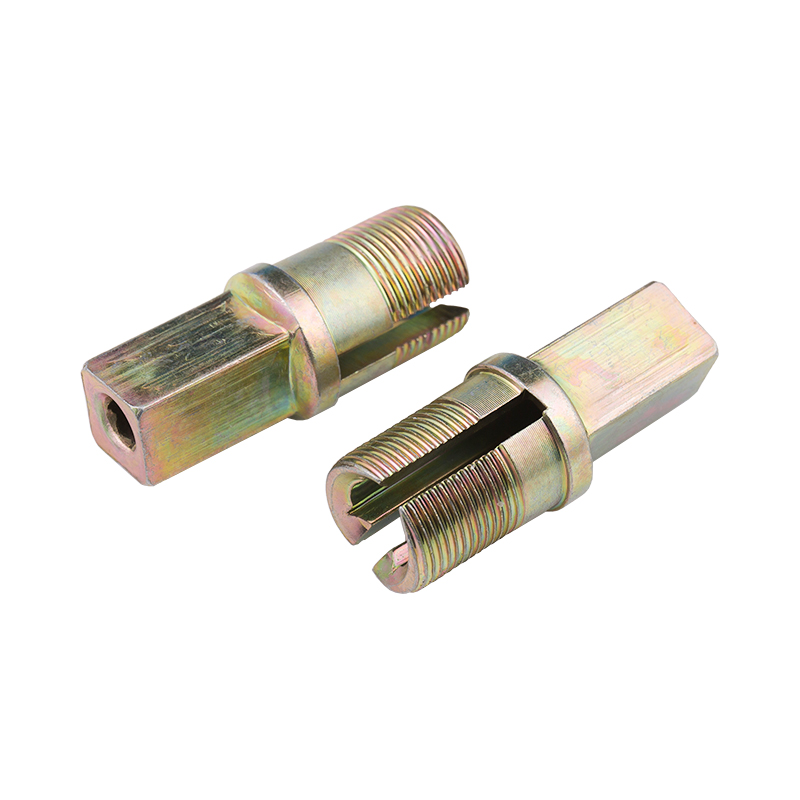
A carbon steel lock cylinder is the core mechanical component of a locking system, manufactured from carbon steel — an iron-carbon alloy in which carbon content typically ranges from 0.05% to 2.0% by weight. The cylinder houses the pin tumbler, disc, or wafer mechanism that engages with the key to control the locking and unlocking action of a door, padlock, cabinet, or security enclosure. Unlike decorative hardware that prioritizes aesthetics, the lock cylinder is a precision-engineered security component whose primary performance criteria are mechanical strength, dimensional stability, wear resistance, and resistance to physical attack.
Carbon steel's suitability for lock cylinder manufacturing stems from its unique combination of properties that emerge from the controlled relationship between iron, carbon, and alloying elements present in trace quantities. By adjusting the carbon content and applying appropriate heat treatment processes — hardening, tempering, annealing, or case hardening — manufacturers can tune the mechanical characteristics of the steel to meet the precise demands of lock cylinder operation. The result is a component that delivers consistent performance across millions of operation cycles while resisting both the everyday mechanical stresses of normal use and the deliberate physical attacks that high-security applications must withstand.
The Metallurgical Basis of Carbon Steel's Mechanical Excellence
Understanding why carbon steel performs so well in lock cylinder applications requires a brief examination of the metallurgical mechanisms that govern its properties. Carbon atoms dissolved in the iron crystal lattice distort the lattice structure, impeding the movement of dislocations — the linear defects within the crystal structure whose motion is responsible for plastic deformation. The higher the carbon content, the greater this lattice distortion and the higher the resulting yield strength and hardness of the steel. This is why medium-carbon steels (0.3% to 0.6% carbon), which strike the optimal balance between strength and toughness, are the most commonly specified grades for lock cylinder bodies and internal components.
Heat treatment dramatically amplifies and refines these inherent properties. Quench hardening — heating the steel above its austenitizing temperature and then rapidly cooling it in water, oil, or polymer — transforms the crystal structure into martensite, an extremely hard but brittle phase. Subsequent tempering at controlled temperatures between 150°C and 650°C converts some martensite back to tougher phases, producing a precisely calibrated combination of hardness and toughness that would be impossible to achieve in the as-rolled condition. For lock cylinders, this heat treatment sequence is what produces the surface hardness necessary to resist drilling attacks while retaining the core toughness that prevents brittle fracture under the shock loads imposed by hammering or impact attacks.
Case hardening — including processes such as carburizing, carbonitriding, and induction hardening — is particularly valuable for lock cylinder pin stacks and shear line components. In case hardening, only the outer surface layer of the component is enriched with carbon and hardened, while the core remains relatively softer and tougher. This creates a wear-resistant exterior that survives millions of key insertion and rotation cycles without measurable dimensional change, while the tough core absorbs impact energy without cracking — a combination that neither fully hard nor fully soft steel alone could provide.
Key Mechanical Properties That Define Carbon Steel Lock Cylinder Performance
The mechanical property profile of a well-specified carbon steel lock cylinder covers several distinct performance dimensions, each relevant to a different aspect of the cylinder's security and durability performance in service.
- Tensile Strength: Medium-carbon steel lock cylinder bodies achieve tensile strengths in the range of 600 to 900 MPa in the heat-treated condition, providing the structural backbone needed to resist the torsional and bending forces applied during both normal operation and forced entry attempts such as wrenching and twisting attacks.
- Hardness: Surface hardness values of 55 to 62 HRC achieved through heat treatment or case hardening are sufficient to defeat standard high-speed steel drill bits — the most common tool used in drilling attacks against lock cylinders. At these hardness levels, the drill tip deflects or shatters rather than penetrating the cylinder body, buying critical time against forced entry.
- Toughness and Impact Resistance: Toughness — the ability to absorb energy before fracturing — is measured by Charpy or Izod impact tests. Properly tempered carbon steel lock cylinders maintain toughness values that allow them to absorb the impact energy from hammer blows and punch attacks without shattering, unlike brittle materials such as cast iron or ceramics that would fragment under equivalent loads.
- Fatigue Resistance: Lock cylinders endure cyclical loading with every key turn. Fatigue resistance — the ability to withstand millions of load cycles without crack initiation and propagation — is a critical property for components expected to serve reliably for decades. Carbon steel's well-defined fatigue limit, below which cyclic loading does not cause crack growth, makes it inherently reliable in this cyclically loaded application.
- Wear Resistance: The sliding contact between key bitting and pin stacks, and between the cylinder plug and housing, generates continuous wear. Carbon steel's hardness, particularly when case-hardened, provides a wear-resistant surface that maintains the precise dimensional tolerances on which the cylinder's security depends throughout its service life.
- Machinability: Carbon steel's excellent machinability allows lock cylinder components to be manufactured to tolerances of ±0.01 mm or tighter using conventional CNC turning, milling, and grinding operations. These tight tolerances are essential for the precision fit between plug, pins, and housing that determines picking resistance and smooth key operation.
Dimensional Stability Under Operating Conditions
Dimensional stability — the ability of the lock cylinder to maintain its precise geometric dimensions under varying temperature, load, and environmental conditions — is as important as raw mechanical strength for long-term security performance. A cylinder that is mechanically strong but dimensionally unstable will develop play between the plug and housing over time, degrading both security and the smoothness of key operation.
Carbon steel's low coefficient of thermal expansion — approximately 11 to 13 µm/m·°C — ensures that dimensional changes due to temperature variation remain small and predictable across the operating temperature range of most lock installations, typically -20°C to +80°C. This is particularly important for lock cylinders installed in exterior doors, vehicles, and outdoor enclosures that experience significant diurnal and seasonal temperature cycles. The tight manufacturing tolerances achieved during machining are preserved throughout these temperature excursions, maintaining the security and operational integrity of the cylinder.
Residual stress management during manufacturing also plays a critical role in long-term dimensional stability. Stress relieving treatments applied after machining and heat treatment eliminate the internal stresses that would otherwise cause gradual distortion — a phenomenon known as stress relaxation — during service. High-quality carbon steel lock cylinder manufacturers include stress relief as a standard process step, ensuring that the cylinder's dimensions remain stable from the day of installation throughout its service life.
Carbon Steel Grades Commonly Used in Lock Cylinder Manufacturing
Not all carbon steels are identical, and the choice of grade for different lock cylinder components reflects specific performance priorities. The following table summarizes the most widely used carbon steel grades in lock cylinder manufacturing and their characteristic properties:
| Steel Grade | Carbon Content | Key Properties | Typical Application |
| AISI 1018 | 0.15–0.20% | Good machinability, case hardenable | Pin stacks, small internal components |
| AISI 1045 | 0.43–0.50% | High strength, good toughness after heat treatment | Cylinder bodies, plug housings |
| AISI 1060 | 0.55–0.65% | High hardness, excellent wear resistance | High-security cylinder shells, anti-drill plates |
| AISI 4140 (Alloy) | 0.38–0.43% | Superior toughness and fatigue resistance | High-security and commercial-grade cylinders |
| AISI 52100 | 0.95–1.10% | Extreme hardness, outstanding wear resistance | Precision pin components, high-cycle applications |
How Carbon Steel Lock Cylinders Resist Physical Attack
The security performance of a lock cylinder is ultimately measured by its resistance to the spectrum of physical attack methods that a determined intruder might employ. Carbon steel's mechanical properties directly determine the cylinder's performance against each of these attack vectors.
Drilling Attack Resistance
Drilling is among the most common forced entry techniques against lock cylinders because it requires only widely available tools and minimal skill. A high-speed steel drill bit operating against a soft cylinder body can penetrate it in minutes, destroying the pin stack and allowing the plug to rotate freely. Carbon steel cylinder bodies hardened to 58–62 HRC effectively defeat standard drill bits — the hardened steel surface causes the drill tip to work-harden and dull rapidly, dramatically slowing penetration. High-security cylinders incorporate hardened steel anti-drill pins or inserts in the shear line zone that rotate freely when contacted by a drill bit, causing the bit to skate rather than bite. This combined strategy — hard cylinder body plus rotating anti-drill elements — provides a multi-layered defense that can defeat even carbide-tipped drill bits under realistic attack conditions.
Pulling and Wrenching Attack Resistance
Pulling attacks use a slide hammer or screw extractor to apply a sudden axial tensile force to the cylinder, attempting to pull the plug assembly out of the housing and expose the cam or tailpiece mechanism. The tensile strength and cross-sectional area of the carbon steel cylinder body determine the force required to cause pull-out failure. Heat-treated medium-carbon steel cylinder bodies, with tensile strengths exceeding 700
Our Products //
Hot Products

If you are interested in our products, please consult us
Kunshan Hong Yong Sheng Precision Hardware Products Co.,Ltd. All Rights Reserved. Customised Fastener Manufacturer in China
