

 русский
 Español
 中文简体


How Are Custom Knurled Nuts Mass-Produced on Cam Automatic Lathes?
Corporate News-Content
- 1 What Is a Knurled Nut and Where Is It Used
- 2 Why Cam Automatic Lathes Suit Nut Production
- 3 Our Workshop and Equipment
- 4 From Bar Stock to Finished Knurled Nut
- 5 In-Process Checks at the Machine
- 6 Materials and Finishes for Knurled Nuts
- 7 How to Specify a Custom Knurled Nut
- 8 Why Choose Our Factory for Knurled Nuts
What Is a Knurled Nut and Where Is It Used
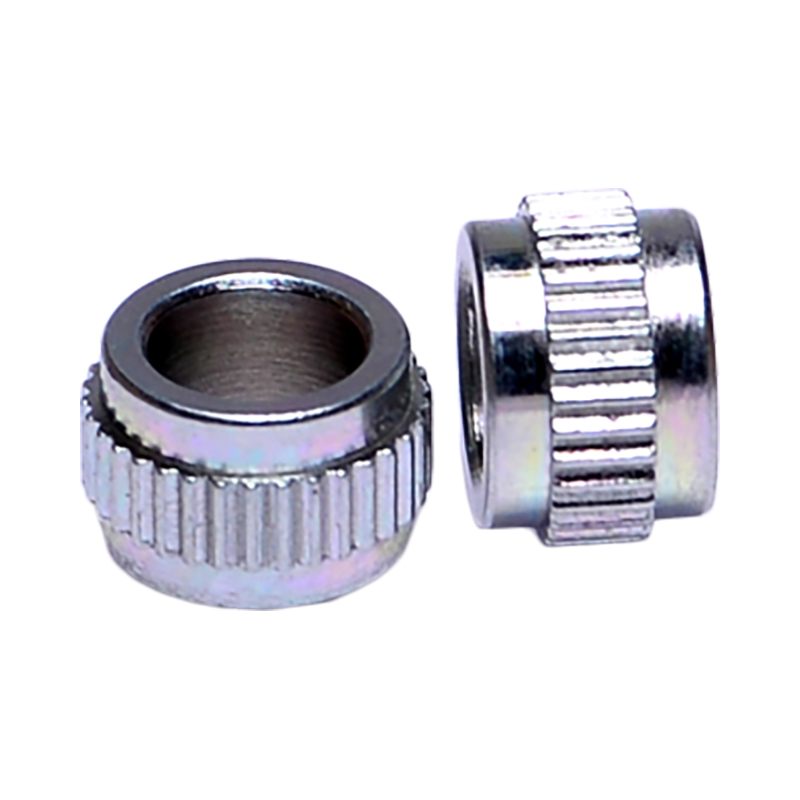
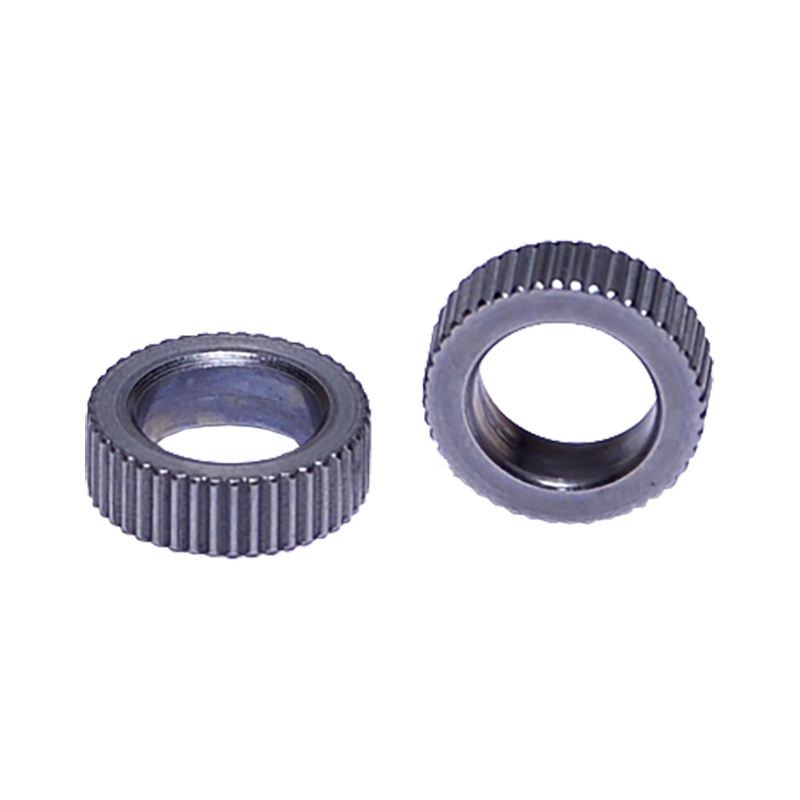
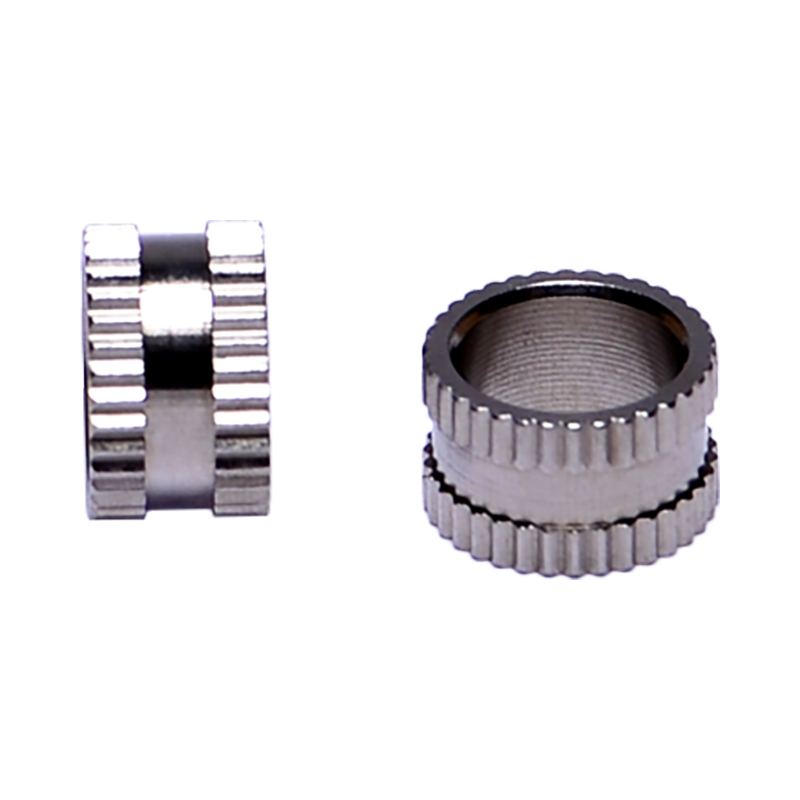
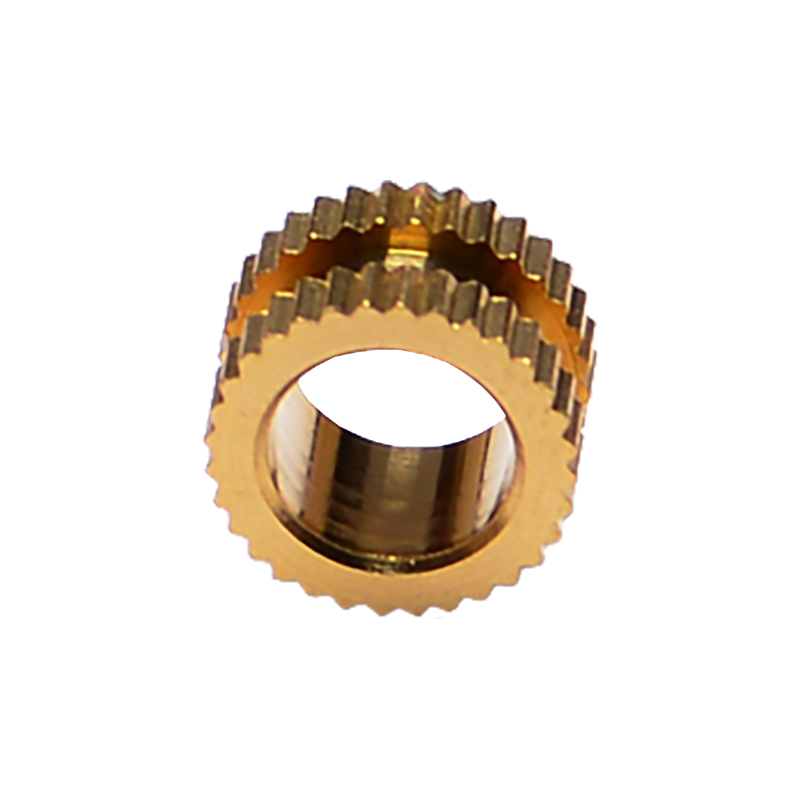
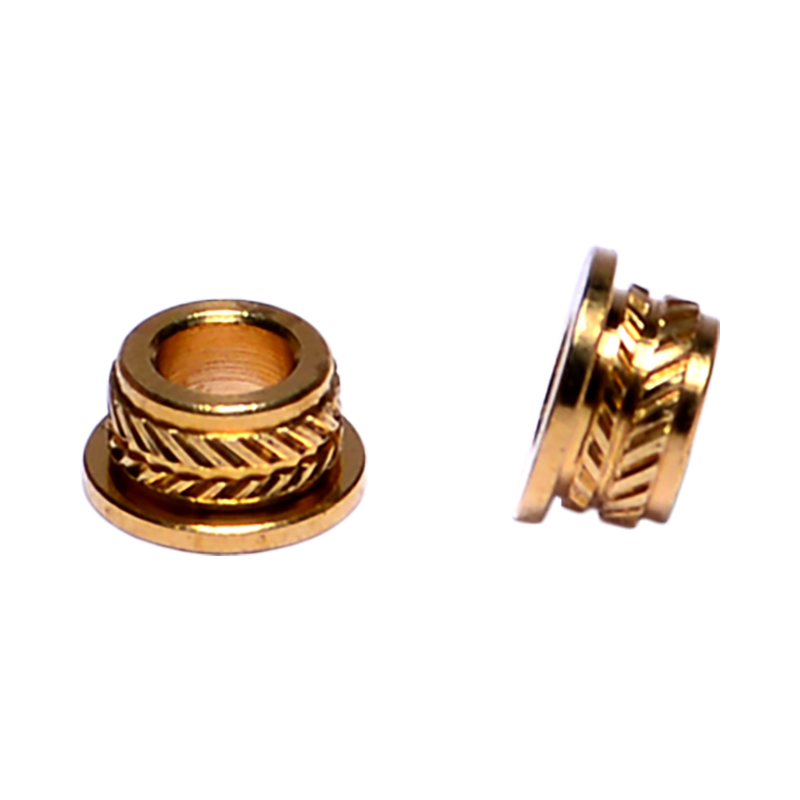
A knurled nut is a nut whose outer surface carries a pattern of fine straight or diamond-shaped ridges. This knurled pattern serves two purposes. In hand-tightened designs, the ridges give fingers a firm grip, so the nut can be turned without a wrench. In pressed-in or molded-in designs, the same ridges bite into the surrounding material, such as plastic, aluminum, or zinc die-cast, and prevent the nut from pulling out or spinning under torque. Because of this, knurled nuts are widely used in electronic housings, plastic injection molded parts, instrument panels, small appliances, and lighting products.
The internal thread, outer diameter, knurl depth, and height of a knurled nut must all be controlled closely. If the outer diameter is too small, the nut will not hold in its host material. If the knurl is shallow or uneven, grip and pull-out resistance drop. The following sections explain how our factory produces custom knurled nuts at volume while keeping these dimensions stable.
Why Cam Automatic Lathes Suit Nut Production
Nuts are typically ordered in very large quantities, often tens or hundreds of thousands of pieces per order, and the unit price must stay low. For this kind of work, cam automatic lathes remain one of the most efficient machines available. Instead of relying on a computer program, a cam automatic lathe uses a set of mechanical cams that move the tools in a fixed, repeating cycle. Once the cams are set up and the machine is running, every cycle repeats the same motion, so the first nut and the ten-thousandth nut are cut in exactly the same way.
Fast Cycle Time for High-Volume Orders
Because the tool movements are mechanical and the cycle is simple, a cam automatic lathe can complete a small nut in a few seconds. Several tools work on the bar at the same time, so drilling, chamfering, forming the outer profile, and cutting off the finished nut happen almost simultaneously. For orders in the tens of thousands, this speed keeps lead times short and cost per piece low.
Repeatable Accuracy Once the Cams Are Set
Setting up a cam lathe takes skill, but once the cams, tool positions, and stops are adjusted correctly, the machine reproduces the same dimensions cycle after cycle. This is why experienced setters matter so much. A good setter can bring a cam machine to a stable condition quickly, and then only small tool-wear adjustments are needed over a long run.
Our Workshop and Equipment
Our factory has been in business for 18 years. In 2016 we invested more than 30 million yuan in a standard production workshop covering 10,000 square meters. Inside, long rows of automatic lathes stand side by side, each fitted with splash guards, coolant supply, and collection trays that catch finished nuts as they drop from the machine.
- Cam automatic lathes for high-volume nuts, bushings, and simple turned parts
- CNC lathes imported from Japan, along with domestic CNC lathes, for parts needing complex profiles
- High-precision Taiwan-made Swiss-type automatic lathes for slender or small-diameter parts
- More than 60 sets of auxiliary equipment for tapping, knurling, deburring, and cleaning
- More than 100 sets of testing instruments for dimensional and quality control
Having cam machines, CNC lathes, and Swiss-type lathes in one plant lets us choose the most economical process for each design. A simple round knurled nut may run on a cam lathe, while a nut with an unusual flange or cross hole may be moved to a CNC machine.
From Bar Stock to Finished Knurled Nut
Each knurled nut passes through a defined sequence of operations, and each operation has its own quality checkpoint.
| Step | Operation | What Is Checked |
| 1 | Bar stock selection | Material grade and bar diameter |
| 2 | Turning and drilling on the lathe | Outer diameter, bore size, height |
| 3 | Knurling the outer surface | Knurl pattern and depth |
| 4 | Tapping the internal thread | Thread fit with go/no-go gauge |
| 5 | Cleaning and surface treatment | Cleanliness and coating quality |
| 6 | Final inspection and packing | Appearance and sample dimensions |
In-Process Checks at the Machine
On a cam automatic lathe that runs thousands of pieces an hour, even a slight drift can produce a large number of bad parts in a short time. For this reason, operators measure parts directly at the machine rather than waiting for a final inspection. They take sample pieces from the tray at regular intervals and check the outer diameter with a micrometer, and they check the thread with gauges. If a reading starts to move toward the tolerance limit, the operator adjusts the tool position or replaces a worn insert right away.
After production, finished nuts are collected in trays and baskets, where they are washed and visually checked. Good knurling shows even, sharp ridges around the whole circumference, with no torn edges or smeared patterns. Nuts with chips left in the thread or damaged knurls are removed before packing.
Materials and Finishes for Knurled Nuts
The right material depends on the host material, the load, and the working environment. We commonly produce knurled nuts from the following options:
- Brass, popular for plastic molding inserts because it machines easily and resists corrosion
- Carbon steel, for strong and economical nuts, usually with zinc or nickel plating
- Stainless steel, for wet, outdoor, or hygiene-sensitive applications
- Aluminum, when low weight is the priority
Finishes such as zinc plating, nickel plating, black oxide, or passivation can be applied after machining to improve corrosion resistance and appearance.
How to Specify a Custom Knurled Nut
To receive an accurate quotation, please include the details below with your inquiry. Complete information avoids delays and prevents misunderstandings about the sample.
- Thread size and pitch, such as M3 or M4 metric, or a UNC or UNF size
- Outer diameter, height, and any flange dimensions
- Knurl type, such as straight or diamond, and knurl depth
- Material, surface finish, and the host material the nut will be installed in
- Annual or per-order quantity
If you only have a sample nut, send it to us and our engineers will measure it and prepare a drawing for your confirmation.
Why Choose Our Factory for Knurled Nuts
Our team of more than 50 employees includes a core group in which over 70 percent have more than ten years of experience in fastener and turned-parts production. These setters and operators know how to bring a cam automatic lathe to a stable condition quickly, how to keep knurling even over a long run, and how to spot a problem before it spreads through a batch. Combined with three types of lathes under one roof, over 60 auxiliary machines, and more than 100 testing instruments, this experience allows us to deliver knurled nuts that are consistent from the first piece to the last, order after order.
Our Products //
Hot Products

If you are interested in our products, please consult us
Kunshan Hong Yong Sheng Precision Hardware Products Co.,Ltd. All Rights Reserved. Customised Fastener Manufacturer in China
